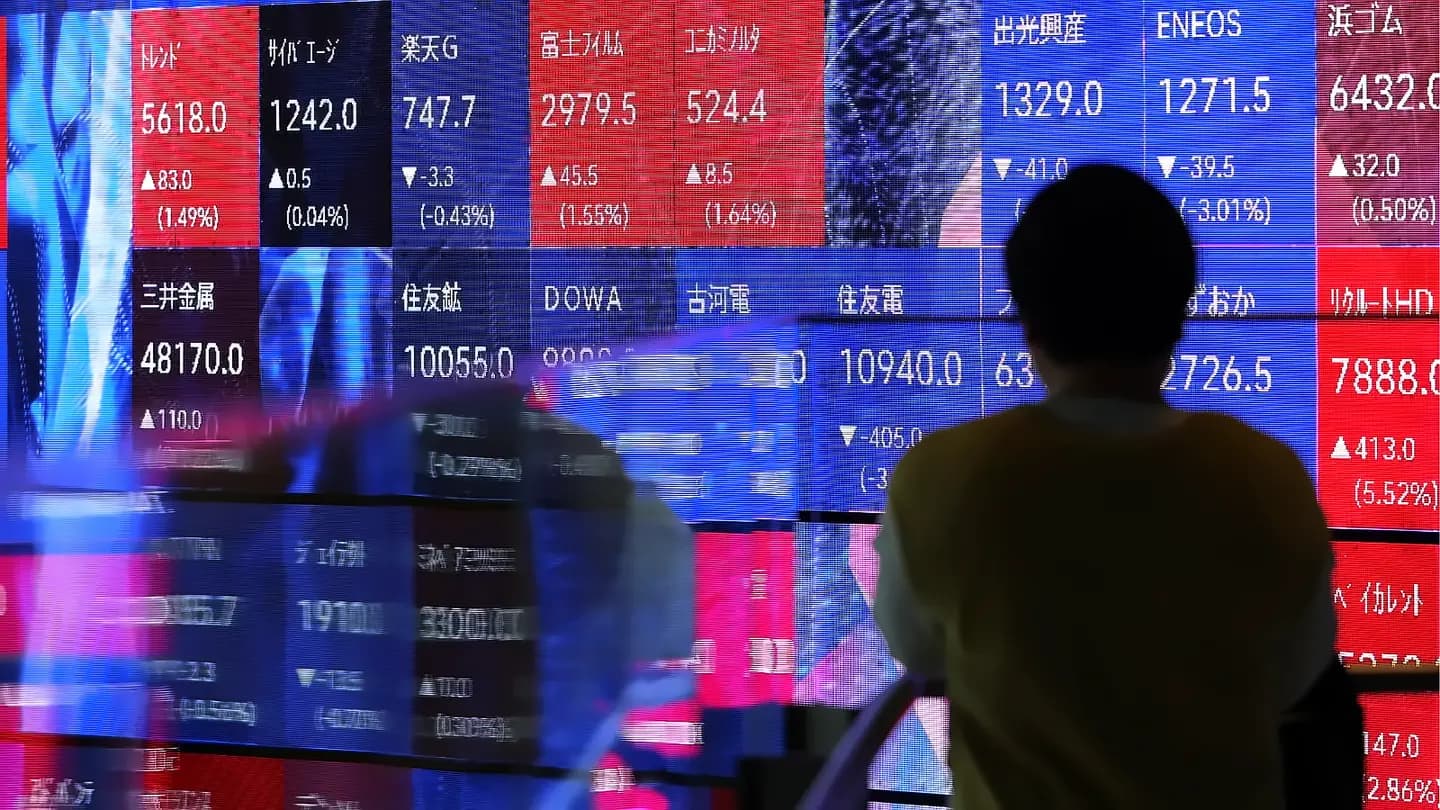
Asian markets delivered exceptional performance on Friday, with South Korea's Kospi jumping 18% as US tech earnings triggered a massive 28% surge in Samsung and SK Hynix. According to The Economic Times, the sharp rebound follows a 40% crash driven by single-stock leveraged ETFs, drawing retail protests. The rally represents a dramatic recovery from this week's selloff, with South Korea's chipmakers leading the regional surge after Wall Street's semiconductor index logged its biggest one-day gain in over a year. Samsung and SK Hynix surged more than 25%, marking their biggest one-day gains in decades, as investors revived bets on AI-driven demand. Japanese chip stocks also followed suit with Tokyo Electron climbing 9.3% and SoftBank Group jumping 14.7%, with the latter benefiting from its ties to artificial intelligence through ownership of OpenAI.
The South Korean government unveiled plans to inject ₹13.9 billion ($13.9 billion) into a new account within the Korea Investment Corporation for strategic investments in AI, data centres and infrastructure, as reported by Bloomberg. The fund will be allowed to invest in domestic assets for the first time, adding to a series of recent measures aimed at supporting South Korea's equity market. While the government did not link the plan to this week's market turmoil, the move comes as the latest recovery comes after a more than 17% slump in the KOSPI over the previous three sessions as concerns over stretched AI valuations, rising leverage and forced selling triggered a sharp technology-led selloff.
Microsoft and Amazon shares jumped nearly 9% each after their quarterly results provided investors with stronger evidence that their AI spending was tied to actual demand. Microsoft added roughly $450 billion in market value after reporting quarterly revenue of $90 billion, up 18% and comfortably ahead of expectations, with Azure revenue increasing 43%, beating forecasts near 40%. The company's Microsoft 365 Copilot reached more than 30 million paid seats, while Azure also surpassed $100 billion in annual revenue for the first time. Amazon surged nearly 10% after reporting accelerating cloud-computing revenue, helping restore confidence in a market that had become the clearest regional expression of the AI unwind. The market rewarded Microsoft's approach of maintaining existing spending plans rather than following Alphabet with another large increase, with capital expenditure rising 70% to $41 billion in the quarter but coming in slightly below expectations.
The Kospi's record 18% rally on Friday marked a comeback for AI stocks, but the bigger takeaway was a shift in investor expectations. Markets are no longer chasing AI spending alone, they want evidence of real returns. Alphabet saw negative reaction even after reporting strong quarterly revenue as investors were disappointed that the company's free cash flow turned negative for the first time since its 2004 IPO, with $39.1 billion in operating cash flow but spending $44.9 billion in capex. Similarly, Facebook parent Meta stock tumbled 9% post earnings as it reported free cash flow of just $784 million for the June quarter, down sharply from $8.55 billion a year earlier. Andrew Jackson of Ortus Advisors noted that Microsoft's stronger-than-expected results triggered a sharp recovery in risk assets and AI-related stocks, with Azure's performance reassuring investors while management's disciplined approach to capital spending showed that a 'spend at all costs' mindset was being punished by markets.