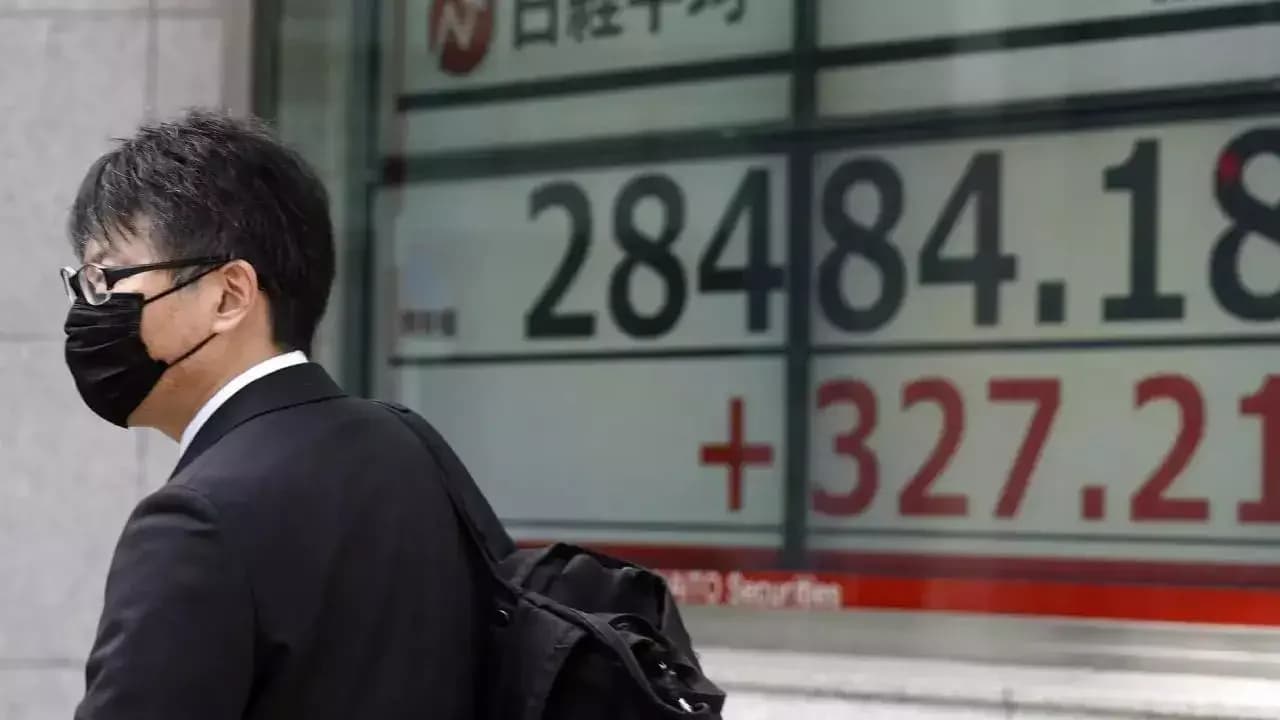
South Korea's benchmark Kospi index plunged 4% to 7,352.89 on Wednesday, marking the third consecutive session of losses and extending the selloff that began after Samsung shares crashed nearly 10% on Tuesday despite the world's largest memory chipmaker forecasting a 19-fold surge in its second quarter operating profit. According to The Economic Times, the index later recovered some losses but continued to trade in the deep red, with the lowest level seen since late May this year. Heavyweight Samsung Electronics saw its share price fall nearly 4%, while peer SK Hynix gained 1% and battery maker LG Energy Solution slid 4%. The sharp selloff was triggered by concerns about the sustainability of the AI-driven chip boom and risk of slower AI infrastructure spending by major U.S. technology firms, as analysts noted that Samsung's strong earnings were widely expected and had largely been priced in after the company's shares rallied ahead of the results.
South Korean economic officials have stepped up their monitoring of market volatility after sharp swings in semiconductor shares continued to unsettle investors. Finance Minister Koo Yun-cheol met with the governor of the central bank and the heads of the country's financial regulators on Wednesday to assess recent market developments, as reported by The Economic Times. The finance ministry stated that increased profit-taking by foreign and institutional investors, portfolio rebalancing and changing expectations surrounding the global artificial intelligence sector had contributed to heightened market volatility. The benchmark KOSPI index tumbled as much as 4% in early trading, touching its lowest level since May 20, before staging a recovery as chipmaker stocks rebounded. By 0052 GMT, the index was trading 0.5% higher, although it remained 15.6% below the record high reached on June 22. The market has experienced elevated volatility this week, with the KOSPI earlier triggering a circuit breaker for the sixth time this year and only the 12th occurrence in its history.
Oil markets remained in focus after a vessel was reportedly struck while transiting the Strait of Hormuz, with Brent crude gaining 0.4% to trade around $72.25 a barrel after reports highlighted persistent risks to shipping in the strategically important waterway. According to Live Mint, the latest developments have Brent crude trading above $72 a barrel after a modest decline in the previous session, while West Texas Intermediate hovered near $69. Although vessel movements through the Strait of Hormuz have resumed following the easing of hostilities between the United States and Iran, shipping volumes remain below levels seen before the conflict. A convoy that included at least eight Japan-linked ships has recently passed through the route, signalling a gradual return to normal operations. Crude prices remain well below the highs seen earlier this year, with Brent losing about 30% during the second quarter after Washington and Tehran reached an interim agreement that eased fears of prolonged supply disruptions from the Middle East.
Technology stocks led the decline across Asian markets, with Samsung Electronics dropping over 6% despite reporting a 19-fold jump in quarterly profit, as reported by Live Mint. The sharp fall dragged South Korea's Kospi index down 4.3%, with small-cap Kosdaq falling a sharper 1.94%. Chipmakers remained under pressure as SK Hynix shares slipped 4.2% after the company formally launched the marketing process for its planned US listing. Recent volatility in technology stocks has prompted investors to look for stronger evidence that the artificial intelligence-driven rally can maintain its momentum, with market participants now assessing whether elevated capital expenditure, intensifying competition, and expanding production capacity will translate into earnings growth sufficient to support current valuations. Although U.S. semiconductor stocks delivered a record quarterly performance, investors are now scrutinizing whether the momentum can be sustained, with Intel, Micron and AMD shares crashing up to 10% as the Philadelphia Semiconductor Index lost nearly 5% amid AI spending concerns.
South Korean regulators have intensified their oversight of products linked to semiconductor shares amid growing market volatility. The Financial Supervisory Service said on Tuesday it would closely monitor the impact of newly launched single-stock leveraged exchange-traded funds (ETFs) tied to chipmakers and examine marketing practices by asset management firms if necessary, as reported by The Economic Times. The Bank of Korea had already warned on Sunday that it would coordinate with other agencies to manage risks associated with such investment products. The central bank cautioned that single-stock leveraged ETFs could amplify one-sided trading, increase concentration in specific stocks and worsen market volatility. The finance ministry noted that the growing concentration of the stock market in semiconductor companies has become an important source of financial market volatility, with movements in chip stocks increasingly influence the broader equity market.