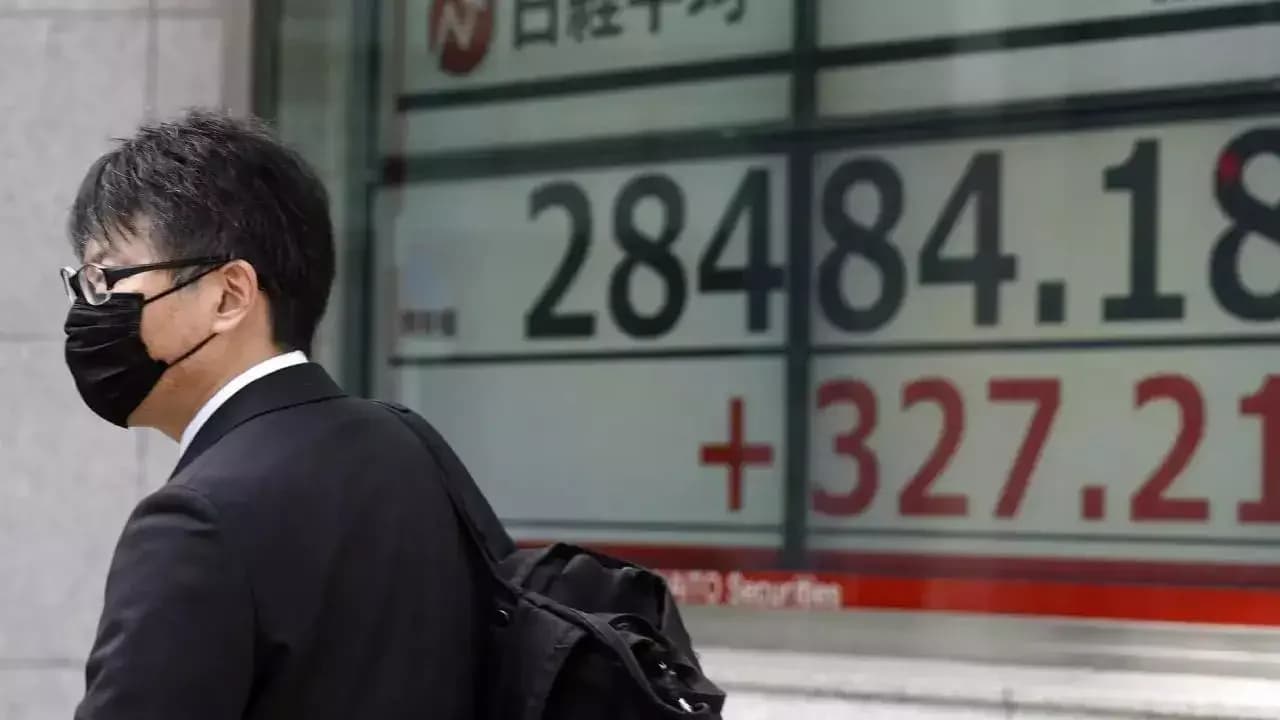
South Korean markets experienced the most severe volatility as the KOSPI index nosedived nearly 8%, triggering a 20-minute trading halt due to the circuit breaker mechanism. According to Goodreturns, the selloffs were fueled by sharp declines in tech and semiconductor giants like Samsung Electronics and SK Hynix, which fell by 5% and 2% respectively, marking their worst single-day performance since March 2020. Dr. VK Vijayakumar, Chief Investment Strategist at Geojit Investments Limited, noted that "There are strong headwinds for the market as trading begins for the week. The sharp cut of 4.18% in Nasdaq last Friday has rattled global markets with tech dominated South Korea and Taiwan facing big sell-off." The circuit breaker activation reflects the extreme nature of the market decline, with Japan's Nikkei 225 also declining over 4% as the world's best-performing gauge this year faces mounting pressure.
The Asian market crash was significantly amplified by stronger-than-expected US job reports that further strengthened the case for Federal Reserve interest rate hikes. According to Goodreturns, the US economy added 172,000 jobs in May, more than double the market forecast of 85,000, with the unemployment rate standing at 4.3% and annual wage growth dipping mildly to 3.4%. Two-year Treasury yields rose more than 11 basis points on Friday and were up 1.6 basis points on Monday to 4.1782%, with benchmark 10-year Treasury futures about five ticks lower early on Monday morning in Asia. Marc Velan, head of investments at Lucerne Asset Management in Singapore, noted that "The move looks more like a positioning and momentum unwind than a reassessment of the long-term AI story." Bob Savage, head of markets macro strategy at BNY, observed that "The AI-drives-everything narrative frayed last week. Whether this is a healthy pause in the nine-week equity rally or a top remains the key question."
The technology sector witnessed severe pressure across Asian markets, with Taiwan Semiconductor Manufacturing Co. (TSMC) sinking by 2.1% and Hon Hai Precision (Foxconn) dropping by 5.1%. According to Goodreturns, Japanese tech behemoths also suffered heavily, with SoftBank Group plummeting by 7.5%, Tokyo Electron tanking by nearly 7% and Advantest slipping by 5%. This performance followed the US Nasdaq Composite Index's 4.2% plunge on June 5th, marking its worst single-day decline since April 2025 as traders frantically sold chip and tech stocks, fearing that AI is not advancing as fast as estimated. Last week, chipmakers were among the hardest hit at Wall Street, including Micron (-13.3%), Nvidia (-6.2%), Marvel (-16.7%), Advanced Micro Devices (-10.9%) and Sandisk (-11.4%). Shoji Hirakawa, chief global strategist at Tokai Tokyo Intelligence Lab, noted that "Selling is expected to spread across Japanese technology shares, while funds may rotate into defensive sectors."
Investor sentiment was further rattled by renewed geopolitical tensions after Iran fired several rounds of missiles toward Israel, exacerbating tensions in the Middle East as the US pushes to preserve a faltering ceasefire. According to Goodreturns, the escalation of conflict in West Asia, with Iran firing missiles at Israel in retaliation to Israel's aggression in Lebanon, has hardened crude prices. Brent crude futures were up about 2.6% to $95.45 a barrel after an Israeli attack on Beirut prompted Iran to direct a salvo of missiles at Israeli targets. OPEC+ agreed on Sunday to the fourth increase in its oil output targets in as many months, adding to supply concerns. Nick Ferres, CIO of Vantage Point Asset Management in Singapore, noted that "The market regime has potentially shifted from moderate inflation and rate cuts to potential 'overheating' contributing to higher Treasury yields, a higher path of short-term interest rates and tighter liquidity." The weakness followed Friday's sharp decline in US markets, where the Nasdaq Composite slumped 4.2% after stronger-than-expected jobs data reinforced expectations that the Federal Reserve may keep interest rates elevated or consider further tightening, weighing heavily on high-growth technology stocks.
Among individual stock movements, Raspberry Pi shares jumped 11.2% after the single-board computing company raised its full-year profit forecast, saying strong AI-related demand was expected to result in adjusted core profit "significantly ahead" of market expectations. However, Bodycote shares slid 11% after the British thermal processing services company said that Apollo Global Management does not intend to make a firm offer for it. The mixed corporate results reflect the broader market uncertainty as investors reassess AI-related investments following Broadcom's disappointing results. According to The Hindu BusinessLine, the S&P/ASX 200 index closed down 0.7% at 8,625.10, its lowest level since May 28, with the benchmark having declined 1.2% for the week, its biggest slide since May 11. Japanese companies have also benefited from the boom, though to a lesser extent than their South Korean peers, with memory-chip maker Kioxia soaring more than 600% this year through Friday and SoftBank climbing nearly 70%. Some assistance was given by defensive industries like telecommunications during the broader market decline.
In currencies, the dollar remained firm, holding above 160 yen and pushing the Australian dollar to $0.7055 as investors continued to favour the US currency amid escalating Gulf tensions. According to The Hindu BusinessLine, the dollar was firm and holding above 160 yen and pushed the Australian dollar to $0.7055, with the euro hovering at $1.1531. Among major currencies, both the euro and sterling were set to register modest weekly losses against the dollar. Bitcoin was hovering just shy of $63,000 on Monday, recovering from last week's heavy decline when it notched its heaviest weekly drop since the collapse of crypto exchange FTX in late 2022, falling about 16%. US stock futures attempted a modest recovery after a steep selloff on Wall Street at the end of last week, with Japan's Topix falling 0.1% and Australia's S&P/ASX 200 falling 0.7%. Hong Kong's Hang Seng fell 0.4% and the Shanghai Composite was little changed. Traders are also increasing bets on a Bank of Japan rate hike when policymakers meet next week, as officials grapple with mounting upside risks to inflation.