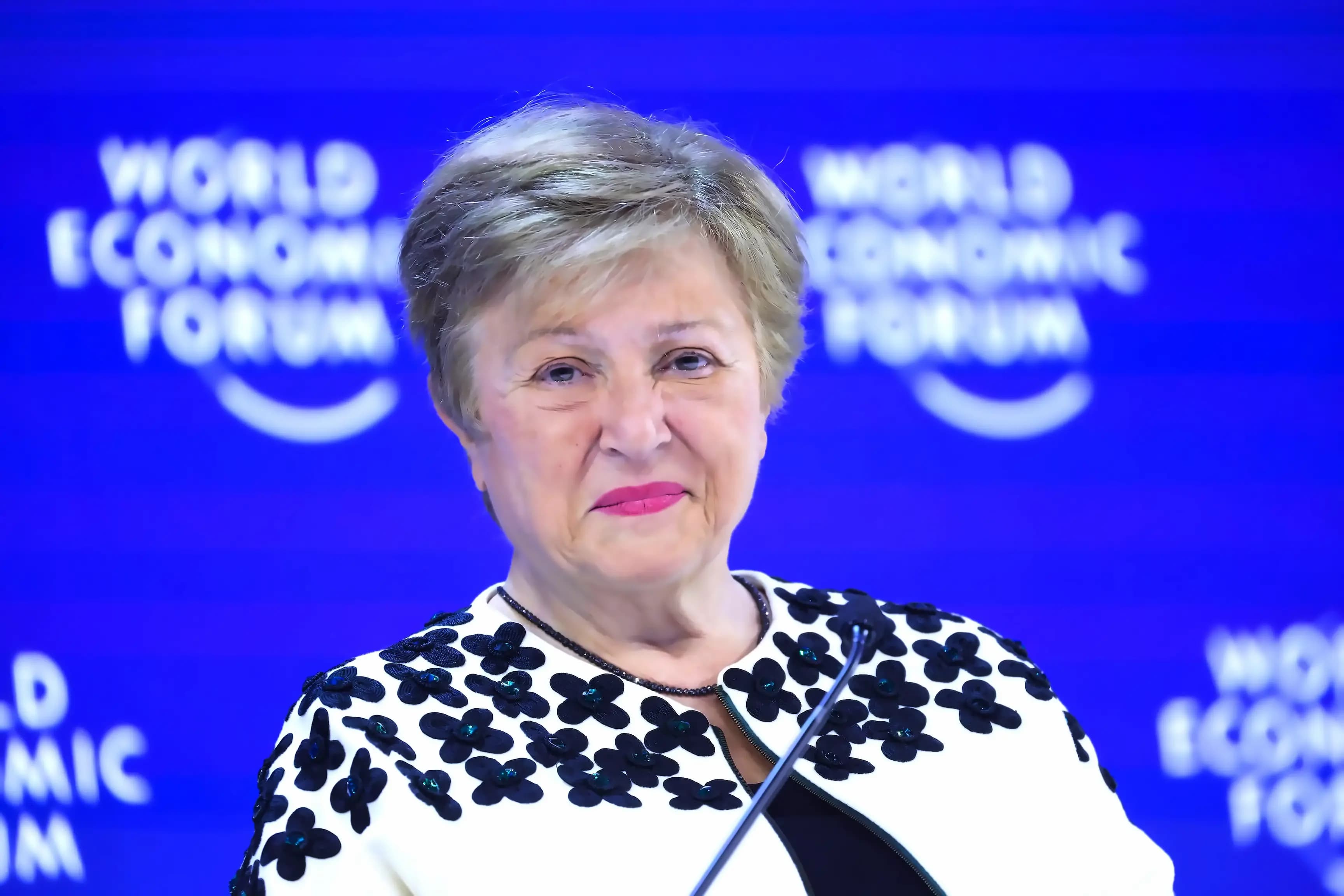
The International Monetary Fund has issued a stark warning about the Middle East war's escalating impact, with Managing Director Kristalina Georgieva stating that the global economy could face a 'much worse outcome' if the conflict drags into 2027 and oil prices hit around $125 per barrel. According to Reuters, Georgieva emphasized that the IMF's 'reference scenario' assuming a short-lived conflict -- which forecast a minor growth slowdown to 3.1 percent and a minor increase in prices to 4.4 percent -- is no longer possible. She warned that if this continues into 2027 and we have oil prices of $125 more or less, then we have to expect a much worse outcome, then we are going to see inflation climbing up and then inevitably, inflation expectations would start de-anchoring.
Asian economies are experiencing significant pressure from the Iran war-induced energy crisis, with the Asian Development Bank trimming its growth forecast for developing Asia and the Pacific to 4.7% this year and 4.8% in 2027, down from earlier projections of 5.1%. The IMF's adverse scenario forecasts global growth slowing to 2.5 percent in 2026 and headline inflation of 5.4 percent, while the severe scenario forecasts growth of just 2 percent and headline inflation of 5.8 percent. According to Reuters, the crisis has already begun to weigh on growth prospects as governments scramble to manage supply disruptions and surging crude prices across the world's largest oil-importing region. The disruption has spurred the ADB to lift its inflation outlook to 5.2% for this year, reflecting the pass-through of higher energy costs into broader prices.
The crisis has been driven by the near-closure of the Strait of Hormuz, a vital artery for global energy flows, with Chevron Chairman Mike Wirth confirming that physical shortages in oil supply would begin appearing around the world because of the closure. Wirth noted that economies will begin shrinking, first in Asia, as demand adjusts to meet supply while the strait remains closed due to the US-Israeli war with Iran. Reuters data showed that oil imports plunged 30% year-on-year in April to their lowest levels since October 2015, after two months of the near-closure of the Strait of Hormuz, which passed 20 percent of global crude supply before the war. The disruption has been particularly severe for Asia, which takes 85% of Gulf crude shipments, highlighting the region's heavy dependence on Middle Eastern supplies and vulnerability to geopolitical shocks.
The IMF's Georgieva highlighted that fertilizer prices are already 30 percent to 40 percent more expensive, which would drive food prices up between 3 percent and 6 percent, with other industries also affected. As per Reuters, she expressed concern that many policymakers were still acting as if the crisis would end in a couple of months and were putting in place measures to cut the impact on consumers and business, which was keeping demand for oil high. She warned that 'Don't throw gasoline on fire,' she said, emphasizing that if your supply shrinks, your demand has to follow. The IMF's analysis shows that long-term inflation expectations remained anchored and financial conditions were not tightening, but that could change if the war continued.
Governments across Asia are increasingly leaning on fiscal measures to shield consumers, with billions of dollars being spent on fuel subsidies and tax cuts, particularly in South Asia where public finances are already stretched. India's state-dominated refining sector has held retail fuel prices steady despite rising crude costs, losing about 100 rupees ($1.06) a litre on diesel and 20 rupees on gasoline, but some analysts forecast price hikes after state polls ended in April. Many regional governments have moved to limit fuel use or clamp down on hoarding, while several have curbed exports and many, including Australia, have espoused diplomatic efforts to ensure access. China, the world's biggest oil importer, has shielded itself with sizeable reserves and export curbs on fuel and fertiliser, although Beijing is making exceptions for some regional buyers. UBS recommends building in resilience through quality bonds and hedges, with the US dollar expected to soften against Asian currencies.
Despite government efforts, currency markets reflect growing stress as several Asian currencies have weakened sharply against the U.S. dollar since the conflict began in late February. Asia's emerging market currencies have fallen furthest and to lower lows against the dollar, compared with global peers and the region's bigger currencies, with the Philippine peso, Thai baht, and Indian rupee all making record lows. Since the war started at the end of February, the Philippine peso has dropped more than 5%, the Thai baht and rupee more than 3% each, and the rupiah more than 2.5%. In contrast, China's yuan is the region's top performer, up 0.8% against the dollar, while Japan has intervened to push up the yen, to stand 0.4% higher than pre-war levels. UBS expects the US dollar to soften against Asian currencies, especially the Australian dollar, Singapore dollar, and Chinese renminbi as risk sentiment improves.