Global energy markets are experiencing prolonged stress with Brent crude refusing to cool off from the $100 per barrel mark. According to Emkay Global's Madhavi Arora, speaking to ET Now, the current situation marks a structural shift rather than a short-lived disruption. Earlier expectations of quick normalisation have not materialised, with geopolitical tensions keeping supply risks elevated. As reported by The Economic Times, Arora noted that earlier assumptions were that the energy crisis would not last more than one or two weeks given the power equation between Israel and Iran, but the world has dipped into its energy reserves. "Energy crisis more protracted than expected," Arora emphasised, warning that if current strains persist for the next one or two months, the world is looking at a global energy crisis for real.

India's response to the energy crisis has been relatively muted compared to several Asian peers, many of whom have already imposed consumption-side adjustments through work-from-home advisories or activity moderation. According to The Economic Times, Arora stated that India has been a laggard in terms of policy advisory on fuel consumption, with most Asian countries already putting measures in order. She added that India also did that but largely on a commercial basis and has not passed on any kind of pain to consumers monetarily or otherwise. "India actually has been a laggard in terms of any kind of policy advisory on consumption of fuel," Arora noted, explaining that while Asian economies have implemented work-from-home policies and economic activity curtailment, India has not passed on consumer pain in any form.
The conversation around fuel conservation is closely tied to India's broader external sector vulnerabilities, particularly the current account and capital flows. As reported by The Economic Times, Arora explained that India is an emerging economy dependent on global cycles and the Reserve Bank of India has been intervening in the past one-and-a-half years to manage the currency and balance of payment crisis. She cautioned that the risk is no longer confined to the current account alone, with India sitting with not only a current account pain but also a capital account pain. "As we stand today, now we are sitting with not only a current account pain but also a capital account pain," Arora warned, noting that policy focus on managing forex is needed given the balance of payment crisis could be for real. She projected a BOP deficit of $60-70 billion in FY27.
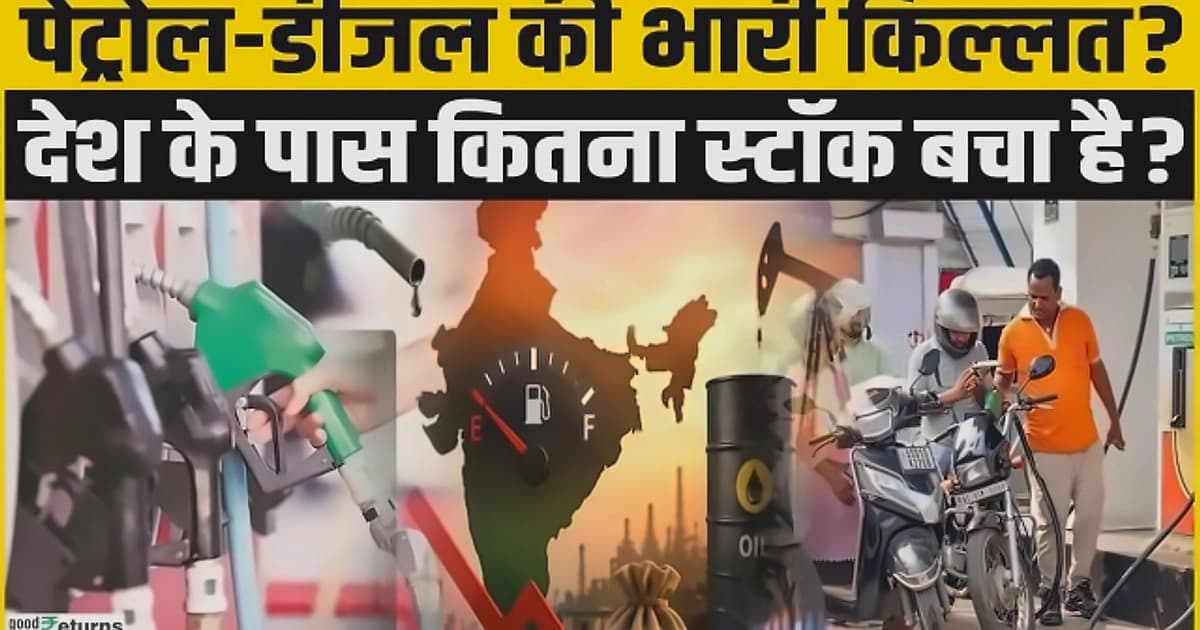
A key concern remains the pass-through of higher crude prices into domestic fuel prices and inflation. According to The Economic Times, oil marketing companies are currently absorbing significant under-recoveries with current under-recoveries that OMCs are bearing after government excise cut is somewhere close to around ₹17 per litre on a blended basis. Arora indicated that a gradual adjustment remains the most likely policy route rather than an abrupt price shock, with a ₹7 to ₹10 blended price increase in petrol and diesel expected in the next month or so. "There is still scope to increase the prices further if the government really wants to pass it on to consumers fully," she reiterated, noting that the current under-recoveries of ₹17 per litre on a blended basis is the cost OMCs are bearing after government excise cut.
The government has already absorbed a large part of the energy shock through excise adjustments and subsidy pressures, with the government running a cost of around ₹1.3 lakh crores by taking excise cut on their books. As reported by The Economic Times, Arora flagged that the government fiscal book is already strained by close to around ₹2 lakh crore on an annualised level. With crude prices staying elevated and geopolitical risks unresolved, policymakers appear increasingly focused on balancing inflation control, fiscal stability, and external sector resilience. "Given the forward book that we know of until recently, the FX reserves are obviously not in the leagues of… you are talking about total foreign exchange reserves," Arora noted, emphasising that India needs to adjust its foreign exchange base and manage forex effectively.