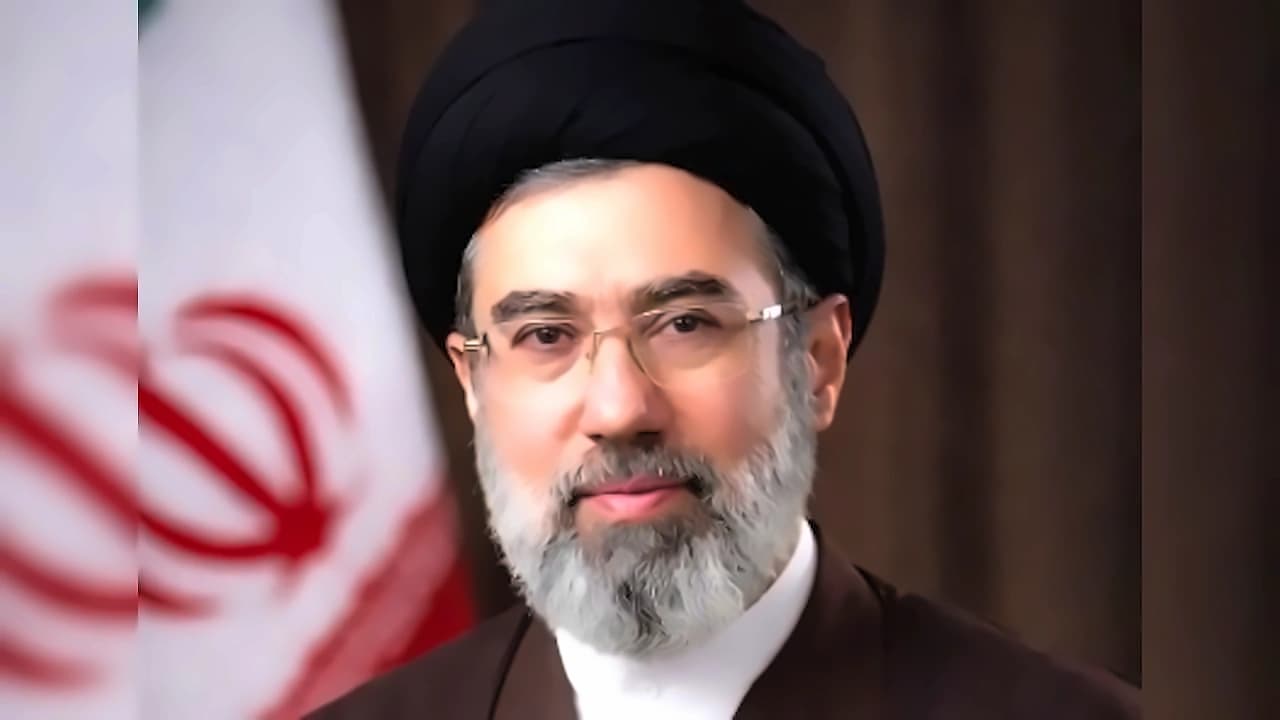
A conservative Iranian newspaper has published an infographic naming US, Israeli and European leaders as potential targets for retaliation following the assassination of Supreme Leader Ali Khamenei. According to Khaleej Times, the government-run Hamshahri newspaper published an online infographic featuring photographs of 13 foreign leaders alongside Mojtaba Khamenei's statement, though the newspaper's infographic was not officially authorized by the Iranian government. The list includes US President Donald Trump, Israeli Prime Minister Benjamin Netanyahu, UK Prime Minister Keir Starmer, German Chancellor Friedrich Merz, French President Emmanuel Macron, Italian Prime Minister Giorgia Meloni, US Secretary of State Marco Rubio, and Defence Secretary Pete Hegseth. The infographic appeared only in the newspaper's online edition and was not included in its Sunday print edition. This development comes after Mojtaba Khamenei vowed revenge in his first public message since his father's funeral, stating "Vengeance is the will of our nation and must inevitably be carried out."
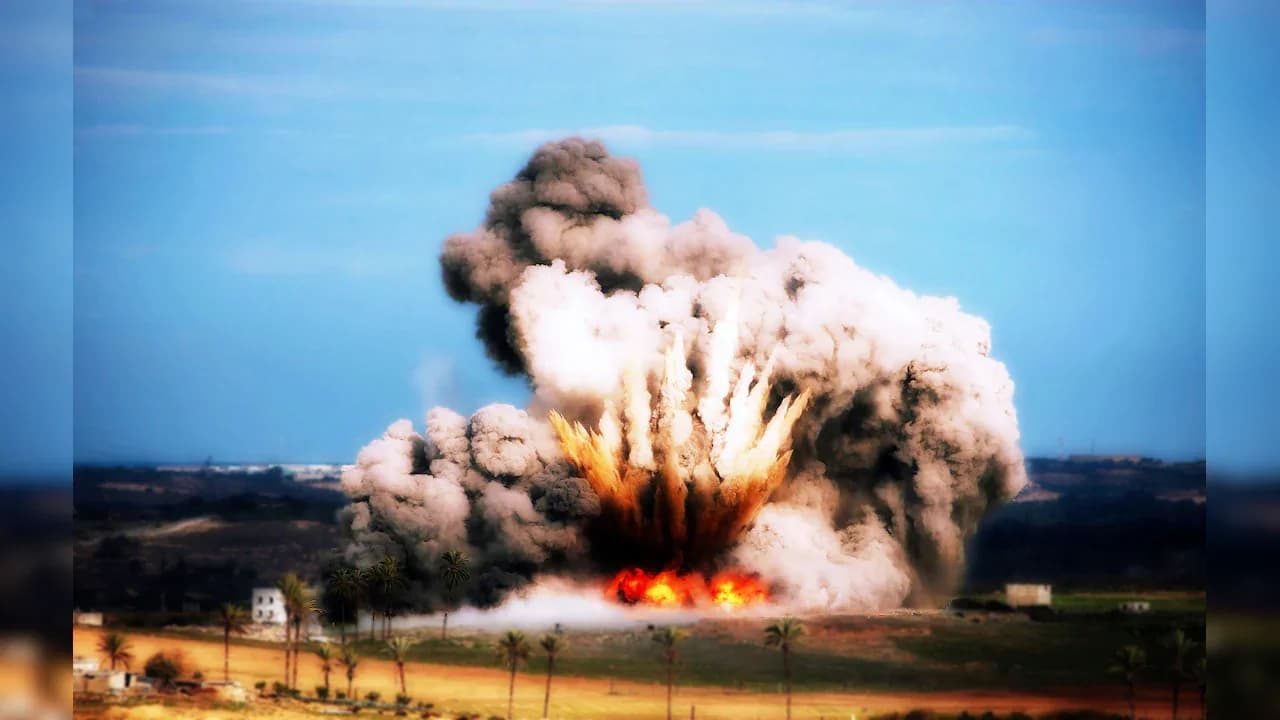
The US military has sharply increased its attacks on Iran this week, with American officials confirming they hit about 170 targets in Iran during strikes on Tuesday and Wednesday, according to Business Standard. This represents 15 times the number struck during a previous round of attacks in late June. US Central Command stated that the strikes had hit air defense systems, drone and missile storage sites and logistics infrastructure along the Iranian coast. The goal, military officials said, is to degrade Iran's ability to threaten ships in the Strait of Hormuz. The attacks have left the region deeply unsettled and seemingly caught in an ongoing cycle of sporadic war, raising the prospect of a return to the full-scale war that began in late February when the United States and Israel launched a joint attack on Iran.
According to reports from Al Jazeera, NBC10 Philadelphia, The Hindu, and Business Standard, Iranian officials confirmed that US strikes killed 14 people and injured 78 across five provinces on July 8 and 9. Hossein Kermanpour, spokesman for Iran's Health Ministry, confirmed that US forces had struck five Iranian provinces during this two-day period. The latest reports indicate that blasts were reported in Iranian cities along the Strait of Hormuz, including Bushehr, Chabahar, Bandar Abbas, and Sirik. IRNA reports that three of the victims were killed in a strike near the southwestern city of Ahvaz, according to Valiollah Hayati, Khuzestan province's deputy governor for security affairs. The strikes also resulted in casualties among Iran's armed forces, as confirmed by Iranian officials. In Iran's southwestern Khuzestan province, at least three people were killed Thursday, state media reported, following at least nine members of Iran's armed forces being killed in Wednesday's strikes. Fars reported that one US strike hit a rail bridge used for trade with Russia and China, while explosions were heard on Thursday morning in Iran's Bushehr province and in Bandar Abbas. Video and images verified by The New York Times showed significant damage to a large maritime control tower in the Iranian port city of Chabahar and buildings at an airport in the southern city of Iranshahr. A local official in Bushehr told state media that a pier and the perimeter of a nuclear power plant had been hit.
As reported by Al Jazeera, NBC10 Philadelphia, The Hindu, and Business Standard, Bahrain activated air raid sirens for the third time on Thursday amid possible Iranian aerial attacks. The Interior Ministry posted on social media platform X, stating that sirens had been sounded across the kingdom, urging "citizens and residents... to remain calm and head to the nearest safe place." The alert came after the Bahrain Defense Force said its air defense systems intercepted and destroyed several Iranian aerial threats in the early morning hours. The latest alert comes amid escalating military exchanges between Iran and the US for the second consecutive day. The Bahrain Defense Force's statement comes after Iran's military claimed drone strikes targeting US bases in the Gulf.
According to reports from Al Jazeera, NBC10 Philadelphia, The Hindu, and Business Standard, Iran's military announced it had carried out drone strikes on US bases and strategic sites in Bahrain, Kuwait and Qatar. The strikes targeted specific infrastructure including a Patriot missile system in Kuwait, an early warning satellite antenna site in Qatar, and fuel tanks belonging to the US military in Bahrain. Iran has confirmed it attacked "US bases and strategic centres" in Bahrain, Kuwait, and Qatar after the US bombed Iranian cities for a second consecutive night. The IRGC stated that attacks on Bahrain and Kuwait were in retaliation for attacks on its southern coastal provinces and "two bridges in the eastern provinces towards the holy city of Mashhad." The IRGC warned that if the US repeats its attacks, Iran's "crushing responses would be expanded to include other American bases in the region." In Kuwait, the military said falling debris wounded one person as it shot down three ballistic missiles, a cruise missile and 10 drones. Bahrain said it shot down incoming fire, without elaborating, while there was no immediate word of damage in Qatar. The Iranian Army later said it had targeted sites in Kuwait, Bahrain and Qatar with one-way attack drones as part of its attacks on US bases in the Gulf, according to state TV. Business Standard reports that Jordan also said it had intercepted Iranian attacks, with eight missiles intercepted and no injuries or damage reported. Iran also said it had launched an attack on Qatar, a mediator in the sporadic peace talks between Iran and the United States, though Qatari authorities did not confirm the strikes.
As reported by The Hindu, Business Standard, and Al Jazeera, Iran buried its slain Supreme Leader Ayatollah Ali Khamenei on Thursday, July 9, 2026, at the country's holiest shrine in Mashhad, northeast Iran. The burial follows a week of mass funeral processions, rallies and mourning ceremonies across the country. Notably, Khamenei's son and successor Mojtaba Khamenei remains hidden from public view after being disfigured in the strike that killed his father. The timing of the escalation coincides with this sensitive period of national mourning, adding significant political and emotional dimensions to the ongoing conflict. The current escalation comes as US President Donald Trump has warned of overwhelming retribution for any further Iranian attacks, saying the US was hitting Iran "20 to 1." Trump fueled concerns that the war could restart by saying Wednesday that the interim agreement to pause the fighting was "over." Trump posted several videos on his social media site of what he said were explosions in Iran and issued another warning: "This is in retribution for yesterday's bombing of ships by Iran. If it happens again, it will get much worse!" Trump had said earlier in the day that the latest back-and-forth fighting would not result in "long-term" military action, though he also suggested the US military might "just finish the job." Iranian officials, including Parliament Speaker Mohammad Bagher Qalibaf, have vowed a "crushing response" and warned Washington against further escalation. Iran has also formally notified the UN Security Council of the renewed strikes, calling on it to take "immediate, effective, and decisive measures" against the US.
According to Business Standard, Iran's Revolutionary Guards Navy said the US attacks and intervention in redirecting shipping through the Strait of Hormuz were disrupting its gradual reopening. The Guards said the number of vessels transiting the strait under Iranian supervision had recovered to about 50 per cent of pre-war levels over the past two weeks, adding that permission was being granted only to ships using routes designated by Tehran. Any further US intervention will draw a "crushing response," the Guards said. The US military said on Wednesday its latest strikes were aimed at keeping the Strait of Hormuz open after it said Iranian forces had struck three tankers in the area. While Iran has not claimed responsibility for the ship attacks, analysts say Tehran uses such actions to gain leverage in negotiations. Oil prices, which had spiked earlier, fell back on Thursday as investors weighed whether the flare-up was tactical and temporary or might cause a complete ceasefire collapse. Business Standard reports that sirens also sounded in Jordan on Thursday after missiles launched from Iran were detected in Jordanian airspace, with eight missiles intercepted and no injuries or damage reported. The surge in fighting has driven up the price of oil, with Brent crude, the international benchmark, trading at about $76 a barrel on Thursday, down from its peak during the war of about $118 but higher than its prewar price of about $72.
The attacks have prompted a new round of diplomatic activity by regional leaders eager to tamp down the violence. The prime minister of Qatar, Sheikh Mohammed bin Abdulrahman al-Thani, spoke by phone on Thursday to the foreign ministers of Saudi Arabia, Oman, the United Arab Emirates and Turkey, according to Business Standard. He also spoke by phone with Iran's foreign minister on Wednesday and condemned Iran's attacks on ships in the Strait of Hormuz. On Thursday, the ruler of the United Arab Emirates, Sheikh Mohammed bin Zayed, made a rare visit to Kuwait, where he met with the country's emir and discussed strengthening ties between their countries. Israel's defense minister, Israel Katz, said on Thursday his country was prepared to resume its military campaign against Iran if needed. "The army is ready and on alert for a resumption of fighting, in order to regain air superiority and strike again in Iran," he said at a military ceremony. The attacks have left the region deeply unsettled and seemingly caught in an ongoing cycle of sporadic war, with the prospect of a return to the full-scale war that began in late February when the United States and Israel launched a joint attack on Iran.