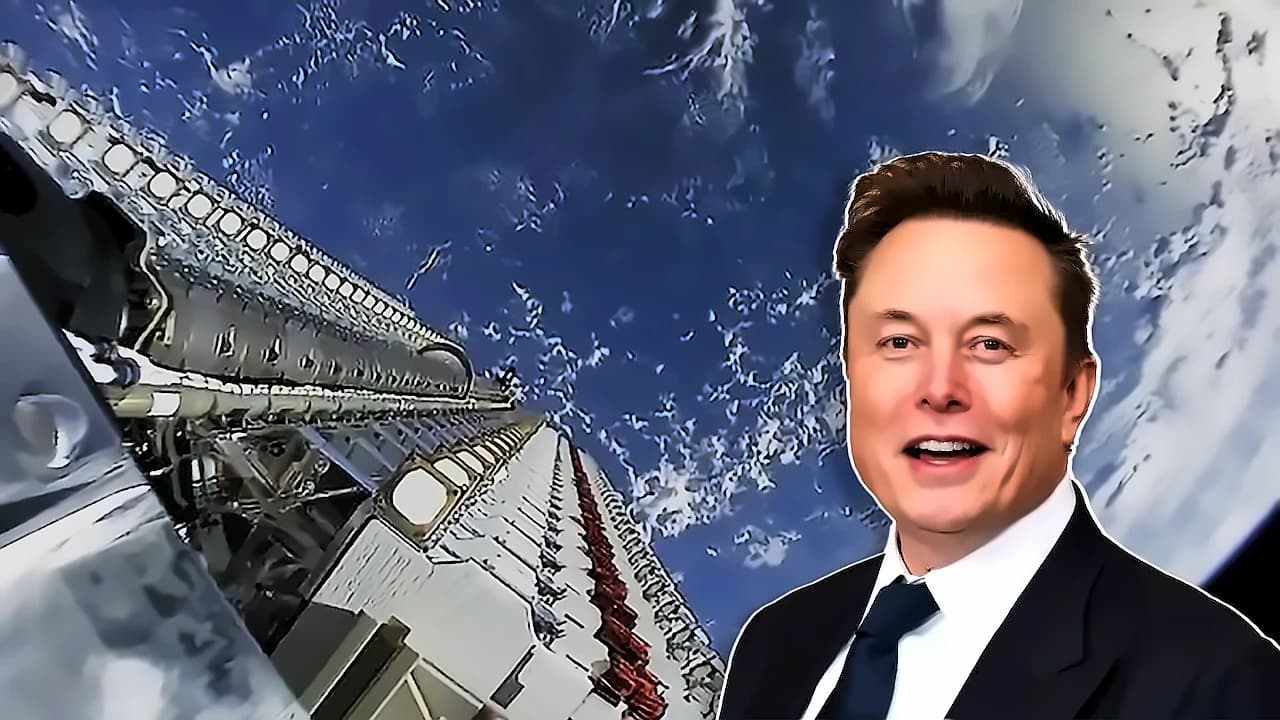
Iran has designated all interests related to economic holdings managed by Elon Musk in West Asia as valid military targets, according to reports from Fars news agency. The designation includes SpaceX's Starlink and X businesses, marking a significant escalation in regional tensions that has intensified amid active US-Iran mutual strikes currently straining ongoing ceasefire negotiations. As reported by Fars, this action comes in response to recent US military threats against Iranian assets, with the threat escalating a months-long dispute over Starlink's battlefield role. Tehran cited the military utilization of Starlink and other Musk-led projects by the United States and Israel as the baseline for this decision, with the inclusion of all assets connected to economic holdings under Musk's management currently under active consideration for Iran's updated targeting bank. According to The Sun, citing Iranian state media, authorities have reportedly placed Elon Musk's SpaceX and Starlink facilities across the Middle East on what they're calling a 'legitimate military targets' list, transforming civilian broadband infrastructure into contested battlefield assets.
The designation specifically targets Starlink ground stations across multiple Middle Eastern countries, including facilities in Israel, Qatar, Jordan, the United Arab Emirates, and Oman. According to Fars reports, these ground stations are owned by Alpha Dhabi and Mubadala firms and represent critical infrastructure for SpaceX's satellite internet operations in the region. The U.S. military now depends heavily on Starlink connectivity for battlefield communications and drone operations against Iran, according to Military Times. Pentagon drones guided via Starlink have played visible roles in recent strikes, essentially turning Musk's consumer internet network into critical warfighting infrastructure. The Defense Department has even clashed with SpaceX over wartime pricing—reportedly hundreds of millions for deployment and high monthly fees that underscore just how central the network has become to U.S. operations. The Pentagon-SpaceX pricing conflict has reached new heights, with SpaceX raising its per-drone Starlink fee from $5,000 to $25,000 before the Pentagon accepted the increase, highlighting the strategic importance of the network to military operations.
The Iranian target designation follows President Donald Trump's warning on Truth Social that the U.S. would strike Iran 'very hard' and take 'total control' of the country's oil market, including the strategically important Kharg Island export hub. As reported by Fars, the news agency citing an informed source, added that the U.S. military, with the support of companies linked to Musk, committed war crimes, including attacks on water infrastructure in Southern Iran. The Iranian response appears to be a direct retaliation against these US military threats, with the designation specifically targeting assets connected to the American businessman and entrepreneur. The timing suggests Iran's response to perceived US military escalation in the region, with Tehran claiming definitive proof that the U.S. and Israeli militaries are utilizing infrastructure managed by Musk, specifically the Starlink satellite network and the Twitter (X) platform. Inside Iran, authorities have declared Starlink terminals illegal and seized hundreds during enforcement sweeps, with the regime fearing dissidents using smuggled terminals to bypass internet shutdowns.
This escalation extends beyond Musk's companies, as Iran has previously threatened Middle East offices of major U.S. technology companies, including Amazon, Microsoft, and Meta, according to Fars News Agency. In March, Iran identified offices and assets linked to major U.S. technology companies, including Alphabet's Google, NVIDIA, IBM, Oracle, and Palantir Technologies as potential targets. The current escalation comes as US-Iran mutual strikes continue to strain ongoing ceasefire negotiations, with efforts for a potential peace agreement severely undermined after the U.S. and Iran exchanged a series of military strikes. The SPDR S&P 500 ETF (SPY) gained 0.4%, while the SPDR Dow Jones Industrial Average ETF Trust (DIA) rose 0.5% and the Invesco QQQ Trust ETF (QQQ) jumped 1.1% at the time of writing, though retail sentiment on these ETFs remained in 'bearish' territory. West Texas Intermediate (WTI) crude futures expiring in August gained 0.1% to $88.4 a barrel, while Brent crude futures for August deliveries traded 0.3% lower at around $92.8 a barrel.