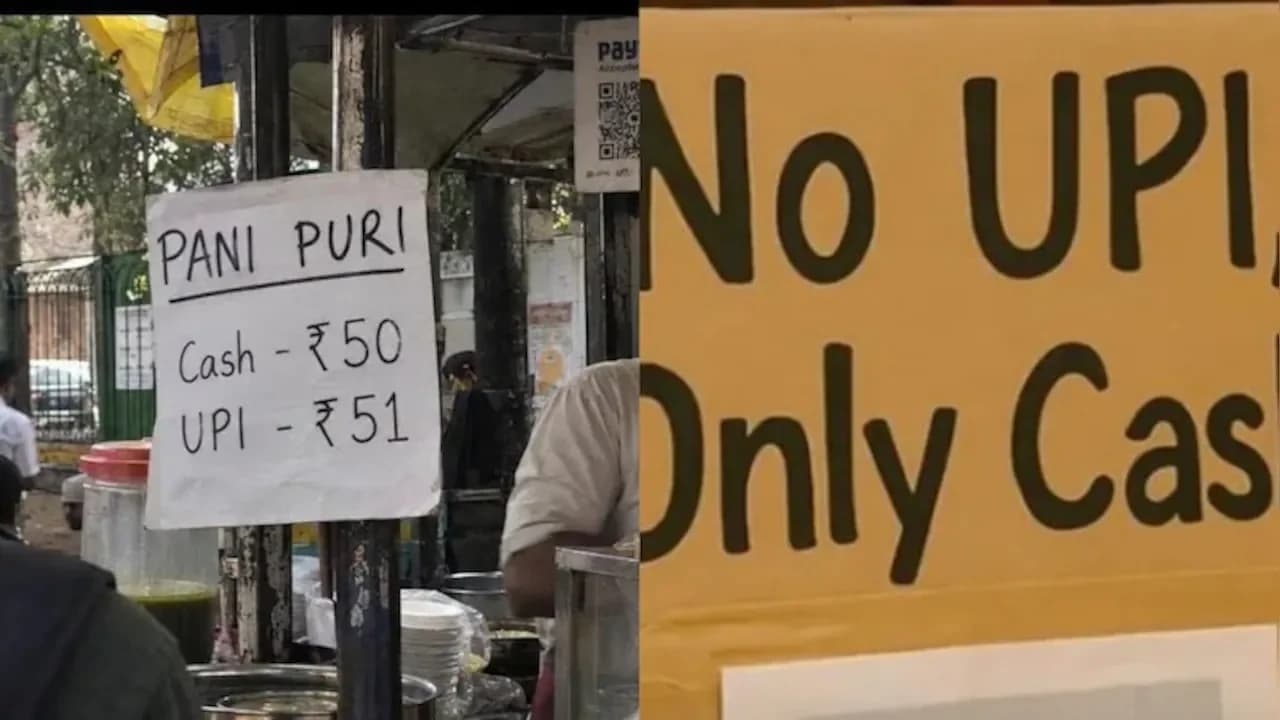
MPs, mostly belonging to the Opposition, on Wednesday expressed concern over the government's decision to levy a fee on UPI payments above ₹2,000 to merchants, claiming that the entire population of the country would be affected due to the 'anti-people' move. According to Business Standard, Chairman of the Parliamentary Standing Committee on Finance Bhartruhari Mahtab said that some MPs raised the issue at the meeting and said that it may be taken up at the next meeting of the panel. RSP MP NK Premchandran, who is a member of the committee, said that the entire population of the country would be affected by the government's decision to levy a fee on payments of above ₹2000 to merchants, describing it as 'a completely anti-people decision.'
The UPI payment system has emerged as one of India's most successful financial innovations, with transaction value surging from ₹0.07 lakh crore in FY17 to around ₹314 lakh crore in FY26, representing a more than 4,000-fold increase over the decade. According to reports from The Hindu BusinessLine, the average transaction value has increased by a CAGR of 155% during the same period. The system currently handles 660 million daily transactions on average, demonstrating remarkable adoption across India's digital payment landscape. The RBI's endorsement comes as the system continues to scale and serve consumers and businesses across the country, with the central bank noting that UPI would continue to be 'safe, seamless, affordable, and accessible' even with the introduction of MDR charges.
Despite the introduction of MDR charges, UPI transactions will remain free for users, both for person-to-person (P2P) and person-to-merchant (P2M) payments, ensuring continued accessibility for end-users. According to the RBI's statement, transactions up to ₹2,000 will not attract any charge, ensuring that low-value daily retail transactions remain unaffected. However, MDR may be levied on merchants for P2M transactions above ₹2,000, while P2M UPI transactions below ₹2,000 will continue to remain free for merchants. The RBI has introduced specific exemptions to protect smaller merchants, with small merchants earning up to ₹1 lakh a month through UPI QR codes remaining fully exempt. The government has indicated that this carve-out will keep around 96% of merchant transactions unaffected. Person-to-person transfers, which account for 37% of UPI's volume and 70% of its value, will remain untouched. The finance ministry clarified that customers will not be required to pay any charge when making such payments through UPI, adding that MDR is a charge within the merchant payment ecosystem, not a charge on customers making UPI payments. Individuals will continue to have 'unlimited free usage, with no monthly quotas, volume restrictions or tiered caps on free UPI transactions', as confirmed by the finance ministry.

The government has implemented a tiered MDR structure with a 0.4% MDR on UPI payments above ₹2,000 to merchants, with the fee capped at ₹300 for payments of ₹75,000 and above. Essential sectors such as railways, telecom and fuel will attract a flat ₹5 fee per transaction, while capital-market payments will have a lower MDR of 0.02%. A fifth of the new MDR pool will be used to fund UPI expansion among small merchants, demonstrating the government's commitment to supporting broader merchant adoption. The National Payments Corporation of India (NPCI) has confirmed that UPI app providers have been barred from adding platform fees, while banks have been directed to ensure merchants do not pass on MDR costs to customers. The RBI has emphasized that a fair distribution of MDR among ecosystem participants would help support the long-term growth and sustainability of India's digital payments network, with the central bank noting that such investments could help expand UPI acceptance, deepen the customer base and sustain growth in transaction volumes.
The introduction of MDR charges addresses a critical financial sustainability crisis that has plagued UPI since its inception. The government's actual subsidy outlay to compensate banks for providing UPI and RuPay payments without merchant fee has been a fraction of the estimated cost. The highest budgetary outgo was ₹3,631 crore in FY2023-24, while the Budget Estimate for FY2025-26 was just ₹437 crore, though the eventual payout was raised to about ₹2,196 crore. The allocation for FY2026-27 is ₹2,000 crore, which remains well short of the ₹20,000 crore industry estimates for operating costs. NPCI has described the annual incentive as 'short-term bridge funding rather than a permanent measure,' adding that relying solely on budget allocations 'creates funding uncertainty and limits long-term technology investments by banks and fintechs.' The Payments Council of India had pressed for years for the right to levy a controlled MDR on larger merchants rather than continue depending on government subsidies. The new framework follows the passage of the Taxation and Other Laws (Amendment) Bill, 2026, and comes after months of industry lobbying and a parliamentary panel's warning about UPI's financial sustainability.