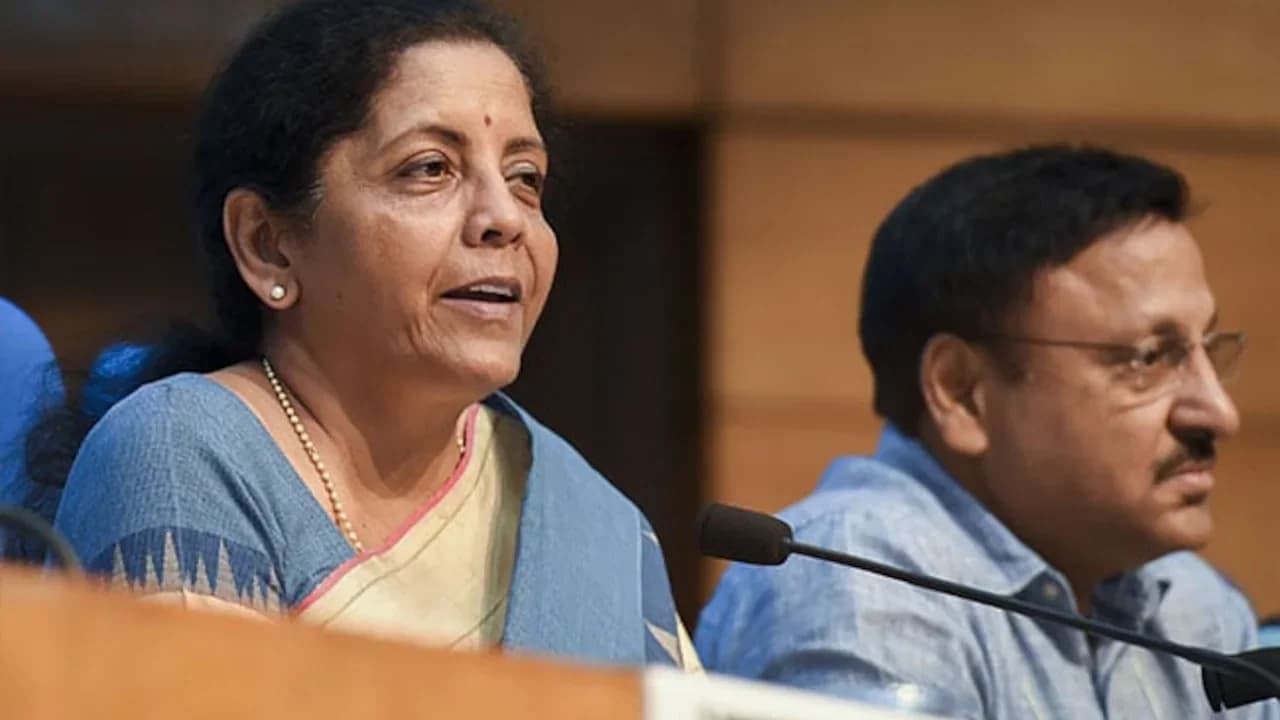
The Centre's decision to impose 0.4% MDR on UPI transactions above ₹2,000 from October 15 has sparked significant political controversy, with Congress MP Gaurav Gogoi rejecting government claims that Parliamentary Standing Committee on Finance MPs supported the decision. As reported by Business Standard, Gogoi stated that the Parliamentary Standing Committee on Finance did not discuss the UPI tax proposal that the Modi government announced recently. The Department of Finance did not have any specific proposal on "UPI tax" when they met the members of the finance committee, with Gogoi noting that questions were raised on the need for MDR, but the government representatives did not have any specific or satisfactory answers at that point. Congress general secretary Jairam Ramesh dismissed these claims as "pathetic" attempts by the Modi government to divert attention from the "gigantic backlash" generated after the UPI tax decision. Ramesh characterized these as "pathetic" attempts being made by the Modi government to divert attention from the "gigantic backlash" generated after the UPI tax decision taken to "appease US companies and Donaldbhai."
Retailers may raise prices or reduce discounts this festive season as the new 0.4% fee on UPI transactions above ₹2,000 takes effect from October 15. According to Mint, although the charge cannot be directly passed to consumers, businesses may still adjust final prices accordingly. For example, if a customer pays ₹10,000 for a purchase through UPI, the merchant-level charge would be ₹40. Similarly, for a ₹50,000 transaction, it would be ₹200 (depending on the applicable cap). Whether your bill will increase depends on whether a business passes the costs on to customers. The carefully calibrated move signals the end of an era for the world's largest real-time payments system even as the government tries to avoid alarming the hundreds of millions of users who use it daily.
The Centre will begin daily monitoring of new merchant discount rate (MDR) on UPI transactions from October 15, seeking to ensure that banks and payment aggregators do not pass the charges on to consumers. According to reports from Mint, a senior government official stated that the monitoring will focus on how banks, payment aggregators and other participants implement the new framework, particularly whether merchants bear the charges as envisaged or whether any part of the cost is transferred to consumers. Comparisons will be made with last year to track any changes in pricing patterns. The government is also working with payment aggregators to conduct outreach and explain to shopkeepers and merchants how the new MDR charges will work and where they will be applicable. From October 15, the government will monitor on a daily basis whether merchants are passing on the MDR to consumers, with officials expressing confidence that there won't be a fall in UPI transactions from October 15 and the government does not expect "much increase" in the use of cash.
According to the Parliamentary Standing Committee on Finance report headed by BJP MP Bhartruhari Mahtab, the panel noted its earlier recommendation emphasising that due to the imperative of a viable revenue model, legislative-enabling provisions for a tiered MDR structure have been brought forward. However, the committee remained deeply concerned by the staggering mismatch between the ₹2,000-crore allocation and the industry's estimated operational cost of ₹20,700 crore. The committee observed that while UPI is expected to process up to 150 billion transactions per month and add 600 million new users, the current government incentive covers merely 11 per cent of the industry's actual costs and 14 per cent of potential MDR collections, creating a structural funding gap impacting long-term infrastructural investment. The committee recommended that while the proposed three-year multi-year scheme and cashback components are necessary to democratise digital payments in untapped Tier 3-6 cities, the Department of Financial Services must concurrently explore a self-reliant, tiered revenue model.
The government does not expect the levy to drive users back to cash, saying only 4% of UPI transaction volume will be affected, according to PTI sources. Of the 24,000 crore-plus UPI transactions that took place in 2025-26, only 30% were between persons to merchants, with only 4% of these payments being for more than ₹2,000. However, analysts estimate the new MDR will generate an annual revenue pool of about ₹170 billion ($1.7 billion), with 60% going to banks, 25% to app providers and 15% to aggregators. The Finance Ministry has clarified that it is unlikely to have an inflationary impact, with the sources stating that the Goods and Services Tax (GST) applicable on MDR will be largely offset through input tax credit and its impact on the overall cost is expected to be limited. The ministry also noted that transactions through RuPay debit cards are completely free regardless of amount, further reducing concerns about cash transactions increasing. The government has also clarified that the incentive scheme currently in force to subsidise UPI transactions of less than ₹2,000 up to 0.15% of the value will be disbanded after October 15, with officials arguing that fully subsidising the fast-payment system won't ensure innovation in the sector.
India's UPI platform processed 241.6 billion transactions worth ₹314.2 trillion in fiscal year 2026 (FY26), up 30% in volume and 21% in value from a year earlier, as reported by Mint. UPI had more than 55 crore users as of August 2026, according to data from National Payments Corporation of India (NPCI). In August, UPI processed 24.5 billion transactions worth ₹29.8 trillion, up 22% in volume and 20% in value from a year earlier. P2M transactions accounted for 63% of UPI transactions by volume, with 86% below ₹500 and another 10% between ₹501 and ₹2,000. The revised MDR framework is expected to fetch around ₹15,000 crore annually, which will be split between banks, payment service providers, and third-party applications. Shares of Indian payment firms and banks rose on Wednesday following the announcement, with Paytm, Axis Bank and Yes Bank gaining between two and eight percent in early trade. However, the move has caused furore in the country, with merchants saying they will pass on the additional cost to consumers or start accepting cash, sparking fears that prices will rise and lead to the slowing down of India's digital payments revolution. The Retailers Association of India has warned that the new regime could discourage wider participation in the interface, where "small merchants will now think twice about whether to accept cash or UPI" and "this cuts against the government's own formalisation agenda. UPI acceptance should be incentivised, not taxed," said Kumar Rajagopalan, chief executive officer of the association.