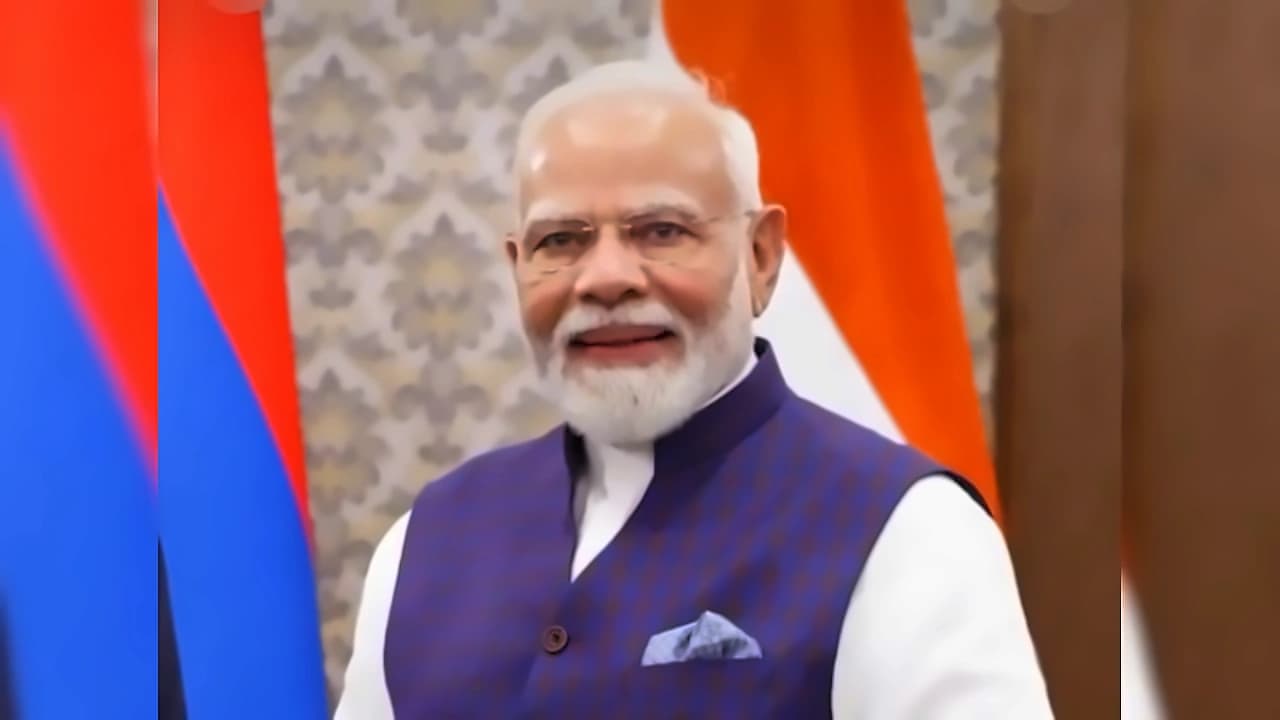
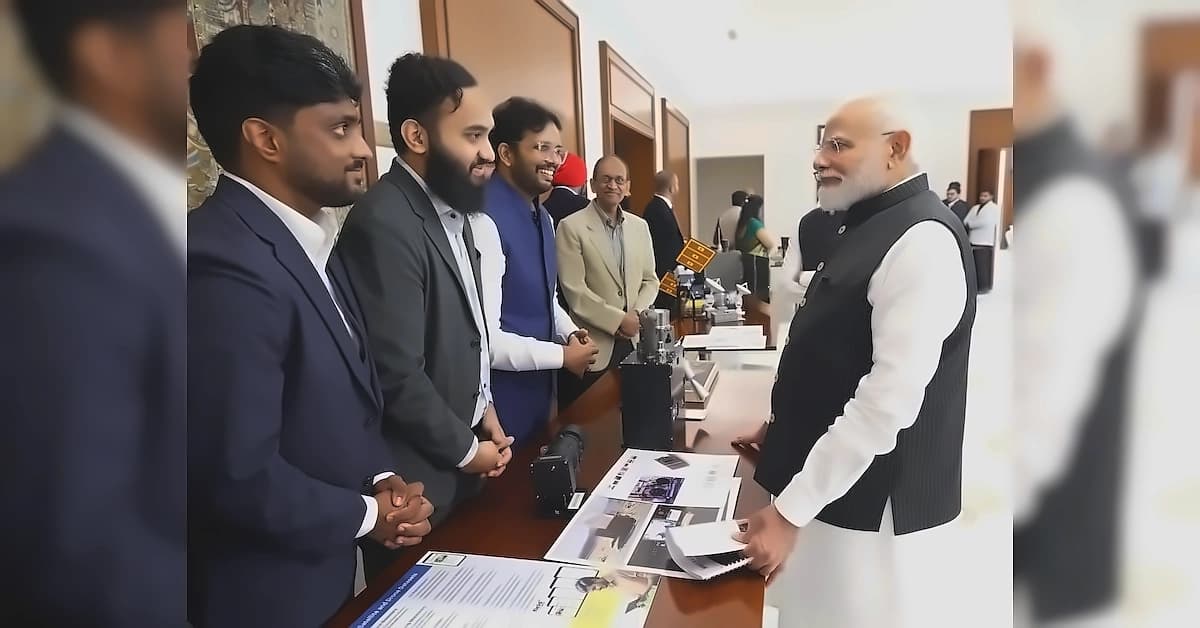
Prime Minister Narendra Modi called for the next phase of India's UPI expansion to go beyond making the payment system available overseas and focus on linking UPI with domestic payment systems in other countries, speaking at the Global Fintech Fest 2026 in Mumbai on Tuesday. As per The Hindu BusinessLine, Modi emphasized that India's UPI is live in 11 countries but stressed that this is just the first step, stating "Today, our UPI has reached many countries. However, this is the first step. Our next target should be to connect with the payment systems in those countries." He explained that "This connection we need to build in other markets and countries. Wherever Indians live in large numbers, wherever India trades on a large scale and whichever country is ready to walk alongside us, we will have to connect with every such country." Modi highlighted that India has already achieved this with Singapore, where transactions between both countries happen the way it happens between two localities of same city, and urged the ecosystem to replicate this model globally. Speaking at the Global Fintech Fest 2026, Modi said "Now, we have to go to the next level, and go rapidly."
Despite PM Modi's vision for India's fintech sector, industry data presents a more complex picture with significant funding gaps threatening the sector's next phase of growth. According to Business Standard's Datanomics report, the creation of new fintech companies and startups in India has slowed significantly. After rising from 1,050 in 2017 to a peak of 1,970 in 2021, new launches dropped sharply to 497 in 2025, before recovering slightly to 515 by August 2026. However, India's global presence continues to expand with the country's share of global fintech companies rising from 9 per cent in 2017 to 14 per cent by August 2026. The report reveals that international funding distribution remains heavily concentrated in Western markets, with the United States capturing a dominant 46 per cent share of total global funding in 2025, while India held just 5 per cent. Within the domestic ecosystem, from 2017 to 2026, investment tech led the segment by accounting for 25 per cent of all companies, followed by payments at 14 per cent, and alternate lending at 11 per cent.
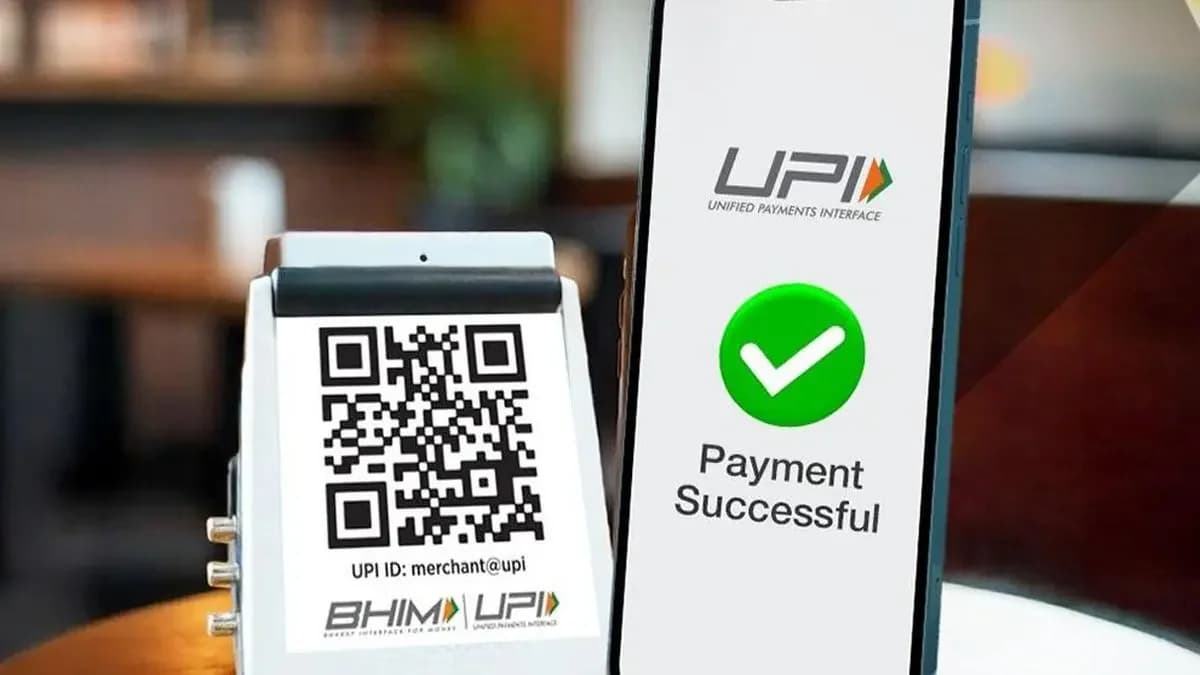
PM Modi highlighted the remarkable growth of UPI over the past decade, with transaction volume surging from 1.78 crore in FY2016-17 to over 24,162 crore in FY2025-26, representing an almost 13,000-fold increase, as reported by Business Standard. The transaction value has risen from ₹0.07 trillion to approximately ₹314 trillion, more than 4,000 times higher over the same period. Modi praised the system's global reach, stating that India's UPI is live in 11 countries of the world, with the system already connected to Singapore's payment system. The International Monetary Fund (IMF) has acknowledged UPI as the world's largest real-time payment system by transaction volume, underscoring India's leadership in building scalable and inclusive digital public infrastructure. Modi noted that French President Macron said that UPI is not just a technology story but a civilisational story, emphasizing that UPI is not restricted to just India and that connecting with payment systems of other countries should be the next goal.
Prime Minister Narendra Modi called for the creation of a Fintech Consumer Protection Index while urging these platforms to work on top-notch cybersecurity standards during his address at the Global Fintech Fest 2026 in Mumbai on Tuesday. Speaking at the four-day conference running from September 8-11, 2026, Modi advocated for ethical data protection standards and a stronger fintech regulatory and industry ecosystem to ensure the financial sector's growth. He emphasized the need for AI-driven fintech solutions to serve gig and blue collar workers as India prepares for its next phase of digital finance transformation. Modi also urged the fintech community to develop top-notch cybersecurity solutions and underlined the need for a fintech regulatory ecosystem and a fintech consumer protection index, which can help rate every company on transparency. As per The Hindu BusinessLine, Modi stated that "We will have to make cyber security top notch in India. Secondly, our industry should have ethical data protection standards. Thirdly, we should have a strong fintech regulator industry innovation ecosystem. Fourthly, we should have fintech consumer protection index on the basis of which every company can transparently rated."
Modi emphasized that deeper integration of payment systems could also help reduce the cost and time involved in remittances sent by Indians working overseas, as reported by Business Standard. He stated that "Indians work in large numbers overseas and it is these Indians who send the maximum money (back to India). But a portion of this money, goes away in form of transaction costs. UPI can help benefit Indians and money can reach quickly to families living back in India." The Prime Minister highlighted that Indians work in large numbers in foreign countries and are the largest remitters of money, with a significant portion of remittances lost as transaction costs. Modi urged the ecosystem not to rest on the laurels of the last decade when UPI became a ubiquitous platform for real-time payments across the country, with the next aim being to expand UPI's reach to countries that are home to a large diaspora, have high trade volumes with India, or are willing to partner with us while connecting the systems. Speaking at the Global Fintech Fest 2026, Modi said "Now we have our own option. Now we can make our own rules and standards and connect them with the world."
The conference comes at a pivotal moment as India prepares for its next phase of digital finance transformation. AI could take India's financial system beyond simply processing transactions, helping assess borrowers, detect fraud, tailor financial products and eventually make payments on behalf of consumers, according to Business Standard reports. Modi highlighted how new technologies such as Agentic AI, tokenisation, and quantum tech have created new opportunities in the sector. This represents a significant evolution from the Unified Payments Interface (UPI) revolution, which has grown from a government-backed experiment into the backbone of India's retail-payments system. Modi also said that after the high number of successes on the payments front over the last many years, the next chapter for the Indian fintech industry should be non-payment transactions. He emphasized that the fintech market needs to increase the share of credit transactions, insurance, savings, investments alongside payments that occupy the largest share, as reported by Business Standard. Speaking at the Global Fintech Fest 2026, Modi said "The next chapter of fintech will be written here" and called on the sector to focus on next-generation innovation while retaining the core strengths of scale, scope, secure systems, democratisation of technology and public trust.