The government has introduced a 0.4% Merchant Discount Rate (MDR) on specified merchant UPI payments above ₹2,000, while fuel transactions above the threshold will attract a flat ₹5 MDR from October 15, 2026. According to reports from NDTV Profit, Zee News, ANI, Mint, and Business Standard, the All India Petroleum Dealers Association (AIPDA) has written to Finance Minister Nirmala Sitharaman seeking an exemption from MDR on UPI payments at petrol pumps, irrespective of transaction value. The association's President, Ajay Bansal, wrote a letter to the Finance Minister on Wednesday seeking intervention on payment processing costs. Frequently asked questions (FAQs) released by the National Payments Corporation of India (NPCI) on Tuesday explained that fuel purchases made at petrol stations via UPI qualify for the flat concessional rate of ₹5 for payments over ₹2,000, while payments below ₹2,000 will continue to carry zero MDR. The revised UPI MDR framework will come into effect on October 15, 2026, giving banks, fintechs, payment aggregators and merchants time to update their systems. The United Petroleum Dealers Association (UPDA) wrote to the Central Government and relevant institutions on September 16, seeking to keep petrol pumps entirely outside the UPI MDR framework, as reported by multiple sources.
AIPDA argues that petrol and diesel dealers operate on prescribed margins and cannot increase selling prices to recover digital payment costs. As reported by NDTV Profit, Zee News, ANI, Mint, and Business Standard, the association stated that dealer margins have remained largely unchanged since October 2017, while expenses such as wages, electricity and regulatory compliance have increased. The association emphasized that dealer margins are determined by Oil Marketing Companies (OMCs) under the guidance of the Ministry of Petroleum and Natural Gas and are primarily fixed on a per-litre basis, rather than as a percentage of the transaction value. The letter noted that dealers therefore have no mechanism to increase their earnings in proportion to the value of a transaction, making even a ₹5 charge on each eligible UPI transaction a substantial cumulative impact. UPDA said petrol and diesel prices cannot be fixed arbitrarily at the dealer level. The selling price of fuel and dealer commission are determined under an established system, as a result, dealers cannot recover the ₹5 charge on UPI payments above ₹2,000 by adding it to the customer's bill. Uttar Pradesh-based dealer Hemant Sirohi, who is a member of the Empowering Petroleum Dealers Foundation (EPDF), calculated that country-wide petrol pumps undertake 23.9 million such payments worth ₹1,573 crore, with about 20% of such transactions above ₹2,000, having a financial implication of ₹230-250 per day on a petrol pump. The introduction of E20 petrol has created fresh operational challenges for dealers, with many existing retail outlets requiring substantial investment to upgrade infrastructure to handle higher ethanol-blended fuels. Dealers have reported concerns relating to storage, handling, equipment compatibility and material durability, along with inadequate financial and technical support, while limited public awareness regarding E20 compatibility with vehicles has further contributed to operational difficulties and customer concerns.
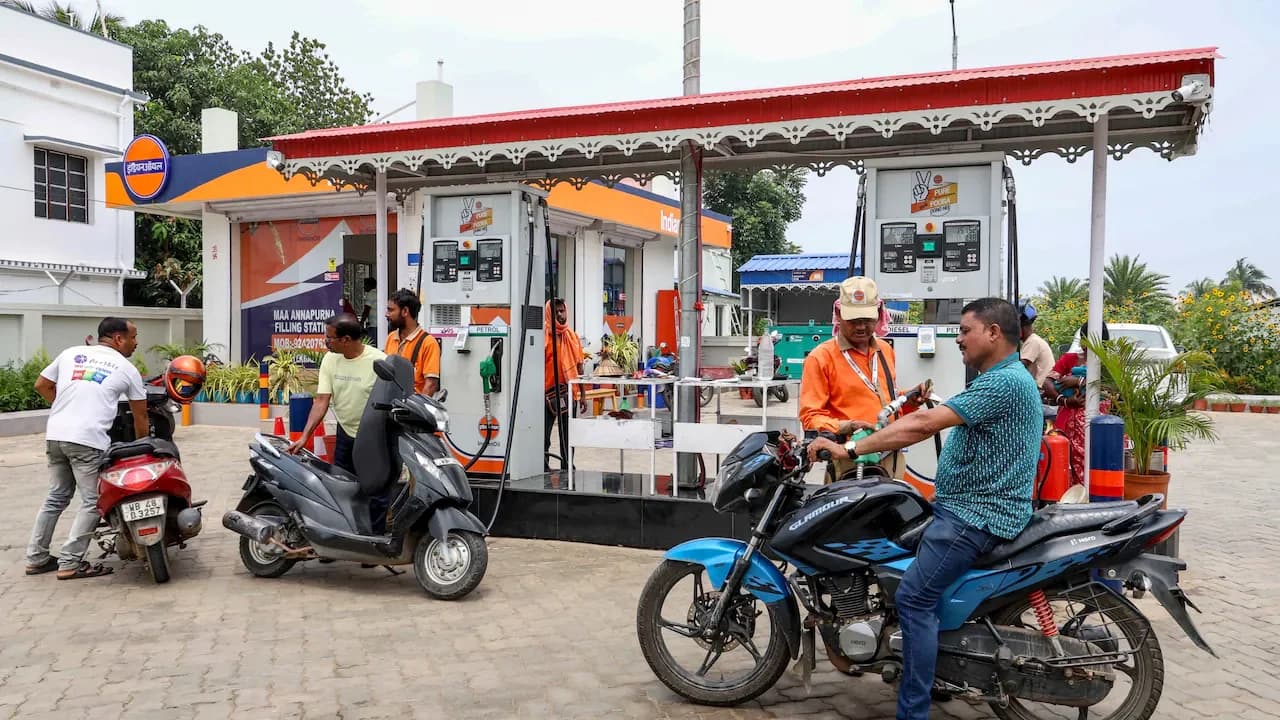
The rapid proliferation of retail outlets has created significant operational challenges for petroleum dealers. As reported by The Hindu BusinessLine, Tom Scaria, general secretary of UPDA, stated that the resulting market saturation in several regions has reduced per-outlet sales volumes, with the impact particularly severe in rural and semi-urban areas where limited demand may not be sufficient to sustain multiple outlets. This has threatened the economic viability of existing dealerships, with a number of dealers having subsequently closed their businesses. The combined impact of stagnant dealer commissions, rising operating expenses, declining sales volumes caused by excessive outlet expansion, challenges associated with E20 fuel, and the proposed MDR on UPI transactions has placed petroleum dealers under considerable financial pressure. Labour costs have increased because of statutory wage revisions and compliance requirements, while electricity expenses have escalated with the growing use of automated systems and equipment.
Senior officials from the Ministry of Petroleum and Natural Gas (MoPNG) held meetings with the All India Petroleum Dealers Association (AIPDA) on Thursday to discuss the dealers' demand for exemption from the merchant discount rate (MDR) on UPI transactions. According to Zee News, representatives of the All India Petroleum Dealers Association met senior officials of the Ministry of Petroleum and Natural Gas on Thursday to discuss their demand for exemption from the merchant discount rate (MDR) on UPI transactions on fuel sales at petrol pumps. The dealers' body said in a statement that the issue was discussed with senior officials of the Petroleum Ministry as the additional MDR cost could put pressure on dealer margins, as retail fuel sales are made on prescribed commissions. During the meeting, oil ministry officials explained the rationale behind introducing MDR and how the mechanism could support the development of the next layer of India's UPI digital infrastructure. AIPDA said its concerns were addressed during the discussions and it expects the dialogue with the government to continue. "We look forward to continuing the dialogue towards a mutually beneficial solution for consumers, petroleum dealers, and all stakeholders in India's UPI ecosystem," the body stated. The association noted that petroleum dealers have been at the forefront of adopting digital payments and have worked closely with the Government to promote their use across the country.
A key concern for dealers is the inadequacy of dealer commissions over the past decade. UPDA states that over the past nine years, dealer commission has increased by only around 30 paise per litre, which it considers disproportionately low compared with the substantial rise in operating costs. Despite their crucial role in ensuring uninterrupted fuel supplies across the country, petroleum dealers are increasingly finding it difficult to sustain operations amid these structural constraints. UPDA has therefore called for urgent policy attention to address these concerns and safeguard the economic viability of petroleum dealerships, with the association demanding "complete exemption of all petroleum retail outlets from any MDR, flat per-transaction fee on UPI (and any other digital) payments, irrespective of transaction value".