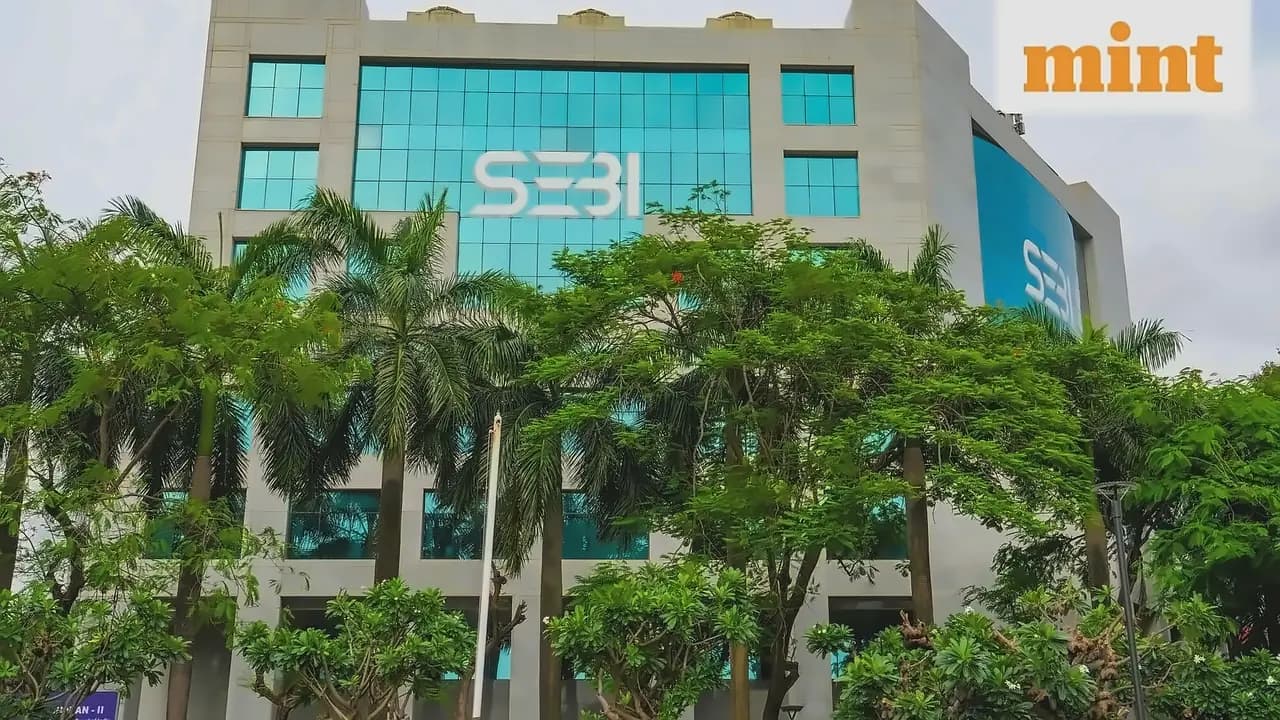
The Securities and Exchange Board of India (Sebi) will examine concerns raised by stockbrokers over the merchant discount rate (MDR) on UPI transactions, chairman Tuhin Kanta Pandey announced on Thursday. Speaking at the National Bank for Financing Infrastructure and Development (NaBFID) - Infrastructure Conclave 2026, Pandey stated "I think there are some important issues there. We will certainly look into it and see how we can ease them." The chairman's comments come after the National Payments Council of India (NPCI) introduced charges on UPI payments above certain thresholds on Tuesday. The new framework, effective from October 15, mandates a 0.4% fee on person-to-merchant (P2M) UPI transactions above ₹2,000, with transactions of ₹75,000 and above capped at ₹300 per transaction. Capital-market transactions, involving mutual funds, securities and brokers, will attract an MDR of 0.02%, also capped at ₹300. However, recurring standing instructions or UPI mandates, such as those for mutual fund SIPs, will not carry MDR charges.

Stockbrokers have approached Sebi to object to the proposed rule changes, arguing that the new formula doesn't reflect operational reality. As reported by The Hindu BusinessLine, brokers have raised concerns that the levy could disproportionately increase their costs since money transferred by a client to a broking account does not necessarily result in a trade. The BSE Brokers' Forum has taken up the matter with the regulator, with the issue discussed in the Intermediary Advisory Committee (IAC) meeting on September 11. According to sources familiar with the matter, the problem is compounded by quarterly settlement regulations that force brokers to return unused funds to clients monthly, with more than half of these transfers happening through UPI. "10,000 customers could each make 50 UPI transfers of ₹2 lakh in a month without executing a single trade. At the proposed MDR, this could potentially cost the broker around ₹2 crore, without generating any business," as noted by industry sources. Zerodha founder Nithin Kamath highlighted the complexity, stating "The problem with broking is that there is no guarantee that money transferred to a broker will actually result in a transaction. As brokers, we can't force a customer to trade after transferring money."
The Securities and Exchange Board of India (Sebi) has proposed significant changes to the variable net worth requirements that brokers must maintain as a buffer against client business risks. According to reports from Mint, the current cushion is set at 10% of the average daily cash balance that brokers hold on behalf of clients. Under the new consultation paper issued in April 2026, this formula would be replaced with 10% of clients' average credit balance over the previous six months, plus an additional amount based on active client count. The proposed changes would also introduce a component requiring brokers with more than 10,000 and up to 50,000 direct active clients to maintain an additional ₹50 lakh of net worth.
The implementation of UPI merchant discount rate (MDR) is creating additional operational challenges for brokers beyond the proposed net worth changes. As reported by MediaNama, brokers are facing higher transaction costs that could impact their business models. "Transfer ₹1 lakh to them, and they will pay ₹20 MDR. If you do one transaction with it – most brokers will typically charge you ₹20 per transaction – the broker makes zero profit on that transaction." The problem is compounded by quarterly settlement regulations that force brokers to return unused funds to clients monthly, with more than half of these transfers happening through UPI. "10,000 customers could each make 50 UPI transfers of ₹2 lakh in a month without executing a single trade. At the proposed MDR, this could potentially cost the broker around ₹2 crore, without generating any business." Payment processing partners indicate that some brokers may prefer net banking over UPI, considering that net banking transactions have a flat fee of around ₹8 to ₹12 negotiated between banks and payment processing partners.
The impact could be more pronounced for discount brokers, where brokerage on some transactions is already very low or nil. As reported by The Hindu BusinessLine, passing this charge to clients is not an option under the circular, and discount-broking brokerage can itself be lower than the MDR, absorption is expected to directly impact margins and could adversely affect low-cost offerings. The industry is also advocating for standardized UPI fees of ₹2 per transaction or less for investment transactions, arguing that the current MDR structure is not proportionate to the actual costs involved. Industry experts are proposing an alternative framework that would link variable net worth to operational scale and risk exposure rather than relying solely on client cash balances. As reported by Mint, Raj Shah, executive director at EPP Securities, suggested a risk-based formula that considers aggregate client funds handled, active client count, trading volumes, leverage and exposure, and the nature of services offered.