RBI Deputy Governor S C Murmu has dismissed concerns that the introduction of Merchant Discount Rate (MDR) on UPI transactions above ₹2,000 will trigger a shift back towards cash payments. Speaking at an event organised by the Bengal Chamber of Commerce and Industry in Kolkata, Murmu said the apprehension that merchants or users could gravitate towards cash after the MDR introduction was unlikely to persist. "I don't think this will have any impact, unlike some voices about whether cash will go up because of this MDR on UPI," Murmu stated. He acknowledged that the change represented a significant shift in how costs associated with the payments ecosystem would be recovered, but emphasized that this should not materially increase cash usage. "Because it is a major shift in terms of how basically you are recovering the cost. So, that's why it may be apprehension only. I don't think this will have any impact," Murmu explained. The Deputy Governor also highlighted the cash paradox - while digital payments are growing rapidly, currency in circulation continues to rise at a healthy pace, even in rural and semi-urban areas among low-income groups and small businesses.
The Reserve Bank of India has endorsed the government's decision to introduce Merchant Discount Rate (MDR) charges on select large-value UPI transactions, stating the move will strengthen the long-term sustainability of India's digital payments ecosystem. According to the RBI's statement, the central bank emphasized that "the introduction of MDR on large-value UPI transactions (i.e., above ₹2,000) is an important step towards strengthening the long-term sustainability of India's digital payments ecosystem." The RBI noted that a fair distribution of MDR among participants in the payments ecosystem would support continued investment in technology, infrastructure and payment acceptance networks, enabling wider UPI acceptance and sustained growth in transaction volumes. Importantly, the RBI clarified that UPI users will not be charged MDR, with the charge remaining within the merchant payment ecosystem. As per the RBI, "MDR will help UPI in continuing to scale, innovate and serve consumers and businesses across the country. A fair and appropriate distribution of MDR across ecosystem participants will support continued investment in technology, infrastructure and acceptance networks."
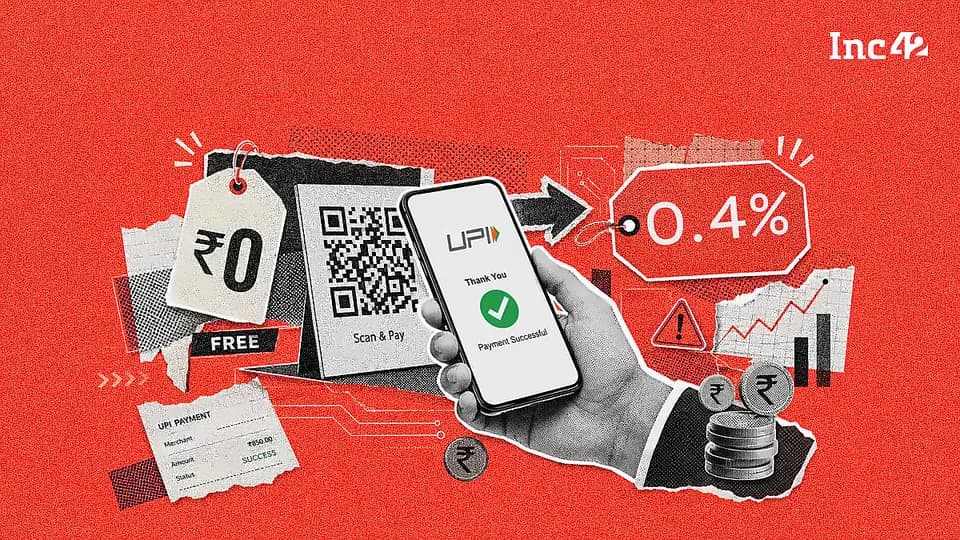
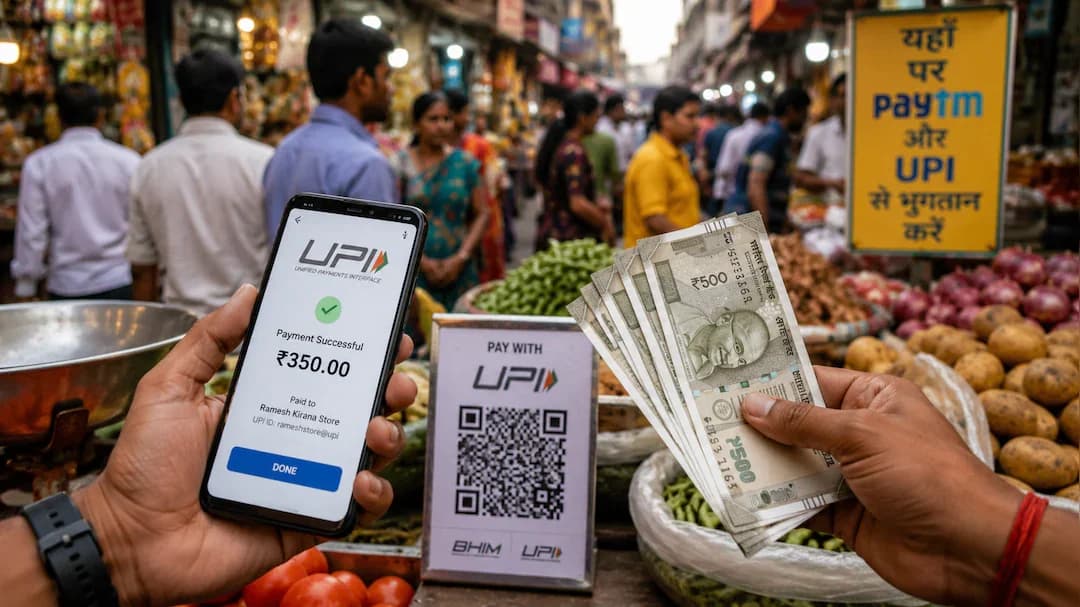
The government has established a 0.4 per cent charge on UPI payments above ₹2,000 to merchants and has capped the fee at ₹300 for payments of ₹75,000 and above. As reported by Banking Standard, this framework will apply to specified person-to-merchant (P2M) UPI transactions from October 15. The move represents the end of the zero-MDR regime that has been in place since January 2020. The revised framework will apply only to specified merchant transactions above ₹2,000, with person-to-person (P2P) transactions remaining free irrespective of the amount and P2M transactions up to ₹2,000 also remaining outside the MDR framework. A flat MDR of ₹5 will apply to transactions above the threshold in sectors such as railways, telecommunications, insurance and fuel. The MDR framework covers regulated capital market entities, including mutual fund asset management companies (AMCs), SEBI-registered stockbrokers, securities dealers and investment platforms. According to Banking Standard, the National Payments Corporation of India (NPCI), which operates UPI, announced that an MDR of 0.4 per cent would apply to P2M UPI transactions above ₹2,000.
Despite the rapid growth in digital payments, currency in circulation (CiC) has shown a significant increase, standing at ₹42.86 trillion at the end of August 2026, up from ₹41.66 trillion at the end of 2025-26 (FY26) and ₹37.24 trillion a year earlier. As per Banking Standard, currency in circulation has been growing at a double-digit pace since December last year, with year-on-year growth at 12.5 per cent as of August-end, compared with 11.84 per cent in FY26, 6.07 per cent in FY25 and 3.93 per cent in FY24. However, as a proportion of gross domestic product (GDP), CiC has been on a declining trend since FY21, when it peaked at 14.4 per cent. After declining for four consecutive years, the ratio saw a slight uptick to 12.1 per cent in FY26. The surge in cash comes amid steady growth in digital transactions, with UPI transaction volume growing 22.5 per cent year-on-year in August, while growth in value terms was nearly 20 per cent. According to Banking Standard, Murmu highlighted that although cash has been replaced by digital payments for transactions, it still remains quite significant as a 'store of value'.
NSE MD and CEO Ashishkumar Chauhan expects the introduction of Merchant Discount Rate (MDR) charges on UPI transactions above ₹2,000 to have an initial impact on transaction volumes. According to reports from Moneycontrol, Chauhan stated that there may be some impact initially on transaction volumes in the short term due to the MDR charges above ₹2,000. However, he expressed optimism that activity would normalise over time, emphasizing that the impact on users and transaction activity is expected to be temporary. "There may be some impact initially on our transaction volumes in the short term due to the MDR charges above ₹2,000. After some time, I hope it normalises," Chauhan said during a media briefing as reported by The Hindu BusinessLine.
Industry participants believe the move is unlikely to dent retail participation in mutual funds. Piyush Jhunjhunwala, Founder and CEO of Stockify, said investors may explore alternative payment modes but do not expect a significant impact on SIP flows. "While some investors may consider alternative payment methods when faced with MDR fees, this possibility is not likely to affect SIP investment volumes unless MDR fees become prohibitively high or easily recurrent," Jhunjhunwala said. The comments come as SIP investments continue to scale new highs. In August, SIP contributions touched a record ₹32,297 crore, while the total number of SIP accounts crossed 10 crore, translating into an average contribution of around ₹3,230 per account. Jhunjhunwala added that investors can easily switch to alternatives such as e-NACH, which enables automated bank debits for recurring investments. "New mandates can be created within a few working days to shift from UPI to bank debits," he said. According to Gibin John, Senior Investment Strategist at Geojit Investments, the larger impact may be on intermediaries rather than investors. "If mutual funds are classified under the merchant category, it could increase the cost of processing SIP and lump-sum investments through UPI," he said, noting that the additional charge would typically be borne by receiving entities such as AMCs rather than investors directly. However, Mint reports that auto-debit recurring payments like utility bills or mutual fund subscriptions will also not carry the prescribed MDR transaction charges, providing further relief to investors.