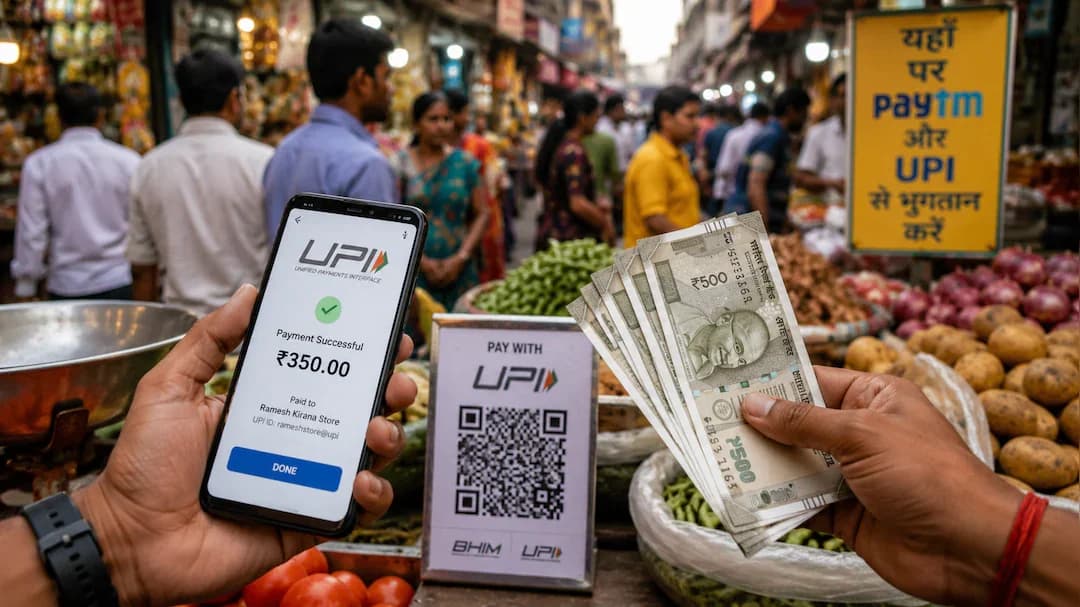
India's digital payments ecosystem achieved a historic milestone in May 2026, with UPI transactions reaching a record ₹29.90 trillion in value and volumes hitting an all-time high of 23.20 billion, according to the National Payments Corporation of India (NPCI). This represents a 19% annual growth from ₹25.14 lakh crore in May 2025, with volume growth of 24% from 18.67 billion transactions in the corresponding period. The growth was driven by summer travel and IPL 2026 excitement, as reported by The Economic Times. Daily transactions also increased to 748 million in May compared to 745 million in the previous month, with the value of transactions at ₹29.03 lakh crore in April against ₹25.14 lakh crore in the same month last year. According to Cashfree Payments co-founder & CEO Akash Sinha, May's numbers reflect strong organic demand with summer travel, IPL 2026, and seasonal consumer spending driving the surge, representing a healthy month-on-month recovery and continuation of UPI's steady upward trajectory.
India's digital payments ecosystem achieved a significant milestone during FY26, with UPI transactions crossing 200 billion and retail digital payments rising 26.9% by volume, according to the Reserve Bank of India's latest annual report. The RBI's Digital Payments Index also continued to rise during the year, while UPI transaction volumes increased 30%. These figures demonstrate the continued expansion of India's digital payments infrastructure and growing adoption across the country, with digital payments becoming part of everyday transactions without necessarily replacing cash holdings. As per The Economic Times, the strong organic demand indicates a maturing digital payment ecosystem with future growth expected from credit-on-UPI and cross-border transactions.
Despite the rapid growth in digital payments, currency in circulation touched fresh highs in May 2026, standing at about ₹42.8 trillion on May 15, up roughly 11.5% from a year earlier and already increased nearly 3% in the opening weeks of FY27, according to RBI data. This contradiction presents a paradox at the heart of India's economy, where UPI recorded its strongest month ever in May 2026 with 23.2 billion transactions worth ₹29.9 trillion. Development economist Jayati Ghosh explained that UPI is strongest in high-frequency, low-value payments — groceries, QR-code merchant transactions, utility bills, peer-to-peer transfers, transport payments and food delivery purchases — where digital payments have clearly displaced large volumes of transactional cash usage. However, a significant share of larger-value and informal transactions continues to rely on cash, helping explain why currency demand remains elevated despite digital payment growth.
The RBI's survey conducted among households and small retail sellers revealed that currency in circulation grew 11.4% in FY26, with the value of banknotes in circulation increasing by 11.9% to ₹41.23 trillion by March 2026. For many households, cash remains a form of financial comfort — easily accessible during emergencies, network outages, medical needs, travel disruptions or banking downtime. Economist Abhirup Sarkar noted that many poor individuals still do not have smartphones and therefore cannot use UPI, while economist Jayati Ghosh highlighted that some people do not want to pay tax and therefore do not want to record their transactions. In smaller towns and semi-urban areas, consumers may receive income digitally but continue using cash for local purchases where acceptance infrastructure remains inconsistent. India's labour-market structure remains another major reason cash demand remains resilient, with more than half of India's workforce remaining self-employed, though the share declined from 58.2% in 2023 to 56.2% in 2025, according to the latest Periodic Labour Force Survey.
Economists caution against interpreting rising currency levels in isolation, as India's economy expands, total transaction volumes rise across both digital and physical channels. The cash-to-GDP ratio declined to 11.1% in FY25 from 11.5% in FY24 and remained well below the pandemic peak of 14.4% in FY21, indicating that cash's importance relative to the size of the economy has moderated. As per economist Abhirup Sarkar, when India has reasonable growth, the demand for cash is likely to increase, as RBI or the government do not control cash in circulation — it's driven by demand. Looking ahead, credit-on-UPI is still in early innings and represents a significant new volume pool, while cross-border UPI is live in over eight countries and expanding. UPI is already operational in seven countries including the UAE, Singapore, Bhutan, Nepal, and Mauritius, as reported by The Economic Times. The combination of digital payments becoming part of everyday transactions without necessarily replacing cash holdings represents a significant shift in how Indians use money, with households appearing to rely on both cash and digital payments simultaneously.