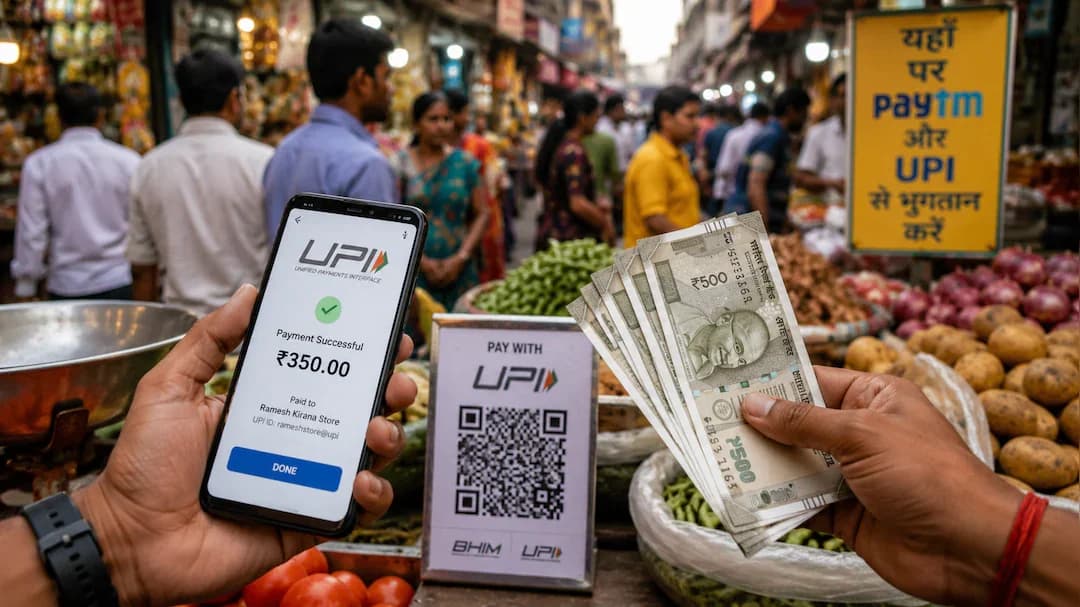
India's digital payments ecosystem achieved remarkable growth in April 2026, with 22.35 billion transactions processed, representing a 25% year-on-year increase according to data released by the National Payments Corporation of India (NPCI). The total transaction value reached ₹29.03 lakh crore, marking a 21% annual growth. On a daily basis, the average number of transactions saw a notable increase to 745 million in April (from 730 million in March), while the average daily transaction value rose to ₹96,766 crore from ₹95,243 crore in the previous month. The IMPS monthly volumes stood at 362 million with ₹7.01 lakh crore in transaction amount, showing a 13% year-on-year growth with average daily transactions at 12.08 million.
India's Unified Payments Interface (UPI) has reached a record ₹314 lakh crore in transaction value in FY26, marking a more than 4,000-fold increase since its launch in 2016. According to the finance ministry, UPI processed over 24,162 crore transactions in FY 2025-26, representing an almost 12,000-fold surge in transaction volume from just 2 crore transactions in FY 2016-17. The platform now processes approximately 60 crore transactions daily and has witnessed steady expansion with 703 banks participating by FY 2025-26, up from 44 banks in its first year of operations. In March, UPI had registered its highest-ever monthly transaction volume at 22.64 billion, since its launch in 2016.
UPI has significantly expanded its global footprint, now live in more than eight countries, including the UAE, Singapore, Bhutan, Nepal, Sri Lanka, France, Mauritius and Qatar. According to NPCI data, UPI's growing international adoption is boosting remittances, promoting financial inclusion, and strengthening India's position in the global fintech landscape. The platform's international expansion has been recognized by the International Monetary Fund (IMF), which has recognized UPI as the world's largest real-time payment system by transaction volume. This global recognition further reinforces India's standing as a global leader in digital payments infrastructure.
Early-stage fintech investors in India are pivoting away from consumer-facing models that are heavily regulated and toward software and infrastructure businesses that promise steady growth with minimal policy risk. According to reports from Mint, funds are increasingly backing software, infrastructure and B2B fintech models with AI that are less exposed to regulatory shocks. This shift follows a reset between 2021 and 2025, when tighter rules on digital lending, first-loss default guarantees and data governance curbed growth and raised compliance costs, pushing investors to favor B2B models over balance-sheet lenders.
According to an April report by neobank Jupiter-backer QED Investors and consulting firm McKinsey, investors globally are either favoring select scaled profitable fintechs or early-stage startups with differentiated AI-led narratives, while mid-stage firms face a funding squeeze. The report added that horizontal fintechs (software firms) that are helping incumbents digitise operations now account for 13% of global fintech revenues. Such horizontal fintechs have grown 25% faster than those directly competing with financial-services players over the past four years. Investors have become selective toward firms that have adapted well to regulatory changes, with those attracting 'patient capital' today being the ones that can navigate regulatory complexities effectively.
According to Beams' Agarwal, the pull for B2B solutions will remain high as BFSI players continue to digitise their operations, strengthen their risk frameworks, and keep pace with RBI's evolving regulatory expectations. Peak XV Partners, which has backed regulated lenders, payments and insurance firms across stages, remains active in all areas of fintech but sees more activity in infrastructure and banking SaaS. The firm's latest Surge cohort's fintech picks are focused on wealth-tech, treasury software, investment rails and insurtech rather than direct lending or payments, reflecting the broader shift toward less capital-intensive, recurring-revenue software businesses. UPI's scale, interoperability, and reliability have positioned India as a global leader in digital public infrastructure, with government assessments highlighting its increasing relevance for higher-value transactions beyond small retail payments.