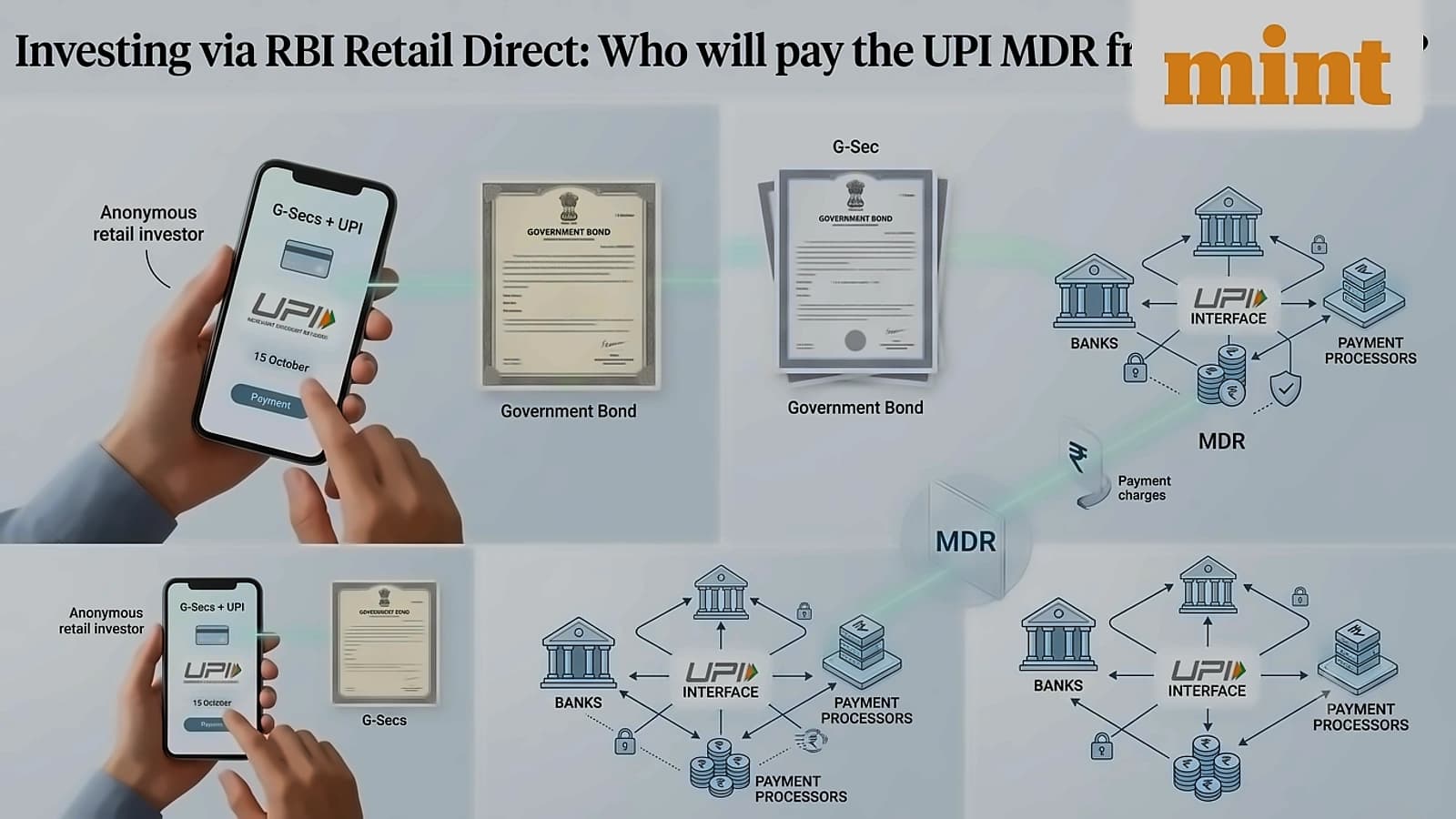
The new UPI fee framework reveals a clear revenue distribution pattern favoring banks with extensive customer bases. Banks with the largest number of bank accounts will be the biggest gainers as they will receive the lion's share of the fees. Using debit cards as a proxy for savings accounts, SBI emerges as the clear leader with a 25% market share, followed by Bank of Baroda (8%), HDFC Bank (6.2%), Canara Bank (5.9%) and Union Bank (5.6%). For every ₹2,000 paid, the merchant will pay ₹8 as fees, with the revenue split as follows: the issuing bank (from whose account money will be paid) will get ₹3.2 as fees, while the bank that receives the payment (the acquiring bank) will get ₹2.4. Third-party payment apps will receive a smaller share, with the remaining ₹2.4 distributed as ₹1.6 to the app and ₹0.8 to the processing bank. This distribution ensures that third-party apps will receive a smaller share but the MDR will make the biggest difference to them as their business model suddenly becomes sustainable without having to look for alternative revenue streams.
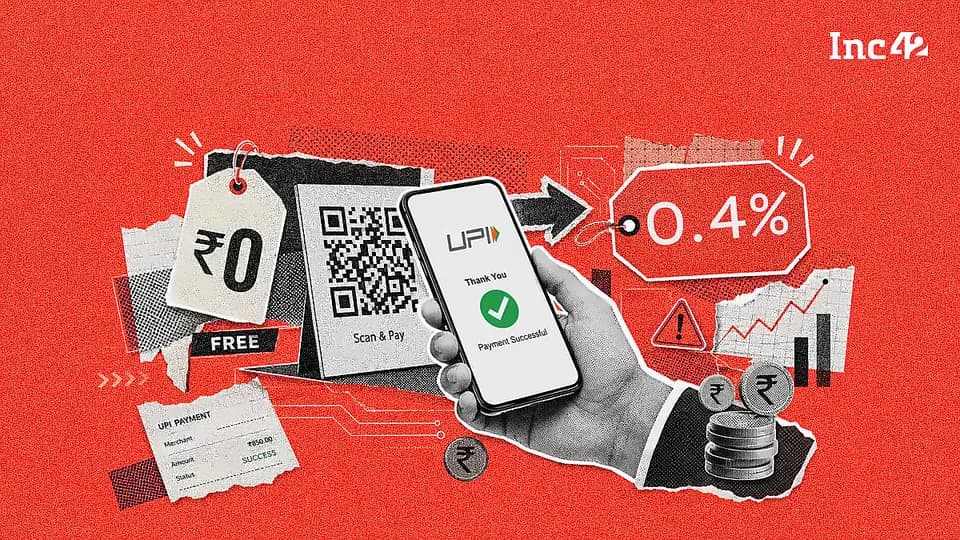
The revised UPI fee framework will come into effect from October 15, 2026, introducing a 0.4% MDR charge for direct account-to-merchant-account UPI transactions above ₹2,000, subject to a cap of ₹300 per transaction. As reported by government sources, a flat ₹5 MDR will apply to select transactions above ₹2,000, while other P2M UPI transactions above ₹2,000 will attract the 0.4% charge. Select categories such as railways, telecom services, insurance and fuel will attract the flat ₹5 MDR on UPI payments above ₹2,000. A separate, much lower MDR of 0.02% will apply to capital-market-related UPI payments, including transactions involving mutual funds, securities, stock brokers and dealers, with the same ₹300 per transaction cap. For transactions of ₹75,000 and above, MDR will be capped at ₹300 per transaction, providing additional protection for high-value transactions. The differentiated rates are intended to account for the varying nature and economics of different merchant payment categories, with the new framework expected to have a relatively limited impact on the overall UPI ecosystem.

The new UPI MDR framework compares favorably with traditional payment methods for eligible transactions. For transactions above ₹2,000, UPI's 0.4% MDR is below the 0.9% maximum applicable to larger merchants for debit-card acceptance through physical POS or online channels. A ₹10,000 UPI payment would cost ₹40 in MDR, while the same transaction using debit cards at the 0.9% ceiling could cost up to ₹90. Credit cards typically carry higher merchant charges, with NPCI citing standard credit-card MDR at 1.5-2.5%, making a ₹10,000 credit-card transaction cost ₹150-250 in MDR. For larger transactions, UPI becomes particularly cost-effective - a ₹1 lakh UPI payment costs ₹300 in MDR under the new framework, compared to up to ₹900 at the 0.9% debit-card ceiling and ₹1,500-2,500 at credit-card rates.
Industry leaders view the new MDR framework as essential for UPI's long-term financial sustainability rather than creating windfall profits. Vishwas Patel, managing director and CEO of AvenuesAI and chairman of the Payments Council of India, stated that "PCI has consistently maintained that UPI needs a sustainable economic model to support its scale. The introduction of 0.4% MDR on P2M transactions above ₹2,000, with a ₹300 cap on transactions of ₹75,000 and above, is an important step towards a viable economic model while keeping UPI free for consumers." Industry estimates peg the annual cost of running UPI infrastructure at around ₹20,000 crore, suggesting that the proposed levy is largely aimed at funding ecosystem maintenance rather than materially boosting profitability. The policy note argues that government incentives were designed as bridge funding and cannot provide a permanent financing mechanism for a payment system operating at UPI's scale.
The framework provides separate zero-MDR treatment for small merchants under the P2PM category, with merchants receiving up to ₹1 lakh a month through UPI QR codes remaining protected from MDR. The government confirmed that existing QR codes will continue to work and small merchants will not have to replace or re-register their QR infrastructure. If a merchant's UPI collections exceed ₹1 lakh a month consecutively for three months, the merchant can be transitioned from the P2PM category to the P2M category. All P2P UPI transfers, including sending money to family and friends or transferring money between one's own accounts, will remain free, with no monthly quota or fee threshold for individual users. This bridges informal street vendor setups with formal merchant acquiring accounts, promoting digital adoption in the unorganised sector, with the government noting that banks have been advised to ensure that merchants do not pass on the MDR charges to customers. Most UPI transactions will remain unaffected, with around 4% of merchant transactions expected to come within the scope of the new MDR structure, while more than 95% of UPI person-to-merchant payments will continue without MDR.