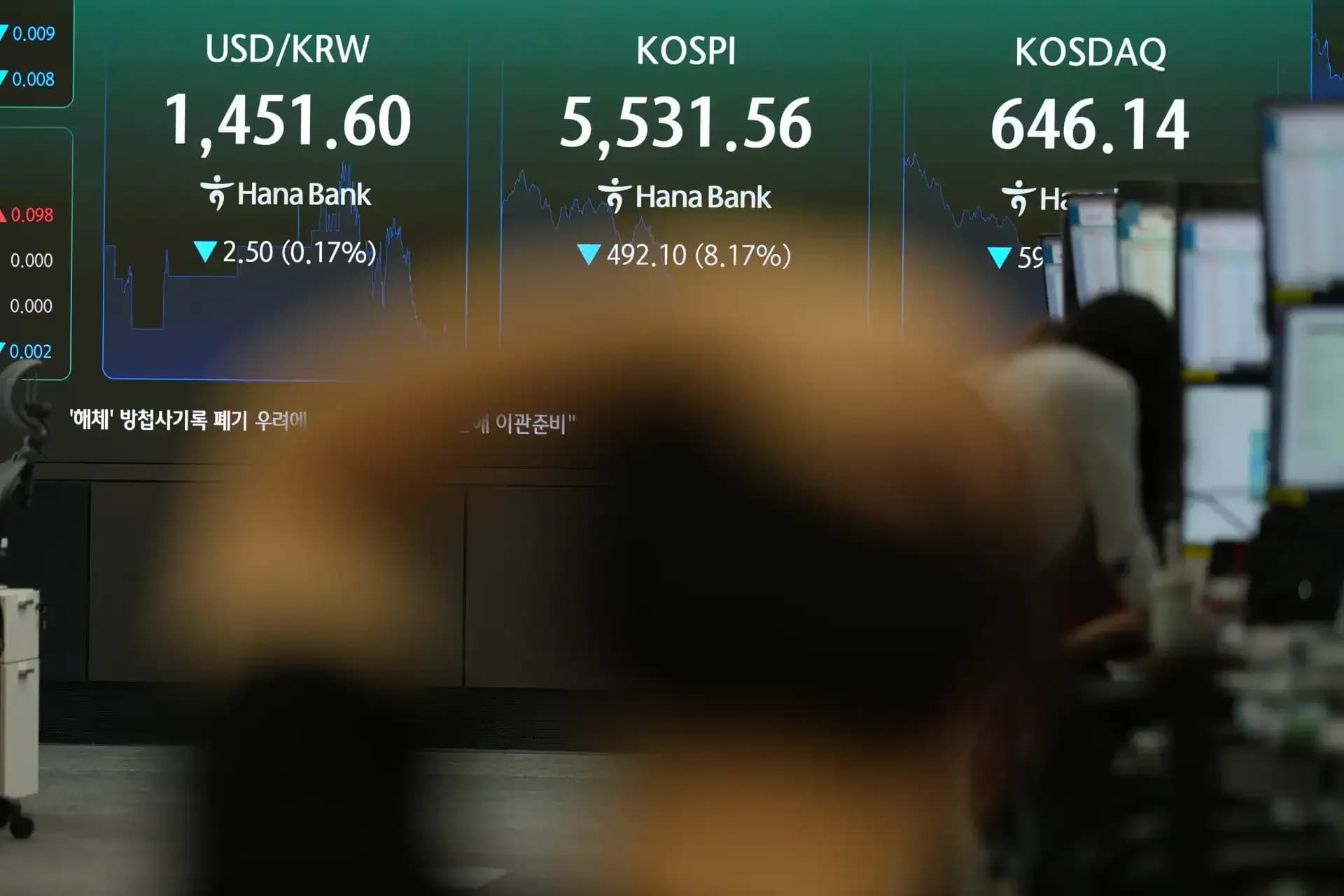
Nithin Kamath, co-founder of Zerodha, has issued a stark warning about the growing risks posed by margin trading facility (MTF) exposure across Indian brokerages. According to reports from The Economic Times, Kamath stated that MTF books continue to expand aggressively even though Indian equity markets have largely moved sideways in recent months. He contrasted this situation with markets such as South Korea, where investors borrowed heavily during a sharp rally, noting that 'This isn't like the Korean markets, for example, where the markets are up 150% in the last year alone, and people are borrowing to ride that rally.'

Kamath has provided detailed examples of how leverage can amplify losses in MTF trading. As reported by The Economic Times, he explained that investors can create extremely dangerous structures by using pledged shares as collateral for even bigger leveraged positions. 'A customer pledges Stock A, gets 80% margin on it, and uses that to take further positions worth 400% in the same stock,' Kamath said. The risk becomes particularly acute when investors use pledged shares as collateral to build even bigger leveraged positions in the same stock, creating what he describes as 'a customer pledging Stock A, getting 80% margin on it, and using that to take further positions worth 400% in the same stock.'
Kamath identified the primary risk as illiquidity during market declines, explaining that brokers may struggle to liquidate pledged stocks quickly enough to recover borrowed amounts. As reported by The Economic Times, he stated that 'The big risk with MTF is the risk of the stock becoming illiquid in case there's a sharp market fall.' He provided an example of how leverage can amplify losses: 'If a stock moves more than the margin provided, say 20%, the bad debit is on the broker.' The risk becomes particularly acute when investors use pledged shares as collateral to build even bigger leveraged positions in the same stock.
According to Kamath's analysis reported by The Economic Times, nearly 50% of the industry's MTF exposure currently lies in non-futures-and-options stocks, a segment generally considered less liquid compared with large-cap F&O counters. He revealed that Zerodha's own MTF book has increased significantly over the past 16 months but remains around 25% of the company's net worth. However, for some brokers, MTF exposure may be as high as 500% of net worth, which is currently the maximum limit allowed by regulators. The comments come at a time when India's cash market volumes have slowed after last year's strong rally, while leveraged trading products including derivatives and MTF continue to see elevated activity.
Kamath highlighted specific dangers in mid-cap and small-cap segments, where lower liquidity and circuit filters can prevent brokers from exiting positions during market stress. As reported by The Economic Times, he explained that 'If that stock is a mid or small-cap stock, circuits kick in, and there's simply no exit if markets turn around.' The comments come at a time when India's cash market volumes have slowed after last year's strong rally, while leveraged trading products including derivatives and MTF continue to see elevated activity. The situation becomes particularly concerning when these stocks face sudden market declines, as circuit filters can prevent brokers from exiting positions even when investors want to liquidate their holdings.
According to Kamath's statements reported by The Economic Times, while Zerodha still does not allow customers to use collateral margin for MTF purchases, competitive pressure in the industry may eventually force changes. He acknowledged that 'While we still don't allow collateral margin for buying MTF, competitive pressure would mean we will have to.' The warnings come as MTF has grown rapidly over the past two years as retail participation in equities surged and investors increasingly used leverage to amplify returns, especially in mid-cap and small-cap stocks. The product has grown rapidly over the past two years as retail participation in equities surged and investors increasingly used leverage to amplify returns, creating what Kamath describes as a major systemic risk for India's stock market ecosystem.