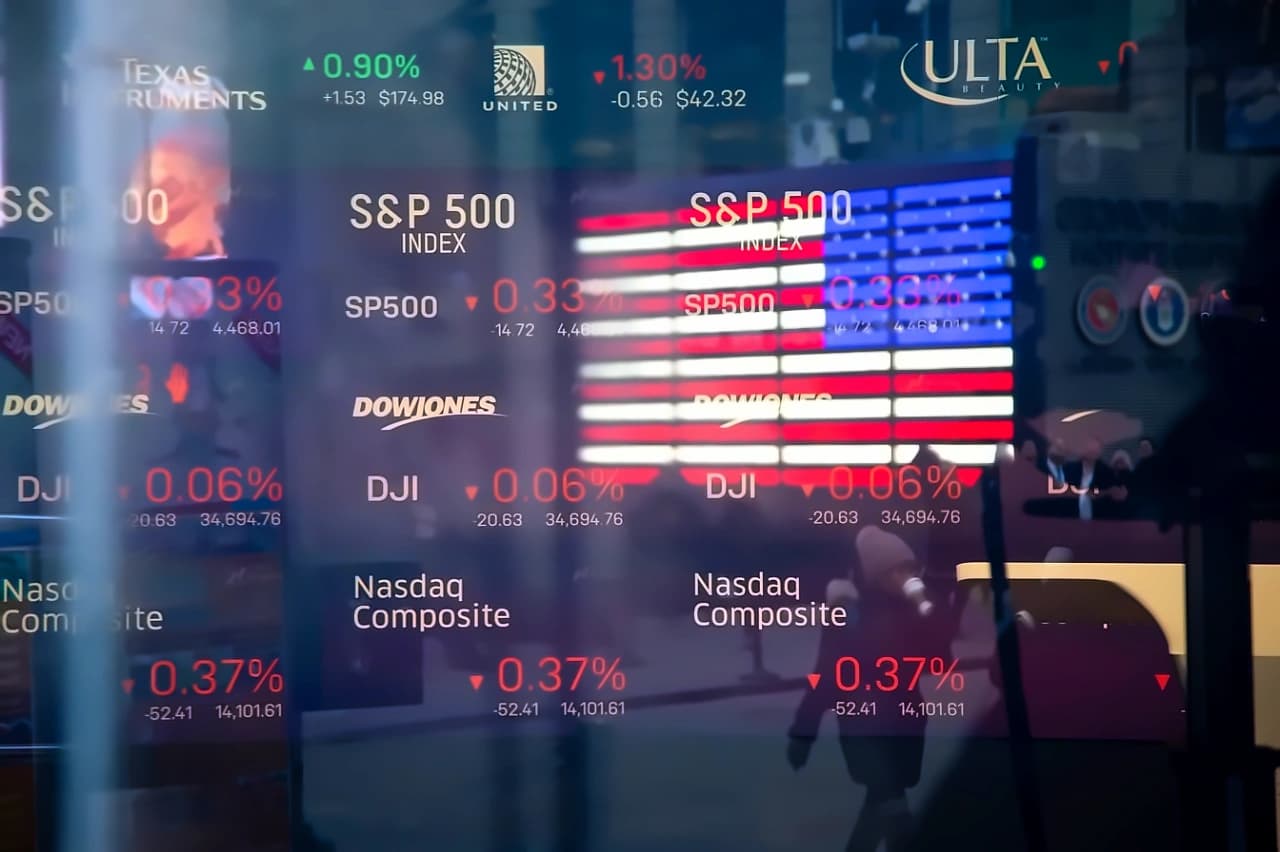
Wall Street's three main indexes closed slightly higher after Thursday's choppy session, with oil prices losing ground as investors focused on potential progress in U.S.-Iran peace talks. According to Reuters, the Dow Jones Industrial Average rose 276.31 points, or 0.55%, to 50,285.66, marking a record closing high that topped its previous record of 50188.14 set on February 10. The S&P 500 gained 12.75 points, or 0.17%, to 7,445.72, while the Nasdaq Composite advanced 22.74 points, or 0.09%, to 26,293.10. After spending the morning in the red, stocks clawed their way back to gains in afternoon trading as oil prices shifted from a rally to a decline. Oil prices fell on reports of an agreement between the US and Iran and after Secretary of State Marco Rubio said there were "some good signs" that a deal to end the war in Iran could be in sight. The Reuters report regarding Iran's refusal to compromise on uranium exports had initially dampened hopes of a peace deal, but the subsequent progress in talks helped stabilize market sentiment.
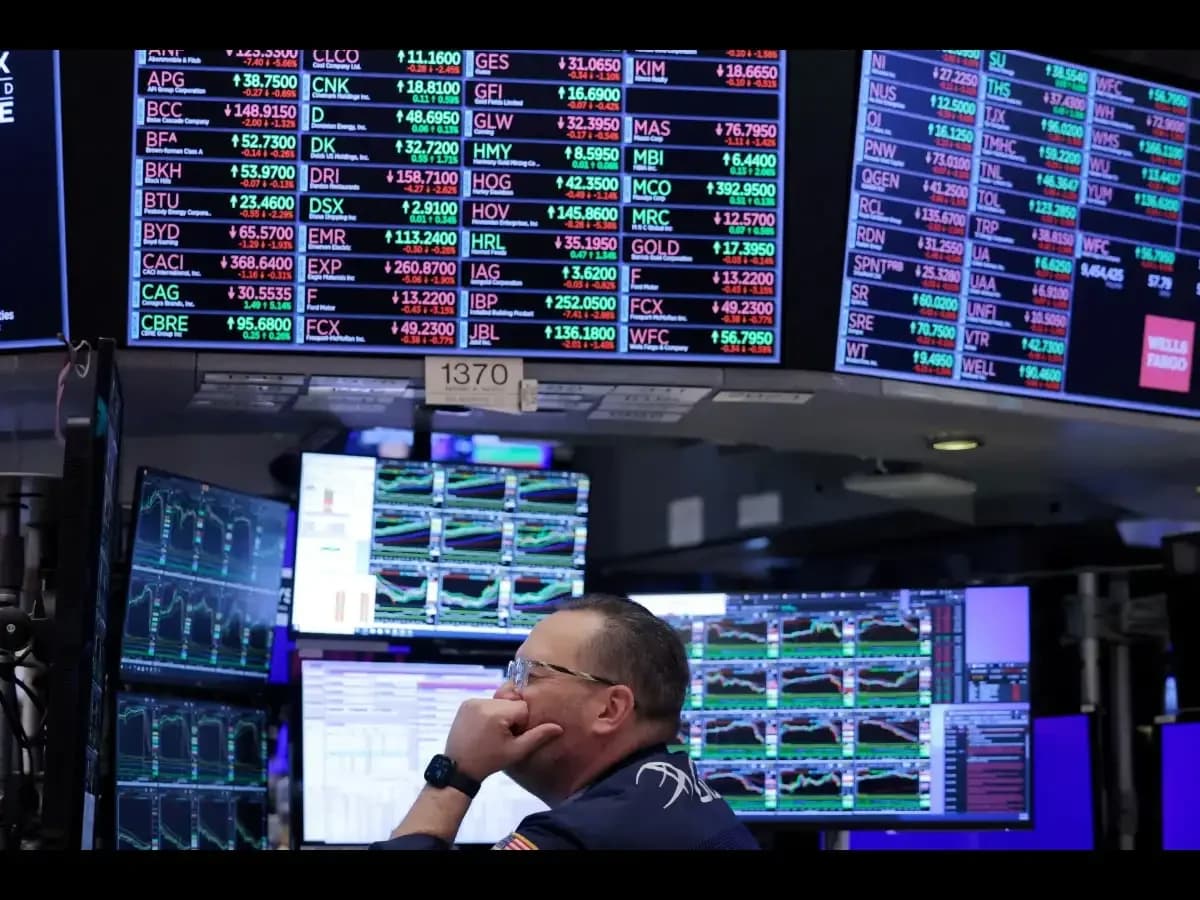
Hopes that the end of the war could be on the horizon emerged after Iranian media said a finalized deal that would guarantee passage through the Strait of Hormuz and implement a ceasefire would be announced imminently. According to Reuters, the US and Iran have reached an agreement, mediated by Pakistan, that includes a full ceasefire, "freedom of navigation" in the Persian Gulf and Strait of Hormuz, and a gradual lifting of economic sanctions on Iran, the Iranian semi-official news agency ILNA said in a post on Telegram. While the post from the ILNA made no mention of Iran's nuclear enrichment program, it stated that negotiations on "outstanding issues" would begin within seven days. U.S. Secretary of State Marco Rubio also said there were "some good signs" of a deal but added that he didn't "want to be overly optimistic". The fragile ceasefire continues to hold, providing some optimism for potential off-ramps in the ongoing tensions.
The oil price movement was a key factor in Thursday's market volatility, with rising oil prices and escalating tensions between the US and Iran weighing on sentiment during the morning session. However, oil prices fell on reports of an agreement between the US and Iran and after Secretary of State Marco Rubio said there were "some good signs" that a deal to end the war in Iran could be in sight. According to Reuters, futures on Brent crude (BZ=F), the international benchmark, fell to a loss of 2.6%, trading around $102.30 per barrel after gaining as much as 3.5% in the other direction on the news. Those on US benchmark WTI crude (CL=F) fell to a loss of 2.5% to trade below $96 after rising as much as 4% earlier in the session. Oil prices had spiked Thursday morning after Reuters reported that the supreme leader had issued an edict saying the regime's stores of uranium enriched to near-weapons-grade levels should not be sent outside Iran. The Reuters report regarding Iran's refusal to compromise on uranium exports had initially dampened hopes of a peace deal, but the subsequent progress in talks helped stabilize market sentiment.
Walmart shares tumbled 7.3% after the largest global retailer forecast second-quarter profit below estimates and maintained its annual targets. CFO John David Rainey said consumers were feeling pressure from high fuel prices and that if the "elevated cost environment persists, we'd expect somewhat higher retail price inflation in Q2 and the second half of the year." Among the S&P 500's 11 major industry sectors, consumer staples led losses with a 1.6% decline as it was weighed down by Walmart along with declines in other retailers. Nvidia shares fell 1.8% despite delivering another blockbuster quarter with earnings that topped Wall Street projections, as analysts pointed to a record rally and rising expectations making it harder for the chipmaker to impress. In the corporate world, Walmart (WMT) reported above estimates on revenue and earnings per share on Thursday, with revenue growing 7.3% to $177.8 billion, more than the $174.8 billion the Street anticipated and adjusted earnings of $0.66, in line with estimates. IBM stock jumped 12% to pace the Dow after the company announced it would receive a $1 billion CHIPS and Science Act award from the Commerce Department to build a quantum chip foundry.
Advancing issues outnumbered decliners by a 1.51-to-1 ratio on the NYSE, with 234 new highs and 106 new lows. On the Nasdaq, 2,985 stocks rose and 1,798 fell as advancing issues outnumbered decliners by a 1.66-to-1 ratio. The S&P 500 posted 11 new 52-week highs and four new lows while the Nasdaq Composite recorded 96 new highs and 108 new lows. In economic data, jobless claims fell last week, pointing to continued labor market resilience, giving the U.S. Federal Reserve room to keep its focus on inflation risks. U.S. manufacturing activity rose to a four-year high in May as businesses built inventories to guard against potential shortages and rising prices tied to the Iran war. The 2-year Treasury yield, a leading indicator of the Fed's interest rate policy, has risen to 4.1%, well above the upper end of the Fed's target range of 3.50%-3.75%, with the yield on the 10-year Treasury nearly touching 4.7% before backing off on Wednesday. The 10-year Treasury yield also reversed course and slipped to 4.57% from yesterday's closing level above 4.59%, after touching 4.69% on Tuesday - its highest intraday level since January 2025.