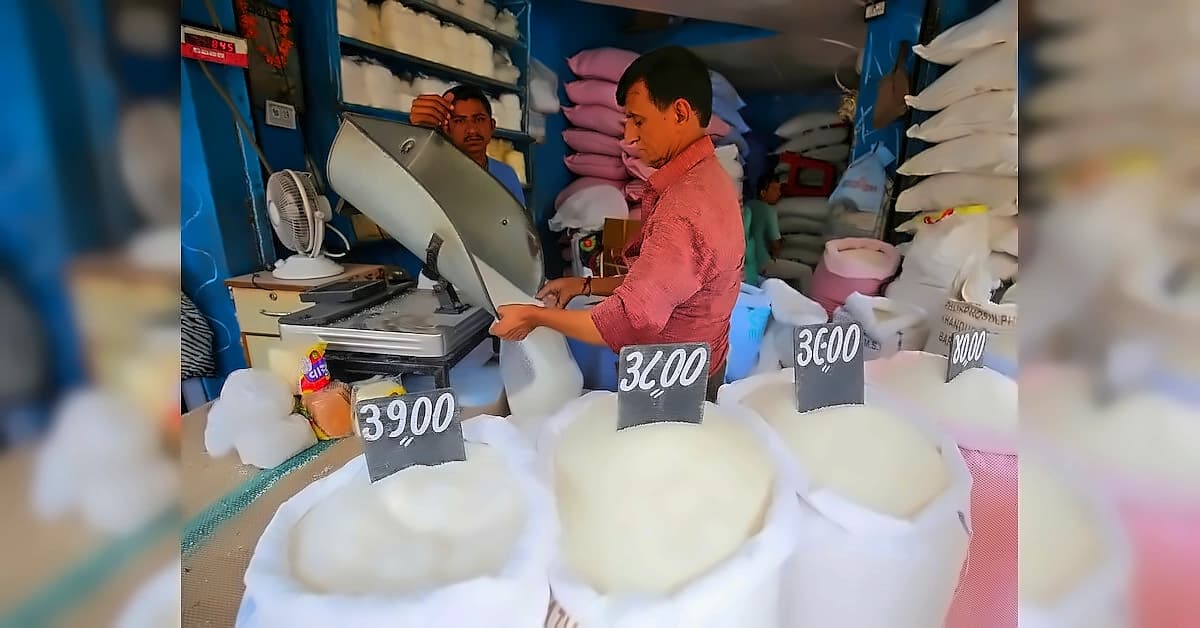
Sugar prices have experienced a dramatic reversal, dropping 20% at the mill level over recent days after surging to over ₹6,700 per quintal. According to The Hindu BusinessLine, retail sugar prices declined to ₹64.33 per kg from ₹65.07 on Wednesday, with prices in almost all cities continuing to rule between ₹60 (Mumbai) and ₹64 (Chennai) per kg. Wholesale prices dropped by ₹50-300 per quintal, with Kolkata and Hyderabad witnessing the maximum fall. Mills tender rates were around ₹5,000 per quintal, while Sonhira Sugars offered 1,400 tonnes at ₹4,900. Resale sugar was quoted at ₹5,040-5,100 per quintal for S-30 grade, as reported by The Hindu BusinessLine. The Ministry of Consumer Affairs, Food & Public Distribution claims that despite having adequate stocks of sugar, the country has recently experienced a sharp spike in prices, though prices remain nearly 31% higher than a month ago even as rates eased slightly on Thursday.
The sharp price decline comes after the government implemented comprehensive measures to address the supply shortage. The Centre allowed duty-free imports of 1 million tonnes of raw sugar till October 31, 2025, as reported by Business Standard. As per The Hindu BusinessLine, the government has also imposed stock holding limits on dealers and bulk consumers like beverage makers, with exports already banned a few months back. The government had earlier allowed 10 lakh tonnes of raw sugar through duty-free imports, while also allowing processors to sell some refined sugar in the domestic market, which was earlier meant to be exported. Sugar production in the 2025-26 marketing year (October-September) is estimated at 279 lakh tonnes after diversion to ethanol, lower than the earlier estimate of 345 lakh tonnes due to bad weather and pest damage. However, annual domestic demand is around 280-285 lakh tonnes and the country has enough sugar stocks, according to Food Secretary Sanjeev Chopra. More than 10 LMT of sugar will be produced during the new season, set to begin on October 15, with mills permitted to sell the sugar without restriction, providing enough stock to comply with domestic needs.
The recent price surge was largely driven by hoarding and speculation rather than an actual shortage, according to the government. A nationwide physical verification of sugar stocks at mills found that several mills were holding more sugar than they had declared in their monthly returns, as reported by The Hindu BusinessLine. This exercise reinforced the government's assessment that supplies remain comfortable. The Ministry of Consumer Affairs explains that the practice of short selling, as resorted to by some sugar mills, constrains market supplies despite the availability of sufficient stock. 4-5 sugar shipments carrying about 2 lakh tonnes of sugar have already started from exporting countries' ports and are supposed to land by mid-September, according to sources cited by The Hindu BusinessLine. The government has also flagged instances of mills selling less sugar than their allocated quota, a practice that can restrict supplies despite sufficient physical stocks.
Sugar prices have experienced a significant correction, falling 18% to ₹55 per kg after hitting a record high of ₹67 per kg last week. However, retail prices have jumped 40% over the past two months as supply constraints tighten ahead of the festive season. Quick-commerce platforms including BigBasket, Blinkit, Zepto and Swiggy Instamart have introduced quantity limits on sugar orders, while retail stores like D-Mart have restricted purchases amid concerns over availability. On Blinkit, customers in Delhi-NCR region can purchase up to one pack of 5 kg per transaction for select brands, while restrictions vary across locations - in Pune, Blinkit allows customers to add only three packs of 1 kg of certain sugar brands. BigBasket has capped purchases at five packs of 1 kg each of specific brands, and on Swiggy Instamart in Delhi-NCR, customers are allowed to order only two packs of 1 kg sugar in some locations. The impact is visible online, with platforms displaying messages like 'Sorry, we have limited quantities available' as demand continues to outpace supply.
The government has implemented new measures to improve supply chain efficiency and market transparency. The Government has decided to replace the existing monthly quota system with a fortnightly sugar allocation system from September, according to which the mills have to sell at least 40% of the total stock in the first week, with the remaining stock to be sold in subsequent weeks. Sugar mills have been directed to dispatch the sold sugar to dealers within seven days of sale, along with the fortnightly allocation system, which is expected to boost sugar movement through the supply chain. Bulk consumers such as beverage makers are also advised not to accumulate excess stock. As per the Indian Sugar & Bio-energy Manufacturers Association (ISMA), "Sugar prices have corrected by nearly 20 per cent from recent highs, with supply-side measures and improved market visibility beginning to reflect in the market. The correction is expected to continue as festive buying normalises and fresh sugar becomes available over the coming weeks." The crop sector is currently dealing with a strengthening El Niño in the Pacific and deficit rains in parts of the country, with the industry yet to release a production estimate for the 2026-27 season, which begins in October.