South Korea's historic after-hours trading session on Monday revealed significant volatility challenges as the exchange's first step toward around-the-clock operations. According to Korea Exchange, volatility spikes triggered trading halts 1,637 times during the extended session, more than four times the number seen during regular trading hours. The session covered 2,501 different stocks with some activating the volatility interruption mechanism multiple times. As per Clepsydra Capital's Sanghyun Park, "Institutional traders mostly stayed on the sidelines, so there just weren't enough buy and sell orders in the market." The extended hours, offered between 4 p.m. and 8 p.m., represent the first of its kind among major Asian exchanges and follows global trends led by Nasdaq Inc. and New York Stock Exchange.

The inaugural after-hours session demonstrated the current market composition challenges, with individual investors maintaining overwhelming control of trading activity. According to Korea Exchange, individual investors accounted for 93% of the extended session's total turnover of ₹1.8 trillion, while foreign investors contributed just 3.9% and local institutions made up the remainder. Clepsydra's Park noted that "smaller stocks were an absolute roller coaster, jumping 15% to 30% on relatively minor news before dropping just as quickly." The session's erratic nature reflects the current market structure, where retail participation significantly outweighs institutional interest, creating conditions for high volatility and limited liquidity during extended hours.
Samsung Electronics and SK Hynix are leading South Korea's capital distribution efforts as part of the Value-Up program, with their joint plans exceeding 130 billion won (approximately 97 million dollars) for this year. The artificial intelligence boom has strengthened both companies' financial positions, with their combined weighting accounting for almost half of the KOSPI index. However, investors are seeking lasting changes beyond higher dividends, focusing on improved corporate governance and capital allocation policies. According to AllianceBernstein, significant portions of these distributions are linked to the favorable memory market cycle, raising questions about whether these remuneration levels will persist when industry conditions normalize.
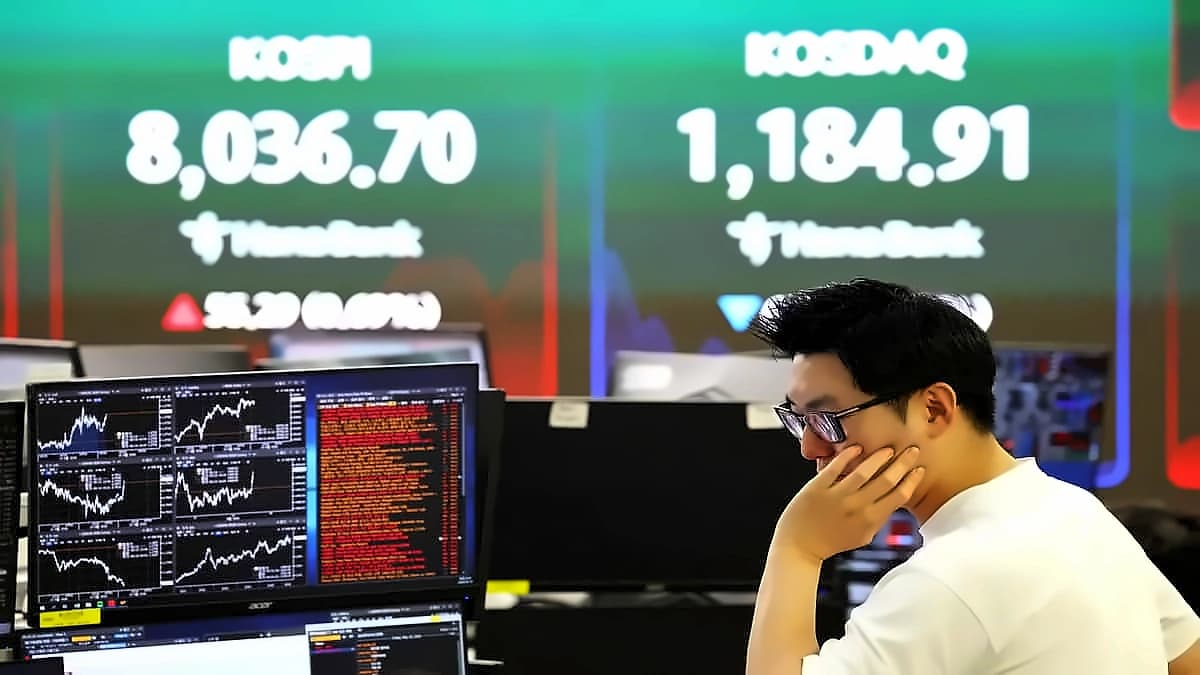
Despite South Korean stocks gaining around 67% this year boosted by AI and improved earnings prospects, the KOSPI remains 26% below its all-time high reached in June. The index is trading at approximately 4.3 times its projected earnings for 2027, compared to approximately 11 times the Asia-Pacific index. The contrast highlights the persistent 'Korea discount' that South Korean stocks receive compared to comparable companies in other markets. After the stock market's world-beating run this year on AI enthusiasm, Korea Exchange aims to capture broader international participation, particularly during European business hours. The Kospi index more than doubled this year through its peak amid an AI frenzy, before a sudden souring of sentiment led to a 22% selloff in July and a sharp contraction in turnover, with the benchmark remaining up 64% for 2026.
Despite Monday's volatility challenges, market watchers broadly support the extension as it enables investors to react more quickly to late-breaking news or earnings. Tony Cheung from Instinet stated that the after-market session "promotes market equality by enabling a wider range of investors to react to post-close news, thereby reducing information asymmetry." However, the success of extended trading will depend on addressing current liquidity constraints. As Park from Clepsydra noted, "until bigger players step in and provide more liquidity, it's likely to remain pretty risky." Korea Exchange plans to introduce pre-market trading by the end of 2027, as it works toward its longer-term goal of enabling round-the-clock trading, though the program's effectiveness will hinge on attracting institutional participation beyond the current retail-dominated model.