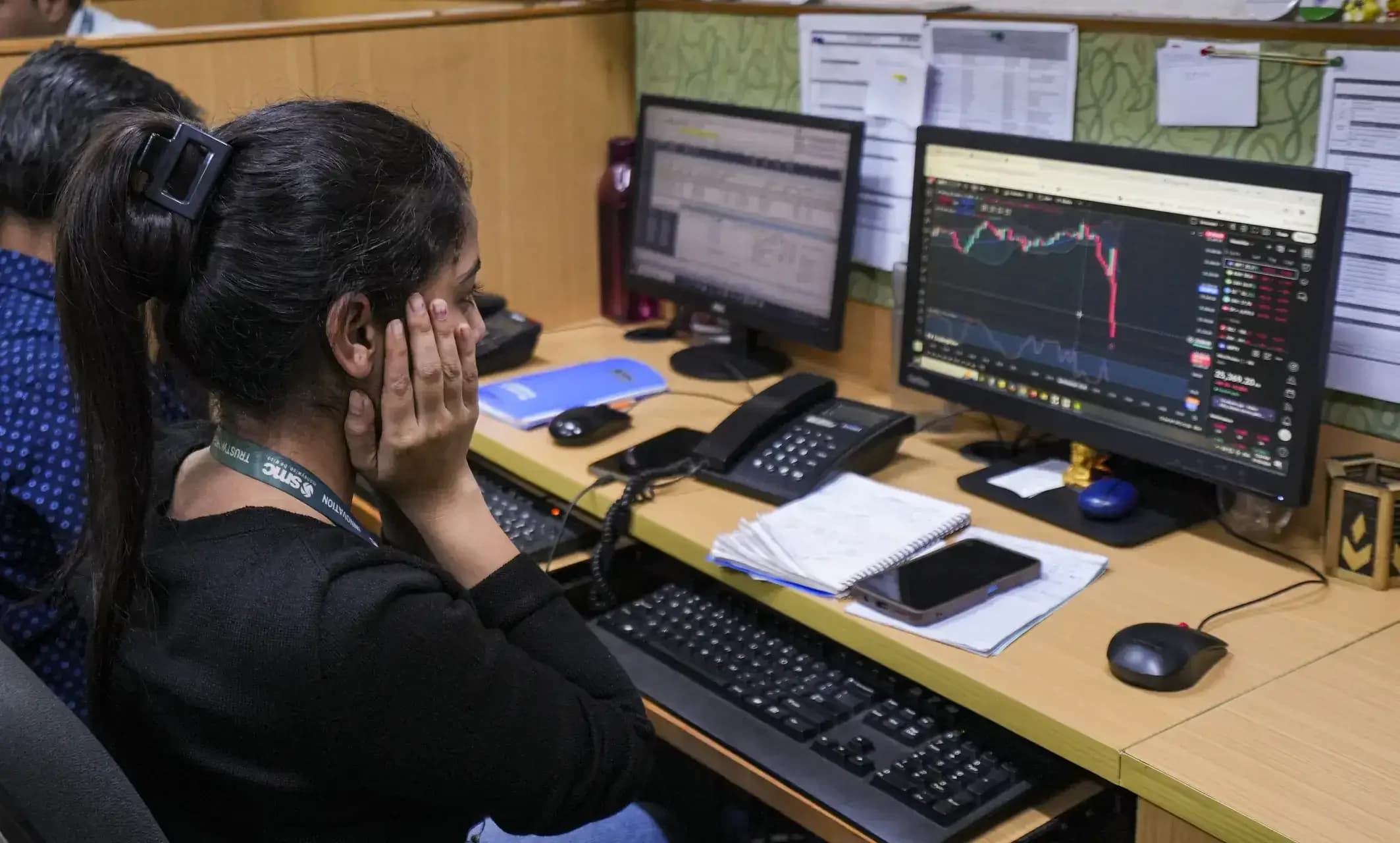
Indian benchmark indices are positioned for a cautious start with GIFT Nifty trading at 24,442, down 143 points, signalling weakness amid renewed geopolitical uncertainty. According to ABP Live, this negative pre-market indicator reflects growing investor concern that the West Asia conflict could drag on longer than expected, especially after the latest round of talks between the US and Iran failed to yield a breakthrough. The soft indication from GIFT Nifty reflects market participants turning cautious as hopes of a swift resolution fade, keeping volatility elevated. GIFT Nifty opened at 24,442 and hit an intraday high of 24,503 within minutes of the Opening Bell, but failed to sustain at higher levels and touched an intraday low of 24,408. By 7:15 AM, the index is trading at 24,475, down 55 points intraday.

The geopolitical situation remains fluid after the US announced an extension of the ongoing ceasefire with Iran, even as negotiations between the two sides hit a roadblock. US President Donald Trump said the truce would continue until Iran presents a unified proposal, describing the Iranian government as "seriously fractured". However, the extension appears largely unilateral, with no clear confirmation of Iran's participation. Adding to the uncertainty, scheduled talks between US and Iranian officials failed to materialise after Tehran reportedly declined to attend further discussions. Crucially, the blockade in the Strait of Hormuz, a vital global oil transit route, remains in place, continuing to disrupt energy flows and keeping markets on edge. This continued disruption is a key trigger for both oil prices and equity sentiment, with analysts noting that markets may remain volatile in the near term.
Asian markets traded largely lower in early deals, reflecting the cautious mood among investors. Hong Kong's Hang Seng declined 1.11% while South Korea's Kospi slipped 0.54%. In contrast, Japan's Nikkei 225 bucked the trend, rising 0.83%. Overnight in the US, equity markets ended in the red, with the S&P 500 falling 0.63%, the Nasdaq Composite down 0.59%, and the Dow Jones Industrial Average also slipping 0.59%. While global equities had rebounded sharply in recent weeks on hopes of de-escalation, the lack of progress in negotiations and continued disruption in energy routes are prompting investors to reassess risk.
Crude oil prices remained volatile, hovering near the $100 per barrel mark as the closure of the Strait of Hormuz continues to impact global supply. In Asian trade, Brent crude futures edged lower by 0.45% to $98.04 per barrel, as investors assessed the implications of the ceasefire extension and stalled negotiations. Despite the recent dip, oil prices remain elevated compared to pre-conflict levels, sustaining concerns around inflation and global growth. Over the weekend, conflicting developments emerged, particularly with reports indicating that the Strait of Hormuz had been closed again after briefly reopening on Friday. This reversal has already triggered a rebound in crude oil prices, reintroducing concerns around supply disruptions and inflation.
Safe-haven assets saw renewed buying interest, with gold and silver prices rising amid geopolitical uncertainty. Gold futures gained 1.07% while silver advanced 1.54%, reflecting cautious positioning by investors. This contrasts with earlier market behavior when gold and silver prices fell up to 2.5% on Monday, April 20, after ships were attacked in the Strait of Hormuz over the weekend, reviving concerns about disruptions to energy supplies and adding to inflation worries. Gold has declined roughly 9%, and silver has lost around 14% since the beginning of the US-Iran war in late February, but recent developments have prompted investors to reassess their risk appetite and move toward safer investments.
Domestic markets are expected to remain volatile, tracking weak global cues and uncertainty around geopolitical developments. Investors are likely to remain watchful of updates on US-Iran talks, crude oil movements and global market trends. Any clarity on reopening of the Strait of Hormuz or progress in negotiations could provide direction, while prolonged uncertainty may keep markets range-bound with a cautious bias. Markets are likely to see a volatile, potentially uneven session today, with sentiment swinging between relief and renewed caution. The risk of a negative reaction remains elevated, especially if crude prices sustain their upward move and geopolitical tensions persist.