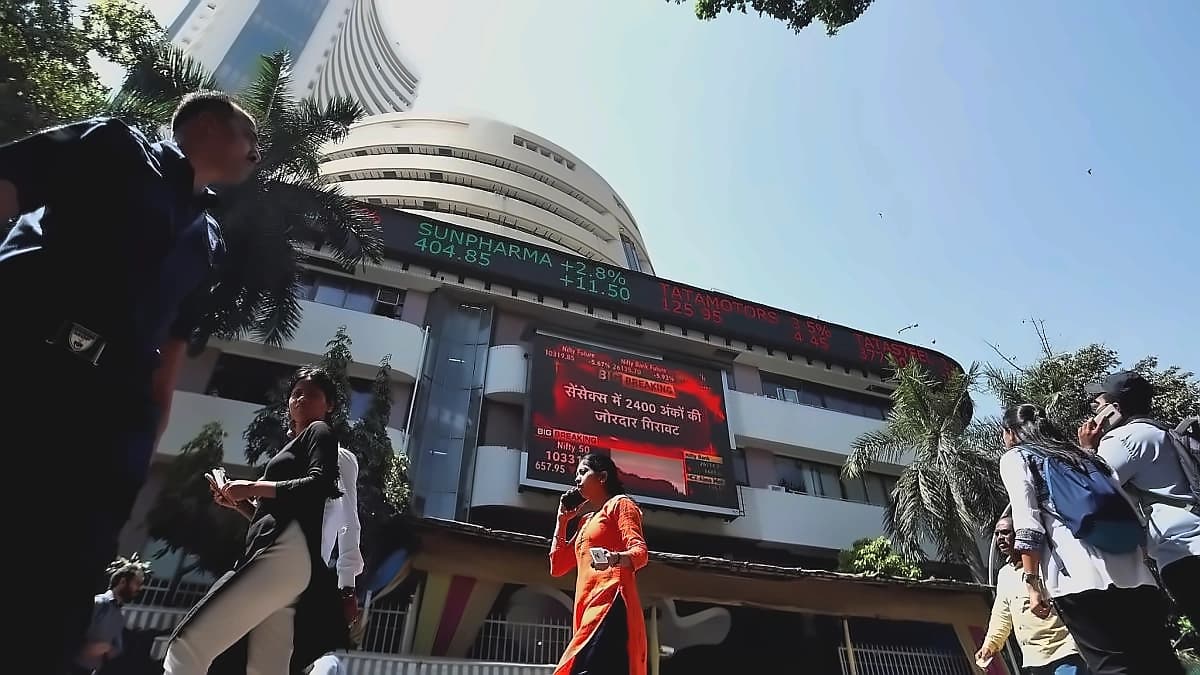
The Nifty's movement during the auction window has shown significant improvement, narrowing from 82.4 basis points on the first day of implementation to just 5.5 basis points on Friday as markets continue adapting to the new Closing Auction Session (CAS) system. According to Business Standard, the Nifty closed at 24,628 points at 3.15 pm, while post-CAS it settled at 24,636 points. This represents a substantial improvement from the 55 points difference observed on Wednesday, when Nifty closed at 24,570 at 3.15 pm and 24,625 post-CAS. The gap has shown a clear trend of narrowing, with 155 points difference on August 4 and 184 points on August 3, indicating that market mechanisms are gradually adapting to the new system. The sharp end-of-day swings triggered by the new closing auction session moderated through the week, suggesting that initial price dislocations have eased as participants become more comfortable with the process.
The moderation in volatility appears to reflect participants becoming more comfortable with the auction process, as noted by Business Standard. Anand James, chief market strategist at Geojit Investments, said the improvement is most likely coming from participant adaptation, particularly aided by data disseminated during CAS including equilibrium price and indicative tradable quantity, lessening uncertainty. The initial volatility was largely attributed to thin participation during the auction window, with the new mechanism introduced on August 3 for all futures and options (F&O) stocks. On its debut, the Nifty rose 1.63 per cent, while the Sensex gained only 0.72 per cent, resulting in an unusually wide divergence between the two benchmark indices. Several heavyweight stocks also witnessed sharp price moves during the closing auction, leading to concerns over price discovery and its impact on derivatives, passive funds and exchange-traded funds.
Shweta Rajani, Head - Mutual fund, Anand Rathi Wealth, said the CAS is expected to make end-of-day prices more transparent and reduce sharp price movements near the market close. According to The Hindu BusinessLine, under the earlier system, the final 30 minutes of trading, especially on expiry and index rebalancing days, often saw wider price movements, creating additional opportunities for arbitrage funds to capture spreads between the cash and futures markets. Gibin John, Senior Investment Strategist, Geojit Investments, said the gains in indices are largely due to wider cash-futures spreads and higher volatility. As the new mechanism becomes more established, opportunities arising from end-of-day price movements may become less frequent, although fund managers are expected to adapt by identifying opportunities at other points during the trading day. The closing price under CAS reflects where buyers and sellers actually agree to trade, making it harder to influence prices with last-minute trades.

The exchanges and the regulator have focused on improving participation rather than altering the framework, as reported by Business Standard. The NSE has maintained that the mechanism is functioning as intended, while expressing confidence that liquidity would improve over time. The BSE has urged brokers and investors to participate more actively in the closing auction, saying deeper order books would lead to better price discovery and reduce volatility. Auction-decided closing price discovery did lead to uncertainty in the first few sessions as the auction pool was still thin and created large gaps between the 3.15 pm level and the official close. One major fallout was the uncertainty faced by option traders, as positions could see sharp moves during the auction window, leaving little room to respond once continuous trading ended at 3:15 pm. The initial price dislocations have eased as the mechanism settles after its turbulent debut, with market participants adapting to the new system.
The divergent performance comes after the RBI policy decision to keep the repo rate unchanged at 5.25%, as reported by Stock Market News. Market participants are still processing the implications of the central bank's latest monetary policy stance, with different sectors showing varying responses. RBI Governor Sanjay Malhotra is widely expected to strike a slightly hawkish tone given the inflation risks from volatile crude prices and a monsoon shortfall, according to Reuters. The central bank's concessional swap facility, announced in June, has drawn over $40 billion in forex inflows through July 31, with Malhotra adding that measures to attract capital inflows will support foreign flows. Since the RBI paused rates on June 5, the Nifty has gained 5.1%, trimming its year-to-date losses to 5.8%, helped by measures to support the rupee and revive foreign inflows.