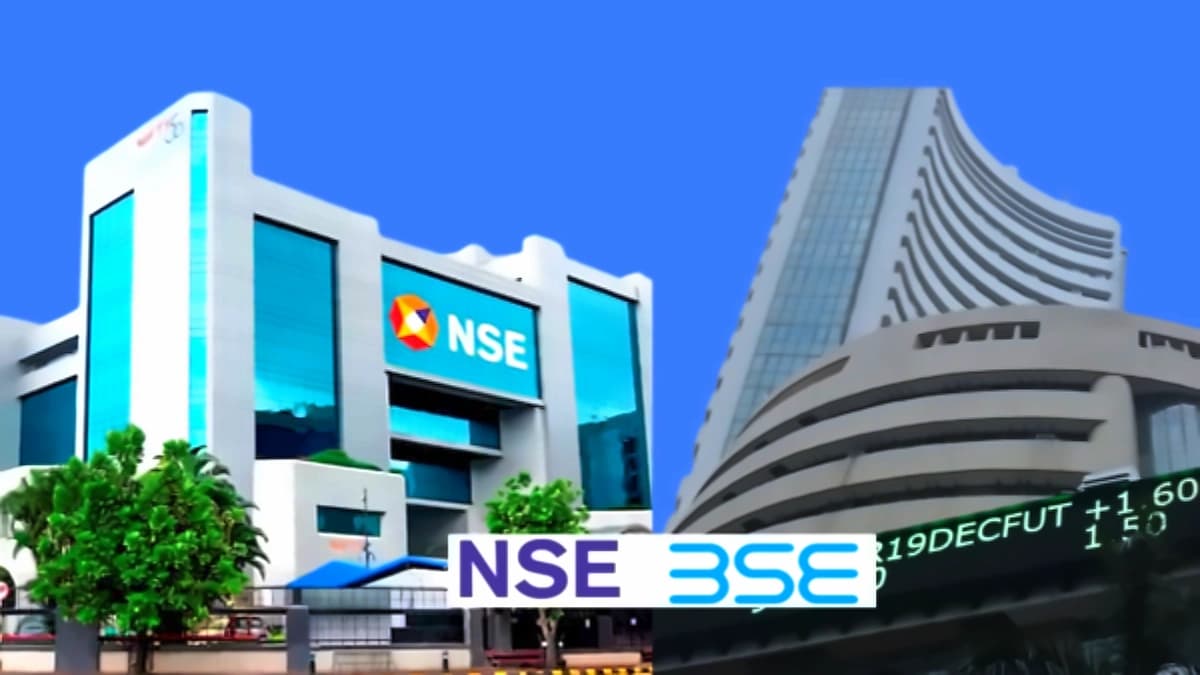
Indian equity markets staged a strong recovery on Monday, with Nifty 50 closing at 23,995.95, up 228.50 points or 1% from the previous session, snapping a five-day losing streak. The BSE Sensex ended at 76,835.78, gaining 776.01 points or 1%, as Brent crude oil prices fell to $89 per barrel following reports that the US paused attacks on Iran. According to Informist Media, India VIX settled nearly 10% lower at 12.66 points, reflecting improved risk appetite among investors. The market recovery was broad-based, with all sectoral indices ending higher, led by Nifty Media (up 2.4%) and Nifty IT (up 2.3%).
Zerodha co-founder and CEO Nithin Kamath has detailed the implications for traders and the brokerage industry following the introduction of the Closing Auction Session. According to The Financial Express, Kamath noted that while the change promotes market integrity, it will likely reduce brokerage revenue by an estimated 1-5% as it may lower trading activity or volumes in the final minutes for affected stocks. He emphasized transparency, stating "Now that broking is listed and people are looking more closely at the business, the honest bit..." and highlighted an immediate operational challenge, educating customers about different closing times across market segments. Zerodha has published a detailed explainer on its Z-Connect blog for users to help navigate the changes. As reported by The Hindu BusinessLine, Ajay Garg, Director and CEO of SMC Global Securities, said while institutional orders are expected to migrate to the auction, some execution-driven trading activity that generates brokerage may see pressure, resulting in a modest impact on revenues. According to LiveMint, Kamath warned that the new staggered closing times may confuse investors and increase customer queries due to varying market close times.
Starting August 3, 2026, India's stock market will adopt a Closing Auction Session (CAS) for eligible Futures & Options (F&O) stocks, replacing the existing Volume Weighted Average Price (VWAP) methodology. According to The Financial Express, this change extends trading hours by 10 minutes and introduces a structured auction mechanism designed to enhance price transparency and improve reflection of actual market demand and supply. While regular cash market trading hours remain unchanged for most stocks, F&O-enabled shares will follow a different schedule with normal cash market trading ending at 3:15 PM and the Closing Auction Session continuing until 3:35 PM. As reported by The Hindu BusinessLine, under the new framework, continuous trading in F&O stocks will end at 3.15 pm, followed by a 15-minute auction during which buy and sell orders will be collected and matched at a single equilibrium price that maximises traded volume. Non-F&O stocks will continue trading until 3:30 pm, while stock and index derivatives will trade until 3:40 pm. According to Dalal Street Investment Journal, the additional trading time for equity derivatives has been introduced to align the derivatives market with the new auction-based closing process in the cash segment, giving market participants additional time to hedge open positions, adjust trades after the cash market auction, exit intraday positions, manage expiry-day volatility and respond to the auction-based closing price.
According to The Hindu BusinessLine, the Closing Auction Session will run from 3:15 PM to 3:35 PM and will begin with a transition phase, followed by order entry, and then price discovery through auction matching. The exchange has confirmed that order entry in the cash market will close randomly between 3:28 PM and 3:30 PM. As reported by LiveMint, the 20-minute auction process follows a structured sequence where trading continues normally until 3:15 PM, with the VWAP during this final 15-minute period serving as the reference price. Between 3:15 PM and 3:20 PM, no fresh orders can be entered, while from 3:20 PM to 3:25 PM, investors can place, modify or cancel both market and limit orders. From 3:25 PM to the random market close, only limit orders can be entered, with the exchange closing order entry at a random time between 3:28 PM and 3:30 PM. As reported by The Hindu BusinessLine, SEBI's own analysis found that large institutional orders, index rebalancing trades and aggressive strategies can still meaningfully sway the VWAP average, which then feeds into index values, derivative settlements and mutual fund NAVs. Sandeep Chordia, COO of Kotak Securities, explained that "The Closing Auction Session is a structurally stronger framework because it aggregates all buy and sell interest and determines a single equilibrium price based on genuine demand and supply. That makes it significantly harder to influence the official closing price with a few late trades."
As reported by LiveMint, the closing price serves as a critical reference value for India's securities market, used to calculate benchmark indices such as the Nifty 50 and Sensex, determine Net Asset Value (NAV) of mutual funds and ETFs, settle F&O contracts and value investment portfolios. The previous VWAP-based methodology calculated the official closing price as the average price of trades executed during the last 30 minutes of continuous trading, with more weight given to prices where more shares were traded. According to The Hindu BusinessLine, Sandeep Chordia of Kotak Securities noted that "For investors tracking index funds, ETFs and mutual fund NAVs, the move should result in a more robust and tamper-resistant reference price. CAS will reduces the scope for 'marking the close' — where a trader nudges the last-30-minute average — which indirectly protects retail and passive investors from a mispriced settlement number." Deepak Shenoy, Founder of Capitalmind, said the new framework could curb attempts to influence benchmark indices through large closing trades, as seen through large institutional orders in the past. "Now they won't easily be able to, with the CAS as their order may not even execute, or someone will be able to see it and provide a large enough quantity on the other side to ruin the exercise," he said. According to LiveMint, Kamath pointed out that the current Indian system determines the closing price using the volume-weighted average price (VWAP) of trades during the last 30 minutes, while under CAS, buy and sell orders will instead be collected and matched at a single equilibrium price.
According to The Hindu BusinessLine, brokers say the move is expected to reduce revenues by curbing high-frequency and liquidity-providing trades around the close, as the closing auction would replace continuous trading in the final 15 minutes for F&O stocks. Ajay Garg, Director and CEO of SMC Global Securities, said while institutional orders are expected to migrate to the auction, some execution-driven trading activity that generates brokerage may see pressure, resulting in a modest impact on revenues. He noted that delivery-based investing is unlikely to be affected materially, but the shift could slightly alter intraday trading patterns around the close. According to LiveMint, Kamath believes the larger challenge may not be the financial impact but helping customers understand why different parts of the market appear to close at different times. A larger share of institutional and passive fund trades is expected to migrate to the auction session over time, with Garg stating that "The migration is likely to happen gradually rather than all at once. Institutional investors and passive funds are expected to adopt the mechanism faster, while retail participation will build as investors become more familiar with the process." As reported by The Hindu BusinessLine, we expect a redistribution rather than a net change in trading volumes, with some activity that currently clusters in the last 30 minutes of continuous trading shifting into the 20-minute auction window, particularly for index-linked and passive flows.
According to The Hindu BusinessLine, this represents India catching up with global practice rather than experimenting ahead of the rest of the world. Closing call auctions are already the norm on the NYSE, Nasdaq, London Stock Exchange, Euronext and most large Asian exchanges, making India something of an outlier among major markets with its trailing VWAP methodology. Sandeep Chordia of Kotak Securities emphasized that "This is India catching up with, not experimenting ahead of, global practice." Exchanges and clearing corporations have also had to build a joint SOP for settlement under the new methodology, ensuring meaningful preparation across the industry ahead of going live. Brokers need to make sure clients understand the new order-placement rules in the 3:15–3:35 pm window, and their systems — order management, algo execution, settlement — need to be aligned to the auction mechanics rather than continuous trading. As reported by LiveMint, Zerodha co-founder Nithin Kamath explained that the new mechanism could improve price discovery and make execution of large trades more efficient, noting that "Passive funds tracking benchmark indices often execute large trades near the market close to match index levels, and those transactions can move stock prices while being executed, increasing tracking error." According to The Hindu BusinessLine, the move aims to strengthen price discovery, reduce the risk of end-of-day price manipulation, and ensure that benchmark prices used for indices, derivative settlements and mutual fund NAVs more accurately reflect true market demand and supply.