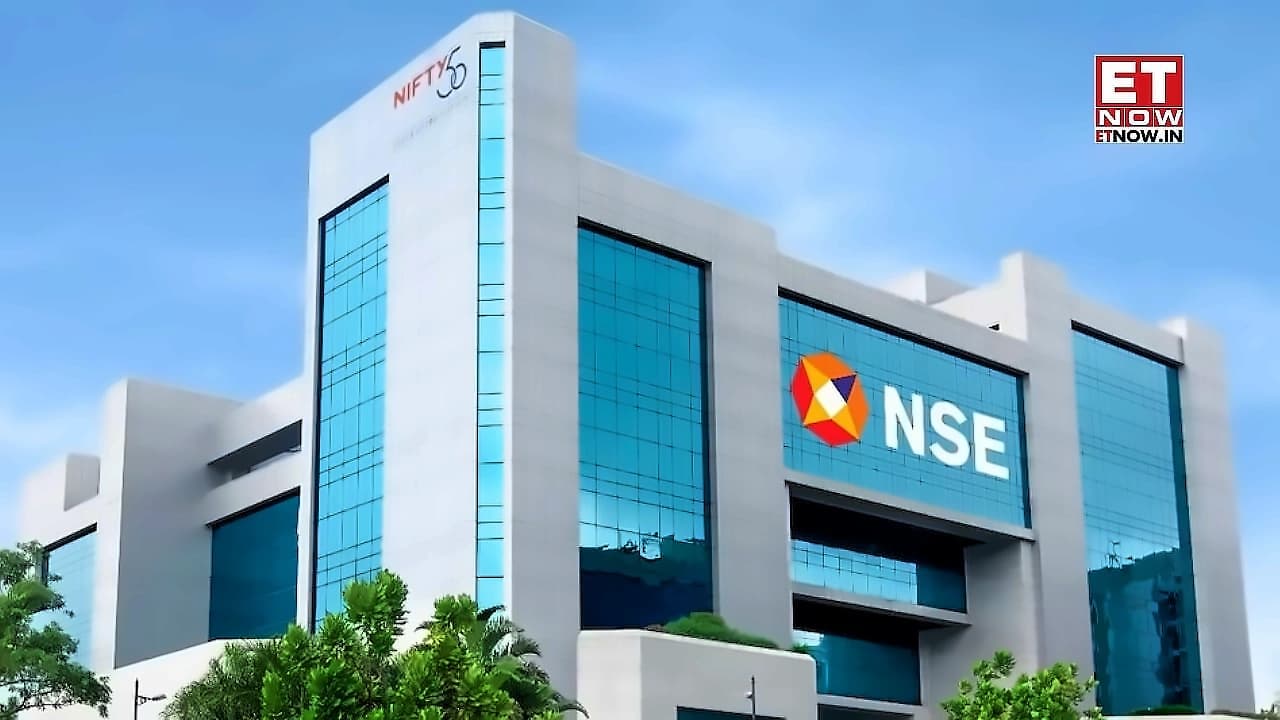
SEBI Chairperson Tuhin Kanta Pandey confirmed on Friday that the regulator has internally approved the settlement in the long-pending National Stock Exchange (NSE) co-location case, stating that "the matter will be resolved soon." This development comes as NSE filed its draft red herring prospectus (DRHP) for its long-awaited initial public offering (IPO), bringing the exchange a step closer to listing after nearly a decade of regulatory hurdles. In the DRHP, NSE has made a provision of ₹1,391 crore towards the proposed settlement with SEBI in connection with the co-location matter, with the exchange adding that a revised settlement amount of ₹1,491 crore has been proposed and is awaiting final regulatory approval. The latest development suggests that one of the key legacy issues that had delayed the exchange's public listing could soon be resolved.
NSE has escalated its legal action against the shareholder dispute by filing a police complaint in July 2025 at the Bandra-Kurla Complex Police Station under provisions of the Bharatiya Nyaya Sanhita (BNS) relating to alleged criminal breach of trust and cheating. According to NSE's latest DRHP, 5,000 NSE shares were erroneously credited to individual Kashmiri Lal Rana's demat account in December 2023, with the exchange now alleging that Rana knowingly retained the shares despite not belonging to him. The exchange has alleged that by the time the error was detected, 3,685 of those 5,000 shares were sold for approximately ₹1.33 crore, prompting NSE to seek recovery of ₹1.44 crore representing the sale proceeds from those shares, along with a mandatory direction from Delhi High Court to transfer the remaining 1,315 shares plus 5,260 bonus shares. As per The Economic Times, NSE and Nuvama Wealth Finance filed a civil suit before the Delhi High Court against Kashmiri Lal Rana and NSDL in May 2025, alleging that the transfer was void and seeking recovery of the sale proceeds. The matter remains pending with Rana having denied the claims in his written statement.
A significant legal challenge has emerged just weeks before NSE's IPO filing, with Parinay Sharma filing a writ petition in Bombay High Court in May 2026 against SEBI and NSE regarding beneficial ownership of certain Mauritius-based investors. According to NSE's DRHP, Sharma has alleged that certain investors have invested in NSE through Mauritius-based entities instead of direct investments to conceal beneficial owners from regulatory scrutiny and non-disclosure of beneficial owners of foreign entities holding NSE shares. The petitioner has sought a writ of mandamus directing SEBI to decide the pending representation, disclosure of NSE's promoter group and shareholders with KYC documents, and a stay on the company's IPO process until final disposal of the petition. As per The Economic Times, the petition alleged that SEBI had not acted on the representation and sought a direction requiring NSE to disclose its promoter group and shareholders or ultimate beneficiaries along with KYC documents. The DRHP states that the matter is currently pending before the court.
The National Stock Exchange has flagged revenue concentration from its top 10 members as a major business risk, highlighting that nearly half of its revenue is derived from these key participants. According to NSE's latest DRHP filed with SEBI, 46.78%, 44.48%, and 45.26% of revenue from operations came from its top 10 trading members in fiscal years 2026, 2025, and 2024, respectively. In absolute terms, revenue generated from these top 10 trading members stood at ₹77,655.80 million in FY26, ₹76,238.40 million in FY25, and ₹66,894.18 million in FY24. The exchange warned that any disruption involving these members could materially affect its financial performance and operations, with the company noting that its financial performance remains highly sensitive to the trading activity, business strategies, and continued engagement of these key trading members. The DRHP also reveals that 78.65%, 79.55%, and 82.07% of revenue from operational activities through transaction charges came from transaction charges, with the options segment accounting for 60.22%, 59.47%, and 64.62% of this revenue, while the futures segment contributed 8.92%, 10.08%, and 8.45% respectively. NSE earned ₹13,057.01 crore from transactional charges in the fiscal year ended 2025-26, marginally lower compared to ₹13,635.76 crore in the previous financial year.

The National Stock Exchange's filing of its DRHP with Sebi on June 18 brings India's most-awaited stock market listing closer to reality after nearly a decade of delays. According to reports from Business Standard, the proposed issue is estimated at around ₹30,000 crore, potentially making it the largest IPO in Indian history, surpassing Hyundai Motor India's nearly ₹28,000 crore issue in 2024. The offering is structured entirely as an Offer for Sale (OFS), with 14.89 crore equity shares representing nearly 6% of NSE's paid-up capital with a face value of ₹1 each. As per The Economic Times, the issue size has been fixed at 6% of the exchange's paid-up capital with NSE's shares listing only on BSE itself. With NSE's valuation in the unlisted market hovering around ₹5 lakh crore, market estimates suggest the IPO could be sized at roughly ₹30,000 crore. The filing marks the culmination of a listing process first initiated in December 2016, when NSE filed its first DRHP for a ₹10,000-crore issue, with the process subsequently stalled due to the co-location controversy. LIC holds the largest stake at 10.72% with 26.53 crore shares, followed by Aranda Investments (Mauritius) Pte Ltd with 11.25 crore shares (4.54%) and Stock Holding Corporation of India with 11 crore shares (4.44%). All proceeds raised from the IPO will be used to pay the corporate selling stakeholders, as there is no fresh issue component in the company's IPO round.
State Bank of India leads the exit strategy, with Bloomberg reporting that SBI is expected to realise around ₹5,000 crore by offloading 24.75 million shares in the offer-for-sale. This would represent a return of nearly 2,568 times on the investment SBI made between 1993 and 1999. The calculation is based on a grey-market valuation of ₹2,055 per share against SBI's average acquisition price of 80 paise per share. Other prominent shareholders participating include MS Strategic (Mauritius), Canada Pension Plan Investment Board, Aranda Investments (Mauritius), Bank of Baroda, Stock Holding Corporation of India, General Insurance Corporation of India, National Insurance Company, and United India Insurance Company. The shareholder base spans insurers, state-run banks, private equity investors and global institutions such as CPPIB, while the remaining 53.5% is spread across a long tail of investors. The IPO is being managed by a consortium of 20 book-running lead managers, including Kotak Mahindra Capital, Morgan Stanley, HSBC, SBI Capital Markets, JPMorgan, Citi, ICICI Securities, Axis Capital, JM Financial and HDFC Bank, with MUFG Intime India appointed as the registrar. NSE is looking to allocate not more than 50% of the IPO shares to the qualified institutional buyers (QIBs), not more than 35% to the retail investors and the remaining 15% to the non-institutional investors (NIIs) via the open market bidding.