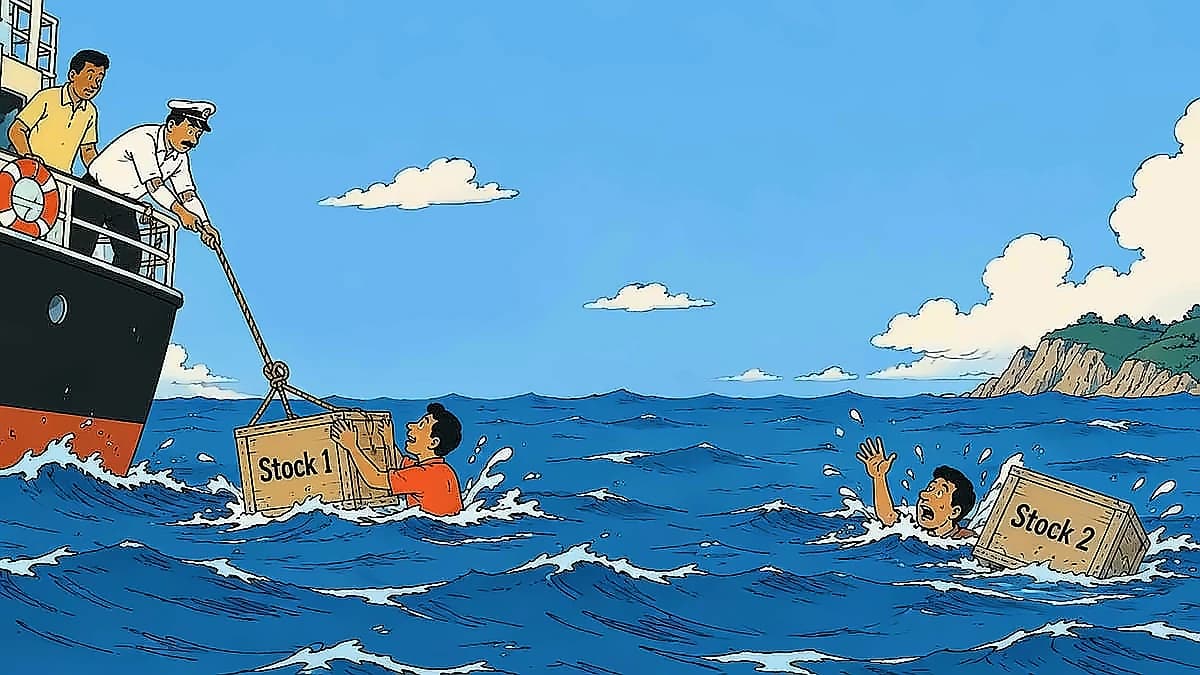
When regulators change the rules of the game, markets don't just adjust—they panic. In recent years, Indian financial markets have witnessed several extreme single-day stock declines triggered not by earnings misses or economic downturns, but by regulatory and governance shocks that fundamentally altered business models. These events reveal how quickly competitive advantages can evaporate when the regulatory landscape shifts.
IRDAI's Insurance Distribution Overhaul
The Insurance Regulatory and Development Authority's proposed distribution norms represent a paradigm shift for insurance intermediaries. The regulator's consultation paper proposes tighter Expense of Management caps—bringing life insurers to 12.5% and general insurers to 20% over five years—along with a return to hard caps on commissions and quality-based compensation models.
For PB Fintech, India's largest digital insurance aggregator with ~90% online market share, these changes threaten the core of its commission-based revenue model. The company generates revenue primarily through commissions from insurance distribution, with its core online business delivering 16% contribution margins. Under the proposed framework, distributor remuneration—which accounts for nearly 27% of first-year premium plus 30-60% in rewards—faces significant compression pressure. Transcripts
What makes PB Fintech particularly exposed is its scale and visibility. As the largest digital broker, it faces greater regulatory scrutiny than smaller players. The 1/n formula for expense management and potential commission caps could force a restructuring of its economics, even as management argues that quality-based compensation models align with their strengths: 82% of their business comes from customers who never had insurance before, and their total cost of operations is lower than other channels when viewed comprehensively rather than just through commission rates. Transcripts +1
CERC's Market Coupling Revolution
The Central Electricity Regulatory Commission's July 23, 2025 order directing phased implementation of market coupling by January 2026 triggered a ~30% single-day crash in Indian Energy Exchange. This wasn't a typical market overreaction—it was a fundamental reassessment of IEX's business model.
Its dominance rested on controlling price discovery through its auction mechanism, which enabled it to charge transaction fees averaging INR 3-4 per unit—constituting 78% of standalone revenues. InvestorPresentations +3
Market coupling fundamentally alters this structure. Under the proposed framework, Grid India becomes the Market Coupling Operator, collating bids from all exchanges to determine a uniform market-clearing price. Price discovery—the very heart of IEX's competitive advantage—shifts from IEX's platform to a centralized algorithm. While IEX retains physical and financial settlement functions and customer relationships, its ability to convert scale into pricing power significantly weakens.
The causal pathway to the stock decline is clear: the regulatory order removed the monopoly thesis that justified premium valuations, creating uncertainty about fee structures, volume sustainability, and long-term earnings visibility. Despite strong fundamentals—39.8% ROE, 85% market share, and 3.13% dividend yield—the stock remains under a sustained overhang, down 21.36% over the past year as investors await final regulations and implementation clarity.
Governance Failures and Banking Crises
The Yes Bank crisis of March 2020 demonstrates how governance deficiencies can trigger catastrophic collapses. The RBI superseded the board and imposed a moratorium with a ₹50,000 withdrawal cap after identifying weak compliance culture, wrong asset qualification, and aggressive lending to stressed companies without adequate risk management.
The bank's financial deterioration was severe: gross NPAs surged to 7.39% by September 2019—the highest among comparable banks, capital adequacy fell to 10.24% against a 12% minimum, and the credit-deposit ratio exceeded 100%. But it was the withdrawal cap that created a devastating feedback loop. Depositors, fearing further restrictions, rushed to withdraw funds before potential limits tightened. This panic created an actual liquidity crisis beyond the regulatory action, causing the stock to plummet approximately 85%—its biggest intra-day fall ever—and wiping out well over $1 billion in market value along with contagion effects across the banking sector.
The IL&FS Contagion Effect
The IL&FS default in September 2018 created a system-wide liquidity panic that transmitted rapidly to housing finance companies. The infrastructure lender's ₹91,000 crore debt default wiped out ₹8.48 lakh crore in investor wealth and triggered a liquidity freeze across debt markets.
Dewan Housing Finance Corporation crashed 59.67% intraday on September 21, 2018, while Indiabulls Housing Finance fell 35%. The difference in their vulnerability lay in their funding structures. DHFL relied heavily on short-term commercial papers—outstanding CP reduced from ₹8,715 crore to ₹850 crore during the crisis—and had significant fixed deposit outflows of ₹1,356 crore. Its asset-liability mismatch was severe, with adjusted gearing of 12.7 times and capital adequacy at just 10.24%, well below the 12% statutory minimum.
DHFL's $1.45 billion market cap wipeout reflected the market's reassessment from liquidity concerns to solvency risks. As information emerged about documentation deficiencies for ₹20,750 crore of loans, unrecoverable wholesale loans of ₹16,000 crore, and promoter-linked lending allegations, the crisis evolved from temporary funding stress to fundamental business viability questions.
Media Reports and Short-Seller Attacks
Sometimes, the trigger isn't regulatory action but media reports or short-seller research. On January 25, 2019, a media report linking Zee Entertainment's promoter Essel Group to a demonetisation-era money movement probe caused a 33.5% crash—the worst intraday fall since its 1995 debut. The report alleged that SFIO was investigating Nityank Infrapower for deposits of over ₹3,000 crore made just after demonetisation, with transactions involving Essel Group entities.
Zee denied any connection to the alleged transactions, stating that SFIO queries were directed to Nityank Infrapower, an independent company not belonging to Essel Group. But the damage was done. What amplified the fall was high promoter pledge levels—59.3% of promoter holding was pledged. Lenders, fearing further declines, sold pledged shares to protect their capital, creating a vicious cycle of more selling, lower prices, and more margin calls. Mutual funds had over ₹12,000 crore exposure to Essel Group firms through loan-against-shares, adding to the selling pressure.
The Adani Enterprises crisis followed a similar pattern but with a different trigger.
The causal chain was swift: the report created panic, Adani stocks crashed, and the ₹20,000 crore FPO—fully subscribed on the final day—was withdrawn on February 1, 2023. Adani Enterprises plunged 28.45% that day, with the group losing $107 billion in market value over the week. The withdrawal decision itself, while protecting investors from immediate losses, signaled that even management recognized the severity of the situation.
The Common Thread
Across these diverse cases, a common pattern emerges. Regulatory and governance shocks don't just create temporary volatility—they fundamentally alter the competitive landscape. When monopolies face structural changes, when governance failures trigger supervisory actions, or when allegations question business model integrity, markets reassess not just near-term earnings but long-term viability.
The speed and severity of these declines reflect how quickly competitive advantages can evaporate when the rules change. IEX's 17-year technology leadership couldn't prevent a 30% crash when its monopoly status was threatened. Yes Bank's scale couldn't protect it from an 85% collapse when governance failed. DHFL's growth trajectory couldn't survive when liquidity dried up and solvency questions emerged.
For investors, these events underscore the importance of understanding not just what companies earn, but how they earn it—and whether those earnings are sustainable when the regulatory environment shifts. In an era of increasing regulatory scrutiny and rapid information dissemination, the line between temporary overreaction and permanent impairment has never been thinner.