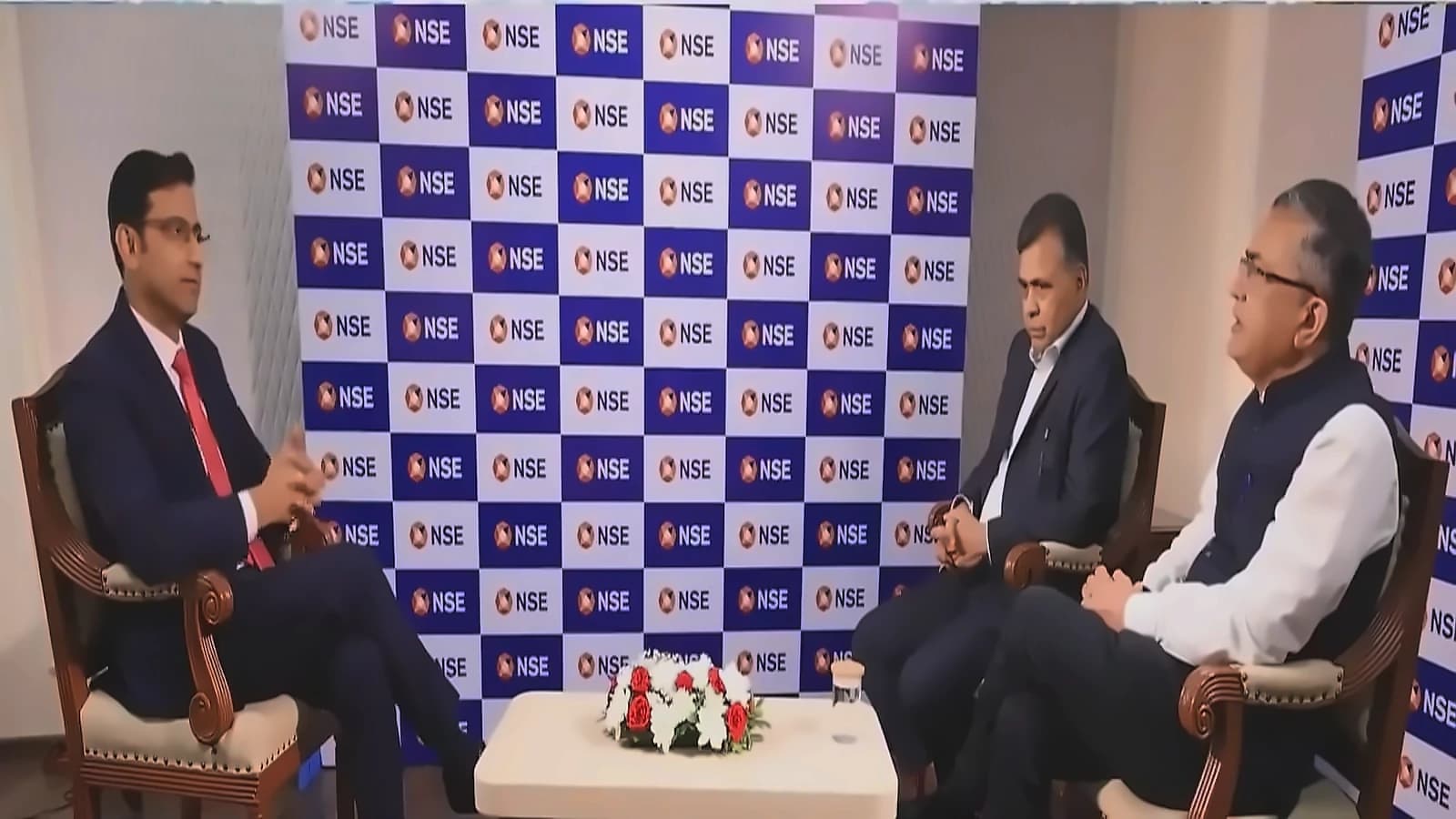
The National Stock Exchange of India sees Electronic Gold Receipts (EGR) as a major growth opportunity, with NSE Chairperson Srinivas Injeti stating the product could become significant over the next three years. According to reports from CNBC TV18, Injeti told the exchange is working on a three-year framework for EGR, though some issues including GST and building the required ecosystem still need resolution. The model being considered could make gold productive by allowing it to be used within the financial system and supporting gold loan schemes while allowing gold to be recycled. Injeti has now expanded on this vision, citing a World Gold Council study that highlights India's 35,000-tonne gold stockpile. As reported by NDTV Profit, he explained how NSE could introduce EGRs to monetise this gold, with the resulting value exceeding the country's total GDP. EGR gold refers to a digital security that represents physical gold stored in an accredited, regulated vault.
Injeti highlighted technology and data monetisation as longer-term opportunities for NSE, describing the exchange as 'essentially a technology company'. As reported by CNBC TV18, he pointed to NSE's 32 years of tick-by-tick data as one area with potential, stating 'Nobody has that much data as NSE has'. He noted that mature exchanges globally have become less dependent on transaction fees as their markets have plateaued, while in India, data monetisation remains subject to regulatory considerations over the possibility of creating information asymmetry. NSE Managing Director and CEO Ashishkumar Chauhan has now outlined the exchange's comprehensive approach to technology integration, telling NDTV Profit that NSE is working on a comprehensive, mobile-first framework that could bring investors' trading data, portfolio information and analytics under a single platform. Chauhan also emphasised that NSE is conservative in accounting for capital expenditure because much of its investment is in manpower and software, which is expensed rather than capitalised.
NSE is exploring multiple new product opportunities as part of its growth strategy, with electricity trading and bond indices among the key areas being considered. According to Business Standard, Chauhan stated that new products will come when there is a need for them to be traded on a well-functioning market. The exchange has applied for both government securities and corporate bond indices, with product contours and specifications to be decided by Sebi and the Reserve Bank of India (RBI) given that the product involves both regulators. Market making in bonds is another area that needs development, with committees looking at these issues and Sebi would consult the RBI in this regard. The exchange's experience across different market types, from IPOs and mutual funds to high-frequency markets such as equities and equity derivatives, positions it well to structure markets, build liquidity and make them efficient, fair, transparent and orderly.
NSE Managing Director and CEO Ashishkumar Chauhan said the exchange's recent loss of market share in equity options appears to have stabilised. According to CNBC TV18, Chauhan stated 'Our market share loss has now run its course', adding that NSE could potentially gain some share. He noted that NSE's revenue is already diversified, with around ₹42 out of every ₹100 coming from weekly options and ₹58 from non-weekly options. Chauhan also said NSE had earlier expected regulatory changes around weekly options to reduce volumes by 40-50%, but instead the decline was around 2-3%, which he described as 'a pleasant surprise'. The exchange's market performance has also reflected this stabilisation, with shares ending 1% higher after a flat debut, as noted by market analysts.
On regulatory interventions, Injeti emphasised they should not be viewed through the lens of revenue impact. As reported by CNBC TV18, he stated 'Regulatory interventions are not seen through the lens of revenue implications', explaining such measures are aimed at ensuring robust mechanisms for price discovery and that market participants have to adjust to them. Chauhan also questioned the practice of using derivatives to trade on a potential closing price while that price is still being formed, suggesting focus should be on how market participants use the closing auction rather than simply changing the mechanism. The exchange's co-location demand remains strong, with NSE currently having around 2,200 racks, with 40-50 new requirements coming every month. Once existing capacity starts getting exhausted, a new data centre would take around three years to build, with NSE having acquired land and basic work having started. On surveillance framework, Chauhan noted that nearly half of NSE's employees are in regulatory functions, with the exchange taking its role as a regulator seriously and experimenting with artificial intelligence tools for surveillance.