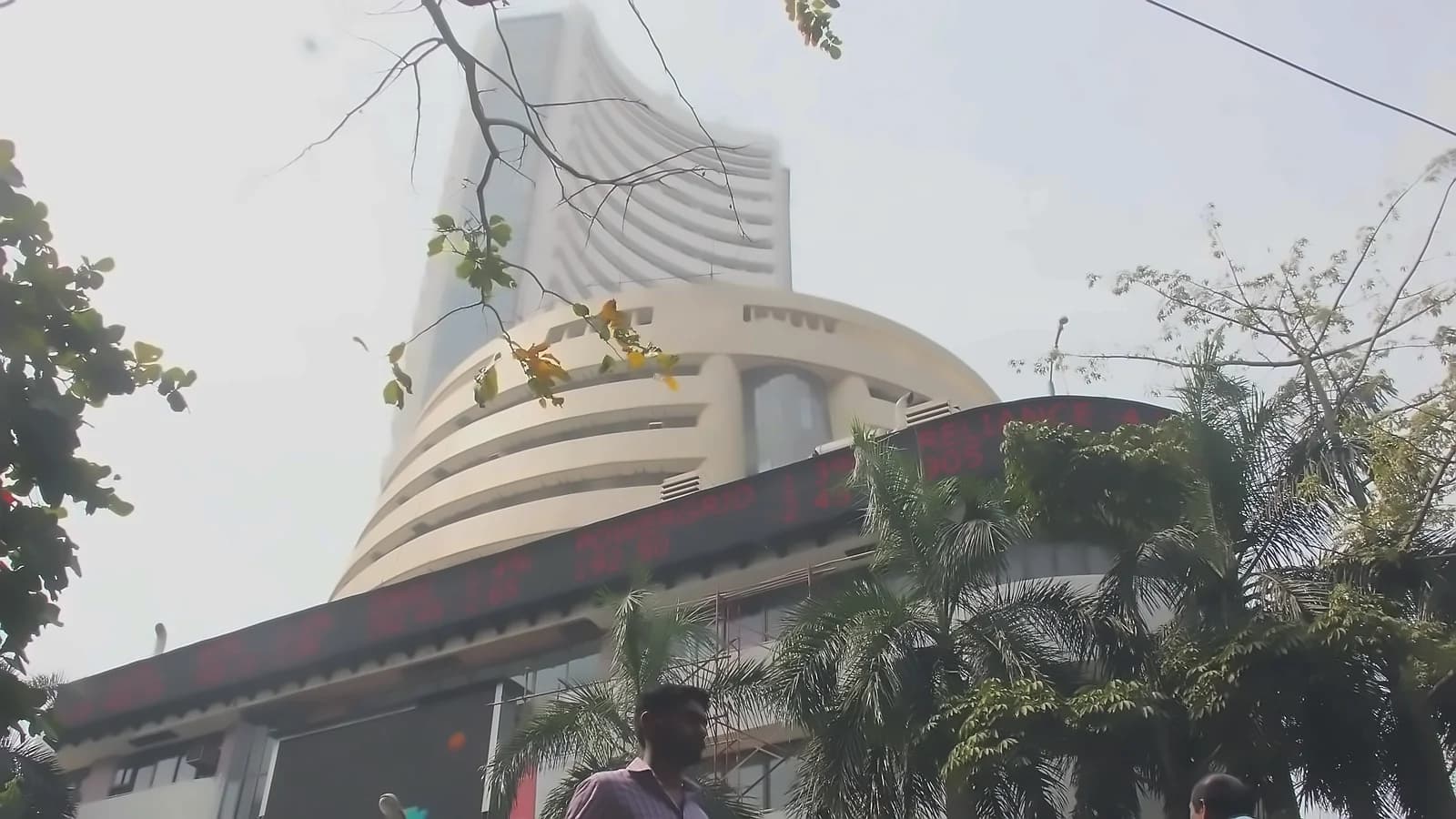
Both NIFTY50 and SENSEX are set to witness a subdued opening on Wednesday, May 27, according to market reports. GIFT NIFTY futures were trading 0.45% lower at 23,885.50 points around 9:10 am, as reported by market data. The cautious sentiment stems from fresh US defensive strikes in southern Iran that have introduced a familiar note of caution into Indian markets. Diplomatic efforts to end the three-month West Asia conflict continue in Doha, but the development has tempered recent optimism around a swift resolution. Market experts warn that the situation is unlikely to see a quick resolution and may require months, if not years, to resolve, as noted by Andrew Freris, CEO of Ecognosis Advisory, who emphasized that the conflict has already expanded into a wider regional issue.
The NIFTY50 index closed 0.49% or 118 points lower at 23,913.70 points after Tuesday's market session, compared to 24,031.70 points at the previous close, according to exchange data. SENSEX closed 0.63% or 479 points lower at 76,009.70 points after the market session on May 26, compared to 76,488.96 points at the previous trading close, as per BSE data. However, Monday's session saw a strong recovery with Sensex gaining 1,073.61 points (1.42%) to 76,488.96 and Nifty 50 rising 312.40 points (1.32%) in response to earlier de-escalation hopes, supported by foreign investors turning net buyers to the tune of around ₹822 crore. The recent volatility reflects what Freris describes as a "flip-flop" environment where markets experience sharp swings based on contradictory developments around ceasefires and military escalations.
Asian stock markets continued their cautious streak on Wednesday, May 27, with Asia Dow down 1.04% at 6,311 points, according to MarketWatch data. Hong Kong's Hang Seng index was down 0.18% at 25,554 points, while China's Shanghai was down 0.28% at 4,133 points. Singapore's FTSE was down 0.82% at 5,28 points. In contrast, Japan's Nikkei 225 was up 0.94% at 65,605.67 points, supported by major movers like Shift Inc., Shin-Etu Chemical, and Hoya Corp. Freris noted that some Asian markets like Singapore, Thailand, Taiwan, and Korea have outperformed the S&P 500 consistently in the last year-and-a-half in US dollar terms, suggesting investors should look beyond traditional US-heavy portfolios for better opportunities without carrying the same valuation concerns as US equities.
Foreign institutional investors (FIIs) restarted their selling streak after shedding ₹2,407.87 crore worth of assets across the stock exchanges in a single day on Tuesday, according to NSE data. While foreign investors became net sellers, domestic buyers provided marginal support by buying ₹1,361 crore worth of assets in the capital market. The FII outflow and lack of support from domestic investors prompted the indices to close lower after Tuesday's trading session. Freris emphasized that higher US bond yields typically reduce the attractiveness of emerging markets by drawing capital back into dollar assets, but maintained that selective Asian markets could continue to outperform if investors focus on relative strength rather than broad regional trends.
Technically, Nifty's decisive close above 23,800 on Monday marked a breakout from its recent consolidation range, with the next resistance levels seen at 24,370 and 24,600, while 23,800 now acts as immediate support. Analysts expect broad consolidation in the coming sessions, especially with May derivative expiry today (followed by BSE expiry tomorrow) before a market holiday on Thursday. Brent crude was holding near $97-98 per barrel, still down more than 20% from recent highs but elevated enough to matter. Market experts note that negotiations are continuing without signs of an imminent end, and while the self-defence strikes have acted as a dampener, investors are not viewing this as the beginning of another sustained military cycle. Freris believes that even if temporary ceasefires or agreements emerge, they may not hold for long, and the conflict has already expanded into a wider regional issue drawing in multiple countries and raising geopolitical risks beyond the immediate participants.