Indian stock markets opened with significant losses on Monday, with the BSE Sensex falling 509.77 points to 72,822.60 and the NSE Nifty 50 dropping 141.20 points to 22,571.90, according to Republic World. This represents a decline of approximately 0.30% for both major indices as markets opened for trading. The early session weakness reflects investor concerns over multiple factors affecting market sentiment, with Brent crude climbing 0.74% to $109.8 per barrel as the global oil benchmark. From the 30-Sensex firms, Reliance Industries, Kotak Mahindra Bank, Sun Pharma, InterGlobe Aviation, Adani Ports and ICICI Bank were among the major laggards, while Trent, Titan, Tech Mahindra and Bharat Electronics were among the gainers.
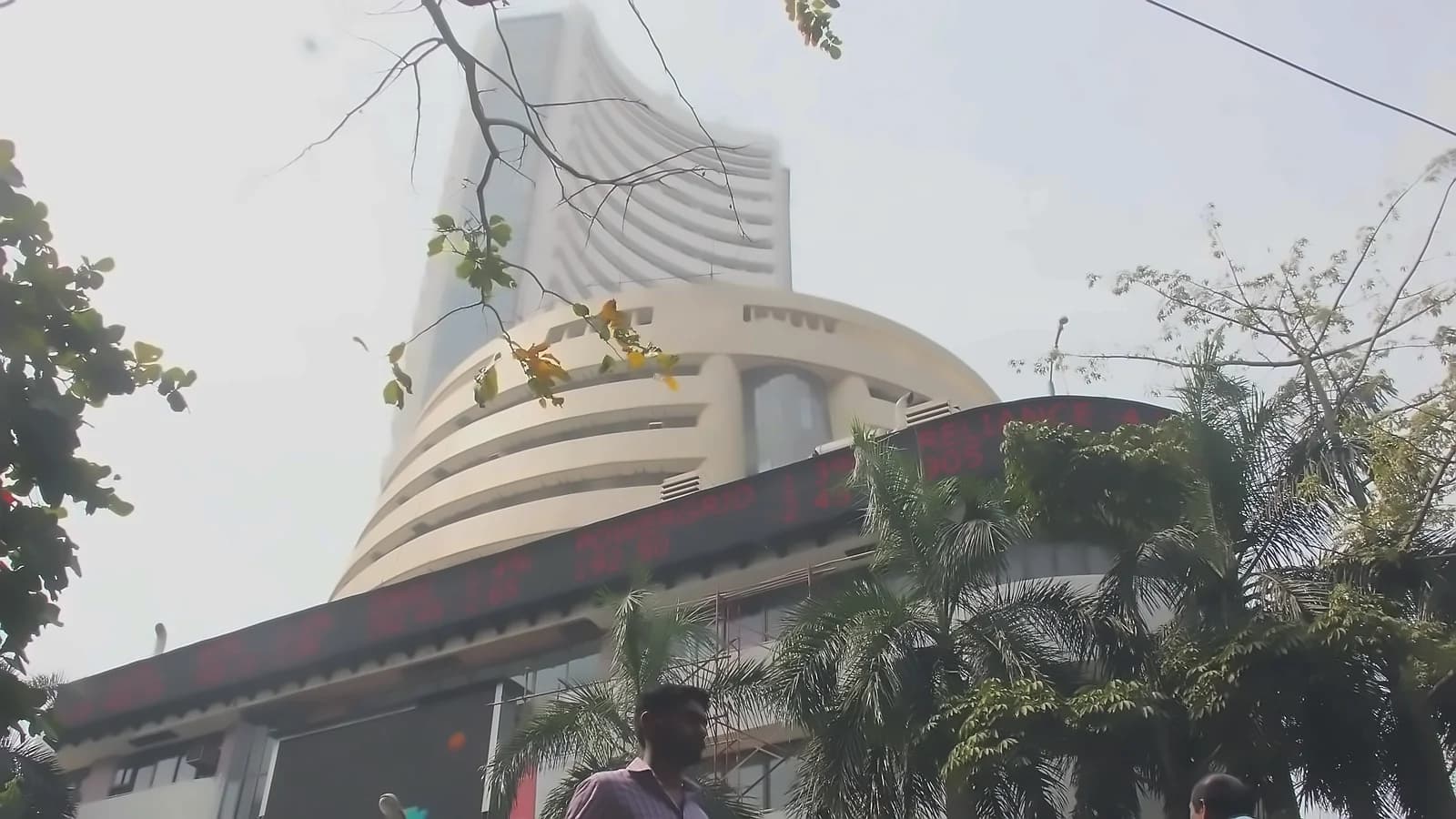
Oil prices have experienced a dramatic surge, with Brent crude rising to $109.8 per barrel as of Monday morning, as reported by Republic World. WTI crude oil prices are spiking to $111.37 per barrel, even as the deadline approaches for US President Donald Trump's Tuesday deadline to Iran for reopening the Strait of Hormuz. The surge in oil prices is primarily driven by fears that the ongoing war between US-Israel and Iran will extend beyond expectations, creating significant supply chain concerns for global markets. Comments from US President Donald Trump indicating potential escalation if key supply routes are not restored have kept risk appetite in check, according to Hariprasad K, Research Analyst and Founder, Livelong Wealth.
Despite the broader market decline, the Nifty IT index surged 2.6% to provide a cushion to benchmark indices, as reported by Republic World. The outperformance was attributed to a "flight to safety" as the Indian rupee touched ₹93.00 against the U.S. dollar, providing a natural hedge for export-heavy IT firms. Wipro emerged as a top gainer, jumping 2.41% to ₹200.80 after announcing an eight-year strategic transformation deal with Singapore-based Olam Group, projected to exceed $1 billion in total contract value. Other IT heavyweights followed suit with Infosys gaining 2.45% and HCL Tech climbing 2.77%, reaching ₹1,402.20. Investor interest also trickled down to mid-cap software firms, with Coforge gaining over 5% from recent lows and LTIMindtree trading near ₹4,303.90.
Foreign Institutional Investors (FIIs) offloaded equities worth ₹9,931.13 crore on Thursday (April 2), according to exchange data reported by The Hindu. However, Domestic Institutional Investors (DIIs) bought stocks worth ₹7,208.41 crore, providing some support to the market. The relentless foreign fund outflows have also dented markets' sentiment, adding to the pressure from geopolitical tensions. The weakening rupee, currently hovering near ₹93.10 per USD, is providing a natural hedge for export-heavy IT firms, making them the preferred defensive play for the week.
Asian markets showed mixed performance on Monday as investors closely monitored the ongoing conflict, according to The Hindu. South Korea's benchmark Kospi and Japan's Nikkei 225 index were quoting higher in early trading. Trading remained closed in Australia on Easter, and in Hong Kong and Shanghai for traditional Chinese holidays. The divergent performance reflects varying investor sentiment across different regional markets, with US markets closed on Friday (April 3, 2026) for Good Friday.
According to V.K. Vijayakumar, Chief Investment Strategist, Geojit Investments Limited, quoted by The Hindu, "With uncertainty over the West Asia conflict looming large the market will continue to be volatile responding to potential good and bad news. The potential for further escalation of the war is high in the next few days. The market will be keenly watching the response of crude prices to war-related events." Analysts expect the domestic stock market to remain volatile this week as investors track multiple key factors including the Reserve Bank of India's monetary policy decision, key global macroeconomic data, and the ongoing impact of the West Asia conflict. The combination of geopolitical tensions and domestic policy decisions is creating an uncertain environment for Indian equity markets in the near term.