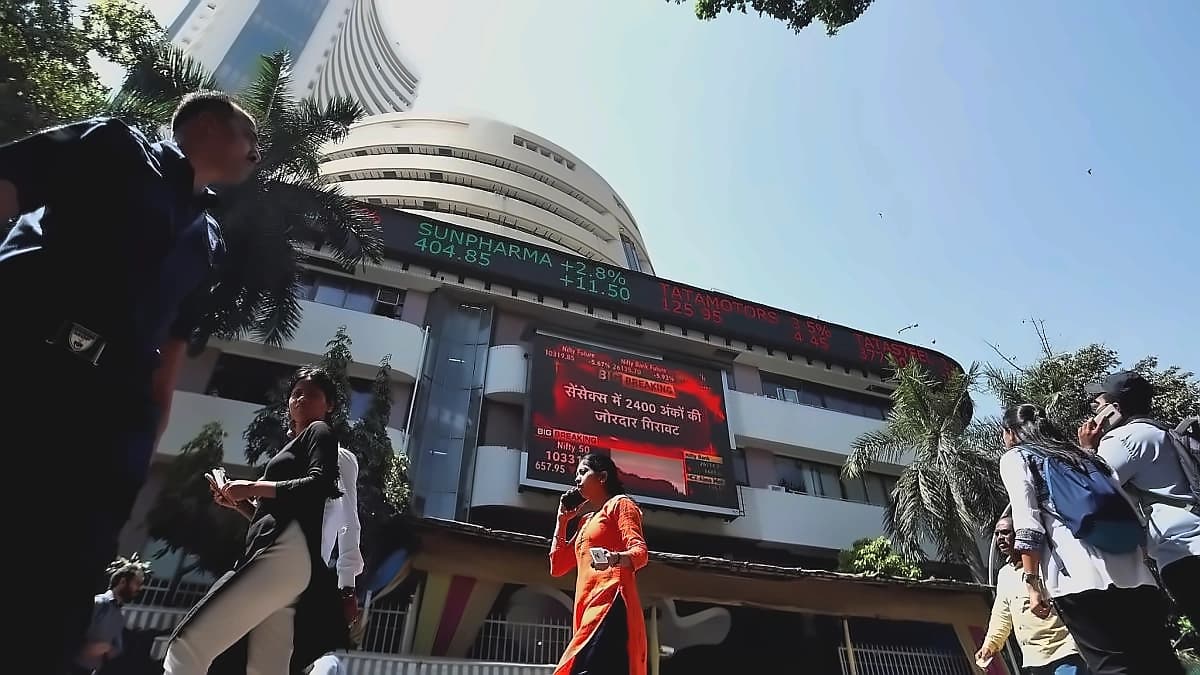
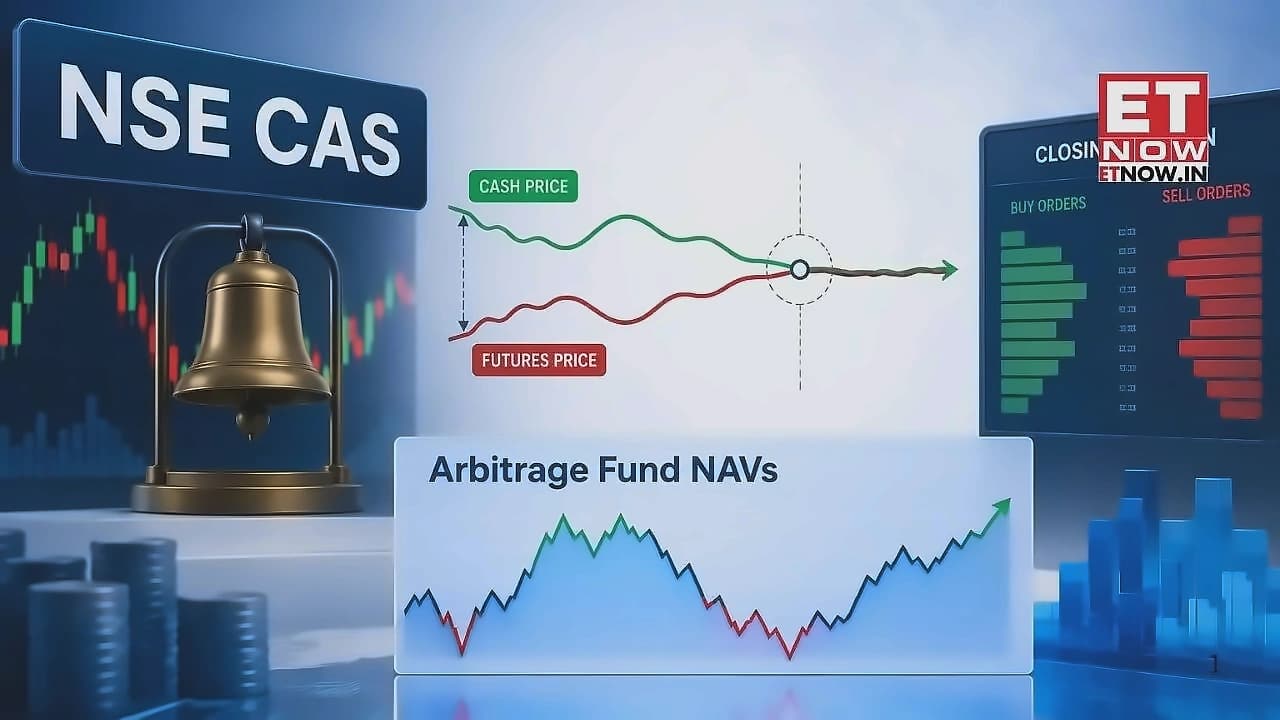
Retail traders are observing a proposed 'No Trade Day' on August 12 to protest the newly introduced Closing Auction Session (CAS), higher securities transaction tax and changing market rules. Several retail traders are boycotting the stock market today, not trading Indian equities as a mark of protest against the CAS system that has triggered panic among investors this month. As per The Economic Times, several investors took to social media platforms, encouraging others to quit trading on Wednesday as a mark of protest against the system, along with the higher securities transaction tax (STT) and changing rules. Ashish Gupta, a full-time trader, stated 'I carried zero positions in indices, won't take any indices trades or new SSO trades today. Have SSO positions open which I'll manage if needed. Let's observe #NoTradingDay today and make it a success'. However, some traders questioned the timing of the boycott, suggesting Tuesday or Thursday would have been more effective due to higher trading volumes on expiry day.
India's options trading has experienced a dramatic 27% decline to 268 million contracts for the August 4 and August 11 expiries, compared to approximately 369 million contracts on average across weekly expiries in July, according to data compiled by Bloomberg. This sharp drop demonstrates how the new closing auction mechanism is fundamentally altering trading strategies and liquidity patterns in one of the country's biggest market-structure overhauls in years. The decline shows how the new price-setting system is particularly affecting traders, especially around derivatives expiry, among the market's busiest days. Some traders are pulling back or changing their trades after sharp price moves during the auction's first few days made it harder to buy and sell at expected prices, though these swings have since eased as participants adapt to the new framework.
Indian equity markets are likely to open on a flat to negative note on Monday, the first week after the introduction of the closing auction session, which has confused both traders and investors. According to reports from The Hindu BusinessLine, Gift Nifty at 24,667 signals a flattish opening for Indian markets, as Nifty August futures on Friday closed at 24,655. The rollout of the NSE's Closing Auction Session (CAS) for F&O stocks was the week's key market development, with continuous trading in F&O stocks ending at 3:15 pm, followed by the closing auction session until 3:40 pm.
The recently introduced CAS, a mechanism to determine the closing price of about 200 stocks that are also traded in derivatives segments, has led to wide divergence between the two leading indices, Nifty and Sensex. During the first week of trading under the new system, some traders said that one of the country's most significant market structure reforms in recent years was failing to deliver as intended. The impact was most visible during the first two trading sessions, with last week on Monday and Tuesday, the closing auction reversed part of the NSE Nifty 50 Index's intraday decline, resulting in an official closing level that was higher than the index's position when continuous trading ended at 3:15 p.m. local time. However, by Thursday, the first weekly expiry of the BSE Sensex Index under the revised closing-price mechanism was completed with little disruption, and the benchmark finished 0.2% above its 3:15 p.m. level. The disruption has sparked brokerage revenue concerns, with Zerodha Broking Ltd. estimating the new system could reduce industry-wide earnings by between 1% and 5%, while Jefferies expects a larger effect, saying that a 10% to 20% decline in expiry-day contracts could lead to an overall fall of 5% to 10% in options trading volumes.

Vinod Nair, Head of Research at Geojit Investments, said the gap between the 3:30 pm and 3:40 pm closing prices of Nifty stocks and the index, along with the divergence with the Sensex, suggested that the new system was not functioning as intended. 'This has triggered forced square-offs of positions, particularly among retail investors, ahead of the 15 minute blind derivatives window closing session,' he explained. Nair said these appeared to be initial teething issues and that exchanges and the market regulator need to address the discrepancies. Raj Deepak Singh, vice president of derivatives and quantitative research at ICICI Direct, noted that 'Since it has only been a few days, it is difficult to make a judgement call on the new methodology as the market takes time to adapt'. The official closing price is used to settle stock and index derivatives, adding significance to the disruption as every developed market has a closing auction, but India just got there before the liquidity did.
As reported by The Hindu BusinessLine, sector-wise market performance remained mixed, with buying interest largely concentrated in specific sectors. Nifty Auto, Nifty IT, Nifty Metal and Nifty PSU Bank emerged as the strongest performers, supported by sustained buying momentum and improving investor sentiment. On the other hand, Nifty Private Bank, Nifty Realty and Nifty Financial Services witnessed profit booking and underperformed the broader market. The trend of FPIs turning buyers in India, which was pronounced in July, has continued in August as well, with FPIs buying equities worth ₹12,920 crore till August 7.
Dr V K Vijayakumar, Chief Investment Strategist, Geojit Investments Ltd, noted that given the improving prospects for GDP and earnings growth in India, FPIs are likely to continue buying. However, this trend may be limited since U.S. bond yields (the 10-year is at 4.67%) are high. According to Kruti Shah, Quant Analyst at Equirus Securities, flows remain constructive, although conviction remains selective, with sectoral leadership continuing to rotate across different segments. The new framework could also affect the National Stock Exchange of India Ltd., which is preparing for an initial public offering and derives a substantial portion of its revenue from derivatives trading, with activity in equity futures and options on the country's largest exchange having already fallen to a 17-month low in July after the central bank tightened funding norms.