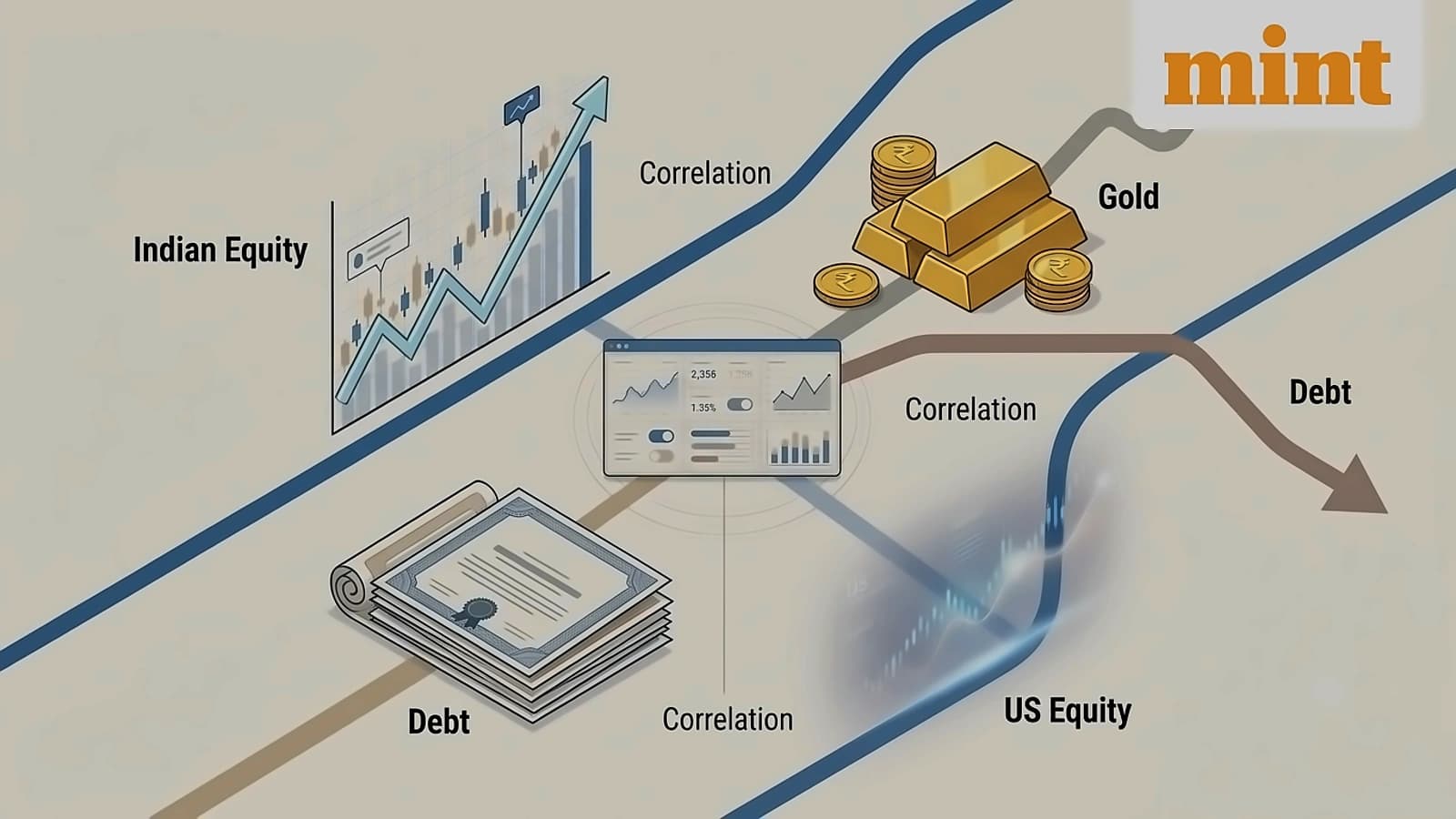
As markets become more volatile and leadership shifts across asset classes, investors may need to rethink portfolios built around a single source of returns. According to reports from Mint, investing has never been about chasing yesterday's winners but preparing portfolios for tomorrow's uncertainties. The next decade is likely to look different from the last, with geopolitical realignments, technological disruption, shifting interest-rate cycles, inflationary pressures, demographic changes and evolving capital flows creating a world where leadership among asset classes is likely to rotate more frequently.

Equities remain one of the most effective vehicles for long-term capital appreciation, with India's structural growth story remaining intact. As reported by Mint, even strong equity markets move through cycles, with valuation corrections, liquidity shocks, policy changes and global events producing extended periods of volatility. History has repeatedly shown that no single asset class outperforms in every market environment, and investors who are heavily concentrated in one asset often find themselves making emotional decisions precisely when discipline is required.
Diversification once meant allocating capital across equity, debt and gold, but the investment universe has broadened significantly. According to the report, global equities provide exposure to innovation-led sectors and economies that may be underrepresented in domestic markets. Real estate investment trusts (Reits), infrastructure Investment Trusts (InvITs), private market opportunities and multi-asset investment strategies are becoming increasingly accessible to Indian investors. The objective is to combine assets that respond differently to changing economic conditions, reducing dependence on any one market cycle.
One of the biggest challenges investors face is behavioral rather than analytical, with a temptation to increase exposure to whichever asset class has recently delivered the strongest returns. As reported by Mint, diversification introduces discipline by allowing assets that have appreciated to be rebalanced while temporarily out-of-favor assets can be accumulated at more attractive valuations. This encourages investors to systematically book profits and redeploy capital rather than chase momentum, providing a behavioral framework that helps investors stay invested through market cycles.
Another shift underway is the move from return-centric investing to goal-centric investing, with different objectives requiring different investment approaches. According to the report, a young professional building retirement wealth, a business owner preserving family capital and parents saving for higher education should not necessarily own identical portfolios. Each objective carries a different investment horizon, liquidity requirement and risk tolerance, with diversification enabling portfolios to align more effectively with differing needs. Rather than constructing portfolios around market predictions, investors should construct them around life outcomes, where asset allocation becomes more important than individual security selection.