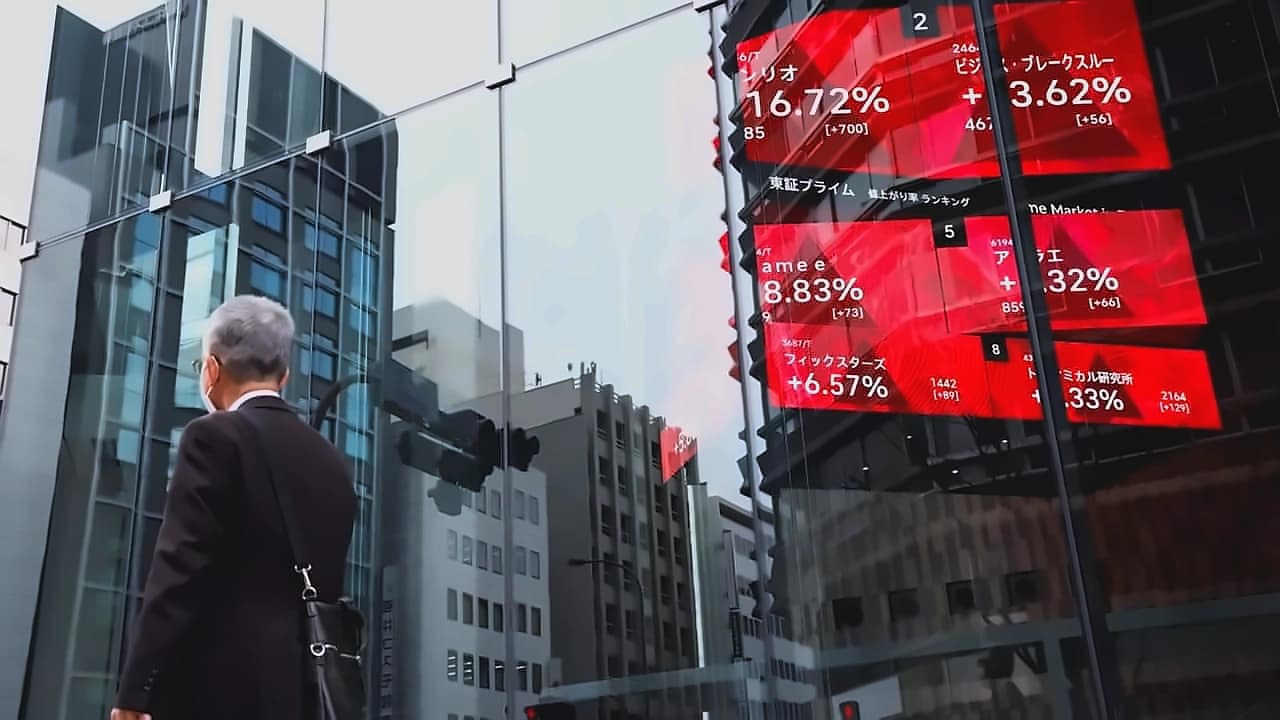
South Korea's Kospi closed at 6,835.8 points on September 1, up 0.23%, marking its second consecutive gain after recovering from an early decline. According to reports from Bloomberg, the index opened 0.52% lower following fresh U.S.-Iran airstrikes and a hawkish Fed speech from Chair Kevin Warsh that unsettled global markets. The index had earlier hit a session low near 6,730 before staging a recovery as dip-buying flowed in during the session. As analyst Lee Kyung-min from Daishin Securities noted, "external uncertainty dampened investor sentiment, but strong buying from big companies backed up the index."
The market recovery was primarily driven by corporate buybacks worth ₹1.68 lakh crore from other corporations, with most of the buying believed to be share buybacks by Samsung Electronics and SK Hynix. As reported by Bloomberg, government data showed Korea's August exports stayed solid on strong chip demand, extending the chip-driven rally that has supported the Kospi. SK Hynix finished at ₹1,693,000, up ₹19,000 (1.14%) from the previous day, while Samsung Electronics closed at ₹260,000, up ₹1,000 (0.38%). Among other gainers, Samsung C&T showed strong performance in the 3.7% range, SK gained 7.52%, and Shinhan Financial Group advanced 2.02%.
Despite the overall market gain, all three major entities recorded net selling, creating an unusual supply and demand pattern that restricted both the upper and lower bounds of the index. According to latest market data, individual investors sold ₹433.7 billion (about $316.47 million), driven by a strong desire to realize profits following the short-term rise from the previous day. Foreign investors maintained selling dominance with ₹153.5 billion in net outflows, while institutional investors expanded their selling volume to ₹274.8 billion, centered around financial investments and pension funds. However, large-scale net buying volume exceeding ₹1.6 trillion flowed in from other corporations, including share repurchases, firmly supporting the lower bound of the index. The broad-based selling pressure from foreign investors highlighted the challenges facing Korean markets amid global uncertainty, with the KOSDAQ index falling 1.56% to 821.25 points under combined selling by foreigners and institutions.
Oil refiners gained on rising crude prices, with SK Innovation up 7.81% and S-Oil up 1.07%. However, some stocks faced pressure, including LG Energy Solution falling 2.91%, Hanwha Aerospace declining 3.99%, LG Electronics dropping 4.62%, and Samsung Electro-Mechanics slipping 1.92%. Key large-cap manufacturing stocks, such as LG Energy Solution, Hyundai Motor, and Kia, exhibited slightly lower to slightly higher trends by stock, reflecting concerns over delayed recovery in global electric vehicle demand and indicators of changing trade environments. The won weakened 1.8 won to trade at 1,370.4 per dollar as of 3:30 p.m., reflecting broader risk-off pressure from Middle East escalation. After reciprocal airstrikes between U.S. forces and Iran, West Texas Intermediate jumped 2.83% to settle at $85.76 per barrel, while the Dow Jones Industrial Average closed at 53,185.90, down 0.70% following Wall Street's overnight decline. Among KOSDAQ stocks, pharmaceutical and biotech names fell alongside major secondary battery shares, with Alteogen losing 2.11%, EcoPro falling 4.49%, and Peptron tumbling 9.66%.