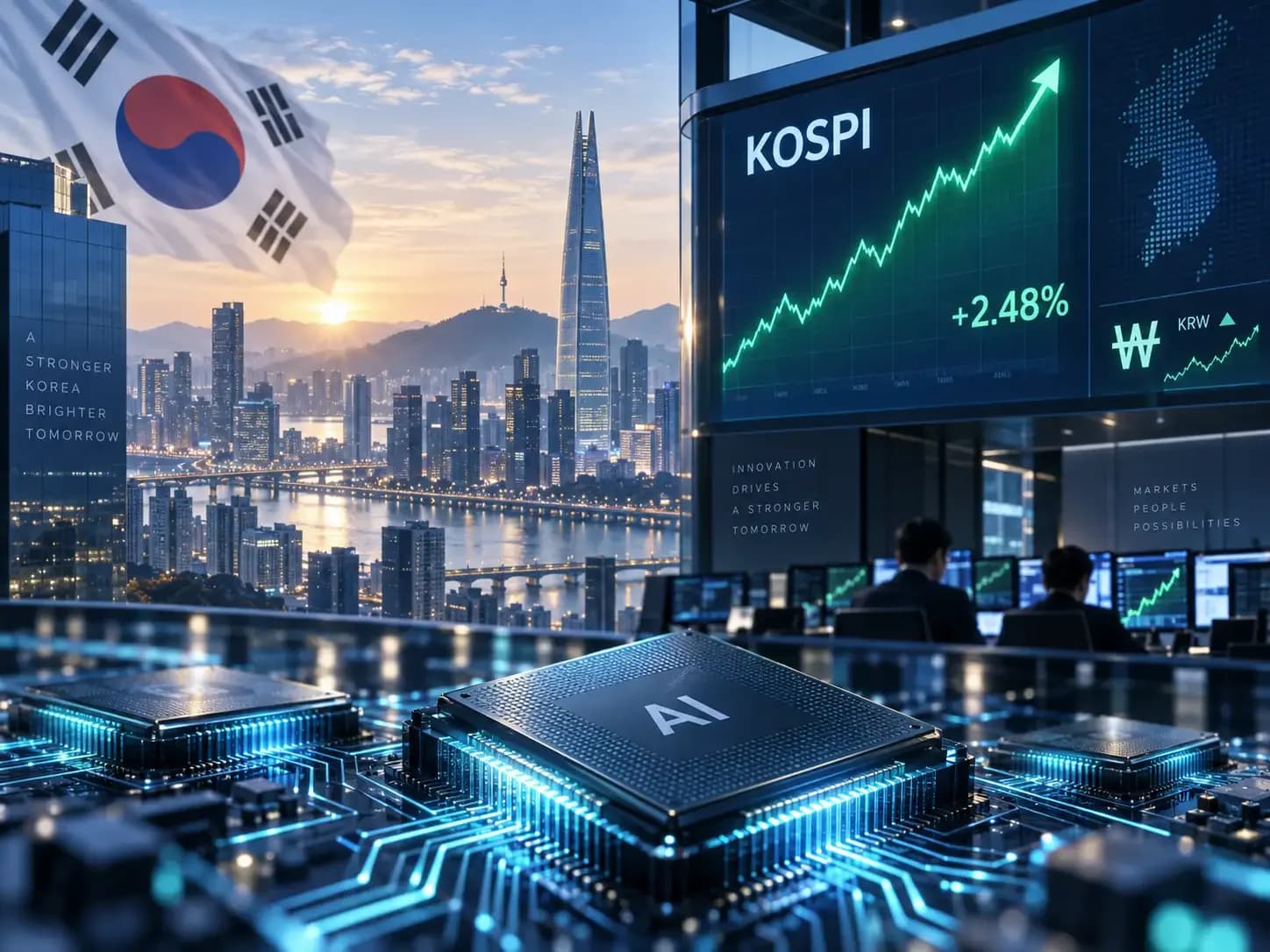
Asian equities staged a dramatic recovery on Thursday as MSCI's Asia Pacific equities gauge rose 0.8%, with South Korean shares leading the region higher. The Kospi surged 6.13% intraday, while Japan's Nikkei 225 gained 1.3% to 66,178.26 and the Topix added 0.80%. Hang Seng futures pointed to a 0.9% rise, building on gains from the previous session. The rally was primarily driven by SK Hynix's shares jumping 14.1% and Samsung Electronics gaining 9.7% after the company announced a massive ₹29 billion ($29 billion) share buyback program and stepped up returns to shareholders. This marked a significant turnaround from the previous session's semiconductor selloff, where Samsung Electronics Co. and SK Hynix Inc. both declined around 8%. No Korean company has ever announced a buyback this large, with the move set to retire about 3.3% of outstanding shares. The sharp early rally triggered a "sidecar" trading curb, a mechanism designed to temporarily ease excessive market volatility, as reported by Reuters.
China and Hong Kong stocks advanced on Thursday, with healthcare shares surging and technology stocks recovering after a sharp selloff in the previous session. China's blue-chip CSI300 index rose 0.2% by the lunch break, after tumbling 3% on Wednesday, while the Shanghai Composite gained 0.3%. Hong Kong's Hang Seng Index climbed 1.5% following a largely flat session a day earlier, with the recovery led by healthcare and technology sectors. China's CSI Vaccine and Biotech Index jumped 10%, while Hong Kong's Hang Seng Innovative Drug Index advanced more than 8%. China's STAR100 Index rose nearly 3%, recovering part of its 7% decline in the previous session, while Hong Kong's Hang Seng AI Index gained about 4%, reflecting renewed buying interest in artificial intelligence and technology-related stocks. However, the recovery was uneven, with shares of Chinese humanoid robot maker Unitree falling 16% after the stock surged more than fivefold during its blockbuster Shanghai trading debut on Wednesday, highlighting the heightened volatility surrounding some of China's technology and emerging-sector stocks.
The recovery gained momentum from US Treasury Department's announcement to at least double the size of planned purchases of longer-term government debt, which helped ease pressure on Asian markets. US futures edged higher after the Treasury announcement, with the benchmark S&P 500 climbing 0.2% for its first gain in four days. The Dow Jones Industrial Average added 0.2% and the technology-heavy Nasdaq composite also rose 0.2%. Yields on US government bonds fell after the Treasury announcement, with the yield on the US 10-year Treasury falling to nearly 4.64% from 4.71% on Tuesday, though it remains well above pre-Iran war levels. The 30-year Treasury yield fell to 5.18% on Thursday, from 5.28% on Tuesday. Japan's 10-year government bond yield also eased to around 2.83% from more than 2.89% on Wednesday, after trading near 30-year highs. The move appeared to mollify investors worried over rising yields that had been driven by concerns about inflation stemming from the monthslong war in Iran and ballooning government debt. As per Investing.com India, the real story is not Seoul or Tokyo, but the message Treasury just sent to the bond market - by at least doubling selected buybacks in the 10-year to 30-year sector, Treasury has effectively told traders that Washington has a pain threshold in long-term borrowing costs.
The recovery extended beyond semiconductor stocks with 544 stocks advancing and 319 declining out of 902 traded, according to Reuters. Foreign investors were net buyers of shares worth ₹524.5 billion, providing crucial support to the rally. Other heavyweight stocks also advanced significantly, with LG Energy Solution gaining 2.38%, Hyundai Motor and Kia rising 2.42% and 0.53% respectively, POSCO Holdings climbing 2.19%, and Samsung BioLogics adding 1.68%. Hong Kong's Hang Seng gained 1.1% to 25,786.32, while the Shanghai Composite index rose 0.3% to 3,905.23. Australia's S&P/ASX 200 was up 0.3% to 9,066.40, Taiwan's Taiex was nearly unchanged, and India's Sensex climbed 0.7%. The South Korean won weakened 0.29% to 1,393.1 per dollar on the onshore settlement platform, compared with the previous close of 1,389.1. In fixed-income markets, September futures on three-year Treasury bonds fell 0.04 point to 103.26, while the most liquid three-year Korean Treasury bond yield rose 2.9 basis points to 3.815%, and the benchmark 10-year yield declined 8.8 basis points to 4.325%.
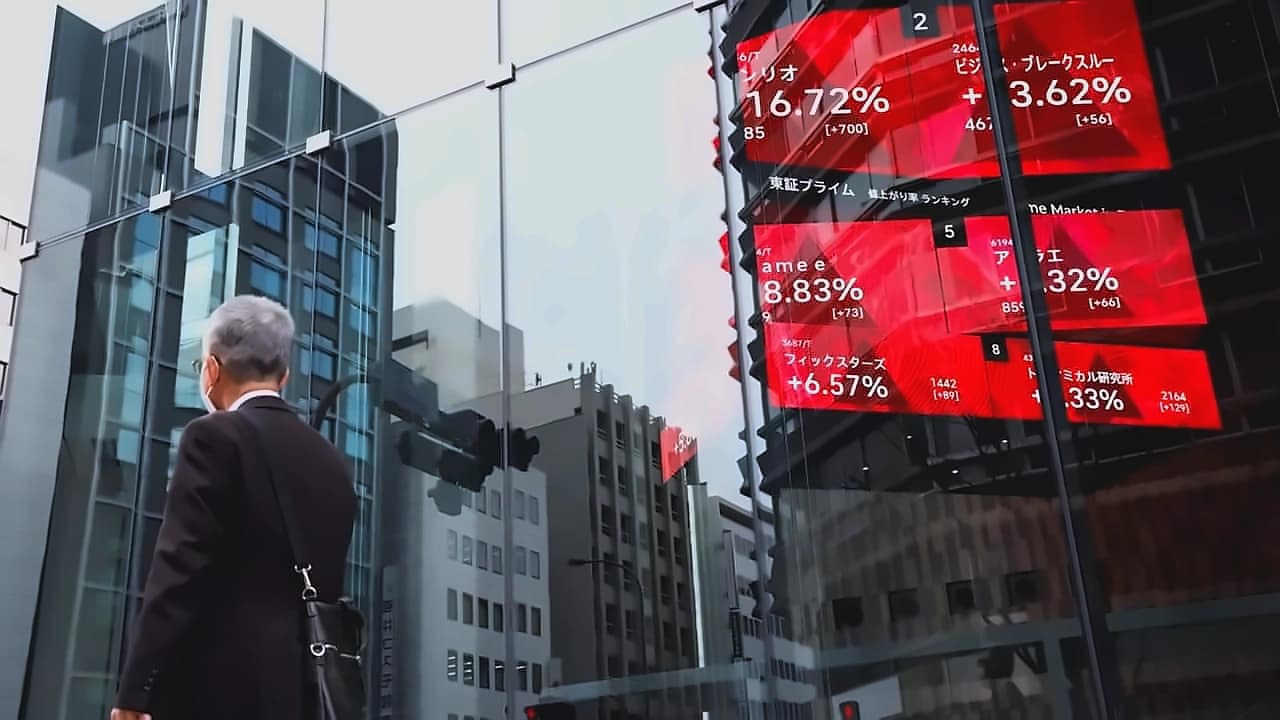
The recovery reflects broader market relief as US stock index futures also edged up during early Asian trading hours, building on the gains that the S&P 500 Index posted on Tuesday, despite weakness among chipmakers. However, concerns about the AI sector's valuation amid rising borrowing costs remain. Heavy corporate borrowing tied to the artificial intelligence build out, alongside softer appetite from traditional buyers of long-dated debt, had also weighed on the market. The Japanese yen was little changed at 158.21 per dollar, while the offshore yuan held steady at 6.7291 per dollar. The Kospi is still seeing daily swings exceeding 5%, though the mountain of leveraged trades that drove record levels of volatility has started to unwind. The highly volatile Korean markets, driven by a number of factors related to AI, continue to influence regional performance. If the gains hold, the Kospi would post its strongest daily percentage increase since July 31, marking a significant milestone for the benchmark index. As per Investing.com India, the next trade is whether investors respect that line, or simply march the long end back toward the recent highs to find out exactly where Washington's real pain threshold sits - Bessent has bought the market some breathing room, but the credibility test has only begun.