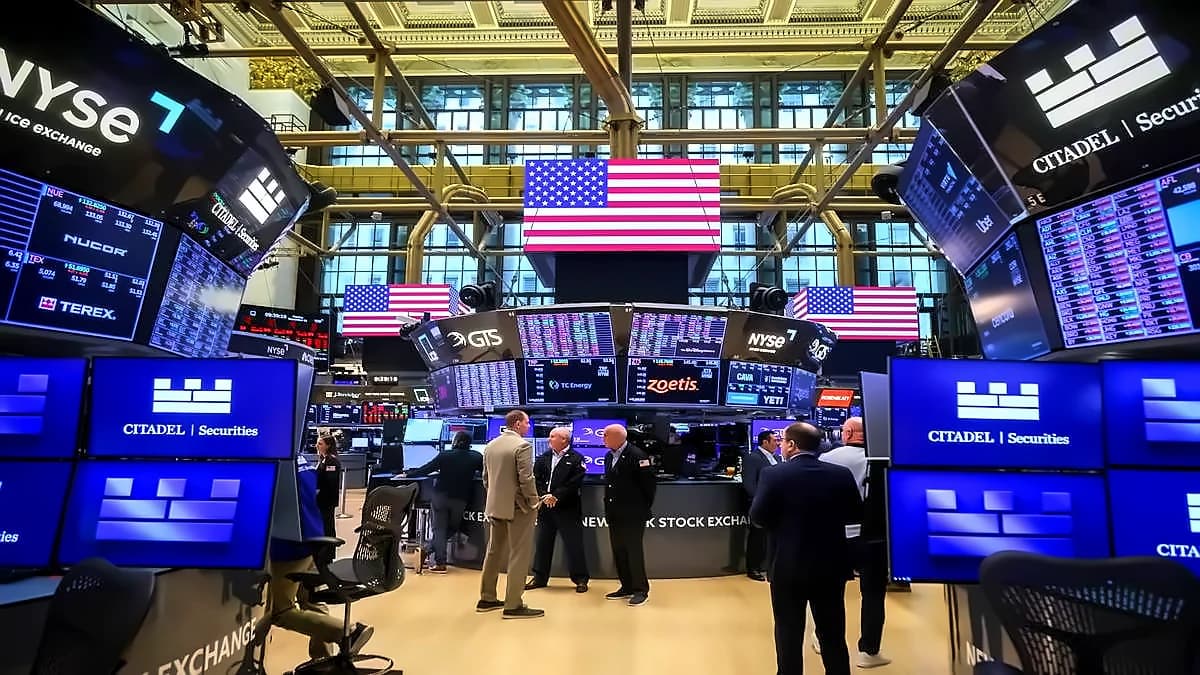
The bond market is experiencing a major selloff as long-term yields hit the highest levels since the Great Financial Crisis, with the 30-year yield reaching 5.18% on Tuesday, the highest since 2007. According to Bank of America, the so-called bond vigilantes have returned, referring to traders who protest huge deficits by selling off bonds to push yields higher. The selloff is being driven by unsustainable fiscal dynamics compounding with a reflation story, as analysts note that fiscal policy is the elephant in the room. The federal government has already signaled it must issue more debt than expected as cash flow weakens, with President Donald Trump's tax cuts delivering bigger refunds this filing season.
Rising inflation is prompting investors to reassess their market strategy, with cyclical value stocks emerging as a more attractive option. According to reports from CNBC TV18, the current economic environment is creating what analysts describe as a 'running hot' outlook, which is making value stocks more appealing to investors seeking defensive positions. This shift represents a notable change from recent years when value stocks had been relatively underperforming in the market. Ned Davis Research has reinforced this trend, noting that value stocks tend to outperform in periods when inflation is rising, as reported in their latest client note.
The investment interest in value stocks is being driven by relatively high near-term growth projections and the broader economic environment. As reported by CNBC TV18, the combination of these factors is creating conditions that make value stocks more attractive to investors who are seeking defensive positions in the current market climate. Ned Davis Research analysis shows that inflation has accelerated to a 3.8% yearly pace in April, marking the fastest rate of inflation in about three years. The research firm notes that "the data suggests that the disinflation backdrop that has supported the bull market since the October 2022 bear low is no longer in place and instead has transitioned into an inflationary headwind."
According to Ned Davis Research analysis dating back to 1972, energy has been the best-performing sector during periods of rising inflation, posting a relative gain of 12%. Consumer staples followed with a 4.3% relative increase, while health care posted a 4% increase. In hot inflation regimes, earnings tend to be strongest in real estate, energy, materials, and industrials sectors. The real estate sector has seen an average earnings per share growth rate of 34% in periods of rising inflation, while energy and materials sectors have typically seen earnings grow by about 30%.
In periods of rising inflation, market gains have been most concentrated in energy, consumer staples, health care, and materials sectors, according to Ned Davis Research analysis. The firm identifies that financials have been the weakest sector by a wide margin, posting an average relative loss of 11% in hot inflation periods. Higher prices can cause rates to stay higher for longer, increasing interest and funding costs while leading to portfolio losses. Ned Davis Research suggests that if the Fed pauses its easing cycle for six months or more, the broader market sees a sharp pullback within the following four months, citing their analysis of stock performance following Fed pivot patterns.

The gaming industry faces unique challenges as Caesars Entertainment experiences takeover interest from experienced operators including Tillman Fertitta and Carl Icahn. According to Investing.com, the promotional environment in Las Vegas can become particularly aggressive during periods of softer demand, compressing margins as operators offer incentives to attract customers. If Caesars must increase promotional spending to maintain market share, the impact on profitability could offset strength in other segments. The concentration of Caesars' assets in Las Vegas creates exposure to cyclical economic dynamics, with consumer spending on entertainment and travel showing sensitivity to economic conditions, interest rates, and consumer confidence. Any economic slowdown could disproportionately impact discretionary travel destinations like Las Vegas.