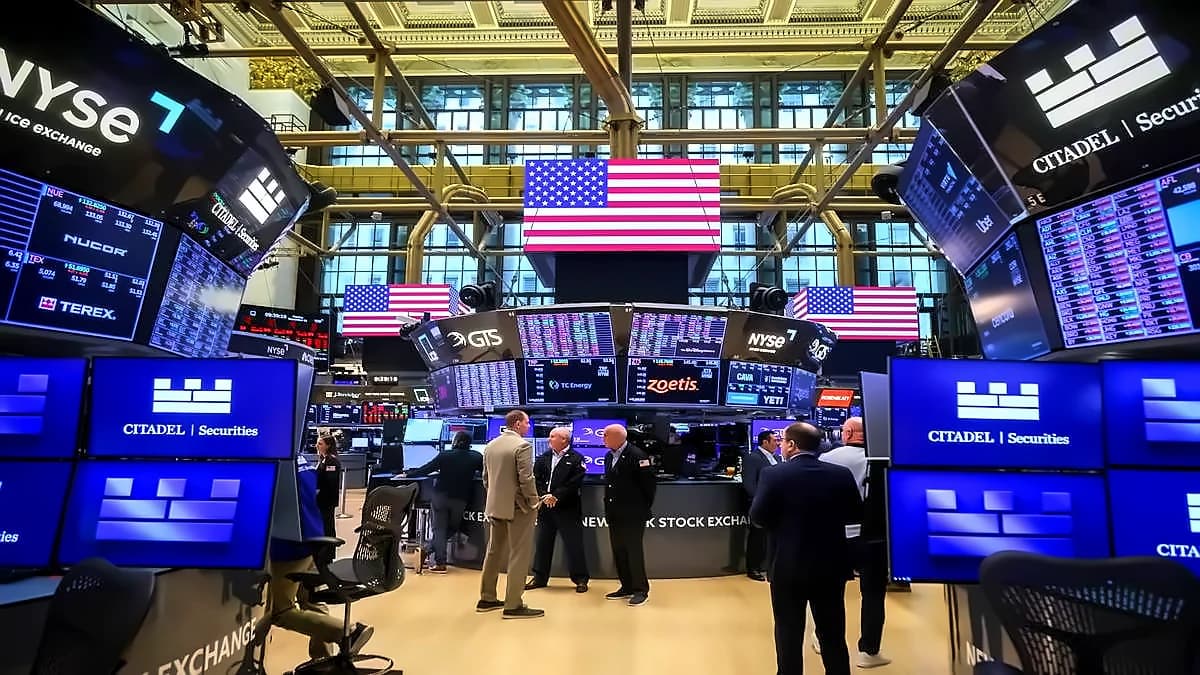
US stocks achieved another milestone on Thursday, ending at record highs for the second consecutive session despite rising bond yields and oil prices. The Dow Jones Industrial Average rose 0.75%, or 370 points, to close at 50,063, surpassing the 50,000 mark for the first time. The S&P 500 gained 0.77%, or 57 points, to 7,501, while the Nasdaq Composite advanced 0.88%, or 232 points, to 26,635, with both indexes posting record closes for the second consecutive session. This performance comes amid rising bond yields and oil prices, with Brent crude futures for July delivery rising 0.10% to $105.72 a barrel and WTI crude at $101.17 per barrel. Since January 1, the S&P 500 is up 9.5% while the Nasdaq Composite has gained 14.6% year-to-date, with the Dow Industrial Average also up 4% year-to-date. As FOREX.com analyst Fawad Razaqzada notes, equities continue to rally despite stronger CPI and PPI data, rising Treasury yields, and geopolitical risks in oil markets.
The Magnificent Seven stocks - Apple, Alphabet, Microsoft, Meta, Amazon, Tesla, and Nvidia - have delivered 25% returns in 2025, significantly outperforming the S&P 500's 16% gain. As reported by The Financial Express, these tech giants have been the primary catalyst for market gains, with the Nasdaq 100 up 20% in three months and 12% in the last 30 days. However, concentration risks remain evident as over 80% of Nasdaq-100 performance is concentrated in just 19 stocks, while over half of S&P 500 performance is concentrated in just 20 stocks. Strong performances from major technology stocks, particularly Nvidia and Cisco Systems, supported the latest rally amid signs of US-China understandings on key issues. Cisco Systems' stock surged 25.36% in one week following a strong Q3 FY26 report showing record revenue and robust AI infrastructure orders raised to $9 billion for FY26.
The current rally has delivered unprecedented market capitalization gains, with the S&P 500 achieving its 14th record close since March 30th. As reported by einsteinofwallst, since the March low, the index has gained over $10 trillion in market cap, representing one of the most dramatic market recoveries in recent history. This performance comes despite rising costs including rising bond yields and oil prices, with Brent crude futures for July delivery rising 0.10% to $105.72 a barrel and WTI crude at $101.17 per barrel. The sustained record-breaking performance reflects strong corporate earnings and investor confidence in the current market environment, though 24/7 Wall St. sets a 12-month price target slightly below current levels for some major stocks.
Futures tracking the Nasdaq and S&P 500 tumbled more than 1% on Friday, with an AI-driven rally in US stocks poised to stall as Treasury yields jumped on concerns about higher inflation driven by the Middle East conflict. The yield on 10-year Treasury notes hit 4.54% - its highest level since early June 2025, as increasing evidence of economic damage from the Iran war prompted investors to assume interest rates will rise faster than expected and growth will suffer. The odds of the US Federal Reserve hiking interest rates by 25 basis points in December have more than doubled over the past week to about 40%, according to CMEGroup's Fedwatch tool. Brent crude prices rose almost 3% to $109 a barrel as the Strait of Hormuz remained closed, heightening concerns over global energy supplies. As Swissquote senior analyst Ipek Ozkardeskaya notes, "The longer the Middle East war drags on, the higher energy prices rise - fuelling inflation expectations and borrowing costs, and increasing the cost of building that extra data center."
Despite the record-breaking performance, US stock futures indicate a softer open following the record-breaking session, as reported by recent market data. The rally faces headwinds from broader trade tensions and geopolitical risks, including rising oil prices and inflation data. The Federal Reserve rate hike probability has doubled, reflecting increased inflation concerns, while global bond markets face synchronized selloffs ahead of a G7 finance ministers meeting. As FOREX.com analysts note, stretched technicals and overbought conditions could signal a near-term pause or consolidation despite the current rally, with market participants remaining cautious about the sustainability of the recent gains amid rising cost pressures. At 05:38 a.m. ET, Dow E-minis were down 330 points, or 0.66%, and S&P 500 E-minis were down 80.75 points, or 1.07%, while Nasdaq 100 E-minis were down 463.25 points, or 1.56%.