India's stock market is on the verge of dropping out of the world's five biggest markets for the first time in three years, according to reports from The Economic Times. The country's weight in the MSCI emerging markets index has fallen to about 12% from 19% last year, while foreign investors have withdrawn a net $42 billion since the end of 2024. This represents a stark reversal from India's peak market value of $5.73 trillion in September 2024, when the NSE Nifty 50 Index was the world's best-performing major market. As per Goldman Sachs Group Inc. calculations, foreign investors now hold less than domestic institutions for the first time in more than 20 years, with their ownership pushing to a 14-year low.
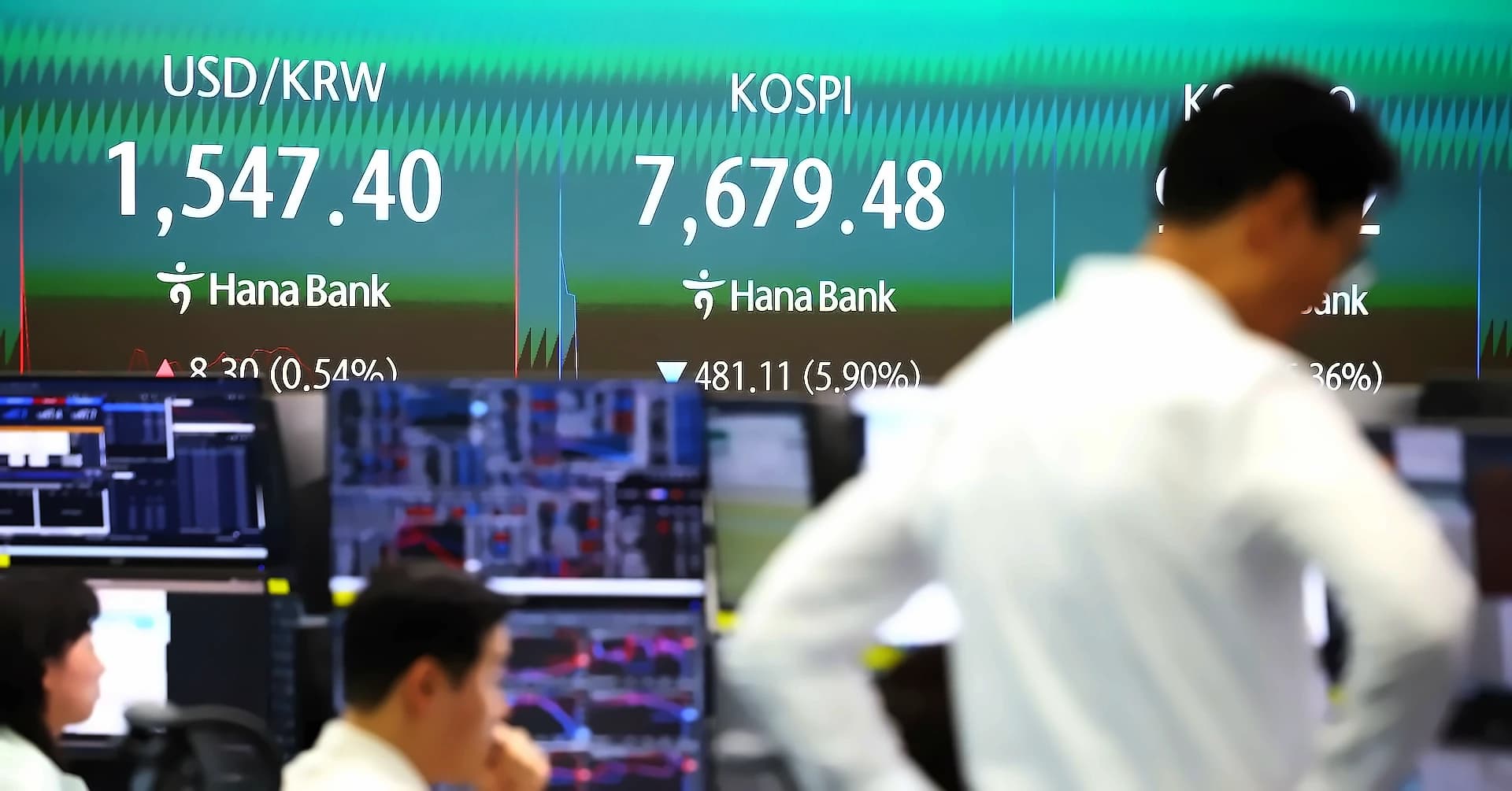
Unlike Taiwan and South Korea, India lacks AI-driven rallies that are powering global investment flows. As reported by The Economic Times, roughly two-thirds of the reallocation from India over the past 12 to 18 months reflects AI positioning, with the country's AI-powered equity benchmarks down more than 9% this year compared to Taiwan's 78% gain and Korea's 42% increase. The two North Asian markets are now less than $500 billion away from overtaking India in equity market value. According to M&G Investments, this shift goes beyond Indian equities being relatively expensive or corporate earnings slowing, as global investors are chasing themes the country's market largely lacks: chip manufacturing, computing infrastructure and AI models.
The NSE Nifty IT Index has dropped more than 26% this year to around its lowest since 2023, according to The Economic Times. The IT services sector, worth $315 billion and led by Infosys Ltd. and Tata Consultancy Services Ltd., faces vulnerability as generative AI tools automate coding, testing and back-office functions. The IT industry's Nifty weight has fallen to about 8% from more than 17% in early 2022, with earnings growth estimates for companies in the benchmark Nifty 50 in 2027 having roughly halved since the start of the year. As per Vontobel's Quality Growth boutique, the Nifty IT gauge is heading for its first annual drop after a decade of gains, caught in a broader global selloff in services and old-economy stocks exposed to AI disruption.

Growth forecasts are moderating significantly, with the International Monetary Fund predicting GDP will likely expand 6.5% in 2027 and 2028 after an average annual rate of 8.3% in the last four years. As reported by The Economic Times, as many as 15 million Indians work in IT services and global capability centers, many in some of the country's best-paying private jobs. A structural slowdown in hiring or fundamental shift in global demand for IT services would ripple across the economy into real estate, consumption, lending and the broader financial sector. According to Chiara Salghini, portfolio manager at Vontobel's Quality Growth boutique, earnings growth estimates for companies in the benchmark Nifty 50 in 2027 have roughly halved since the start of the year.
According to The Economic Times, India is approaching a genuine strategic inflection point as the next phase of global growth is being shaped by AI infrastructure, compute power and technological ownership that India has not yet secured. The rupee has swooned to a record low against the dollar, forcing Prime Minister Narendra Modi to plead with citizens to cut fuel use and avoid unnecessary travel. Industry experts suggest that while some investors believe the worst is already done after a prolonged slump, the urgency for strategic rethinking has not fully landed among market participants. As per Gary Dugan, chief executive of Global CIO Office, "This isn't a dip you buy. What markets haven't fully priced yet is that this isn't an earnings miss story in India, it's a terminal value story. The assumptions about where these businesses are in 10 years have to change."