The US Energy Information Administration (EIA) has sharply revised its assumptions for global oil supply disruptions, warning that interruptions to Middle Eastern exports are likely to be deeper and more prolonged than previously anticipated. The agency now assumes the Strait of Hormuz will remain effectively closed through the end of May, extending earlier expectations that disruptions would ease by April. According to the EIA, approximately 10.5 million barrels per day (mbpd) of oil production was shut in across the Middle East in April, with disruptions expected to rise further to 10.8mbpd this month as regional storage facilities approach capacity limits. The updated estimates are substantially higher than the EIA's earlier forecast, which projected peak supply losses of 9.1mbpd in April. The widening supply deficit is expected to accelerate the depletion of global oil inventories, with the EIA now forecasting global oil stockpiles will decline by 2.6mbpd this year — a dramatic upward revision from its earlier estimate of roughly 300,000 bpd.
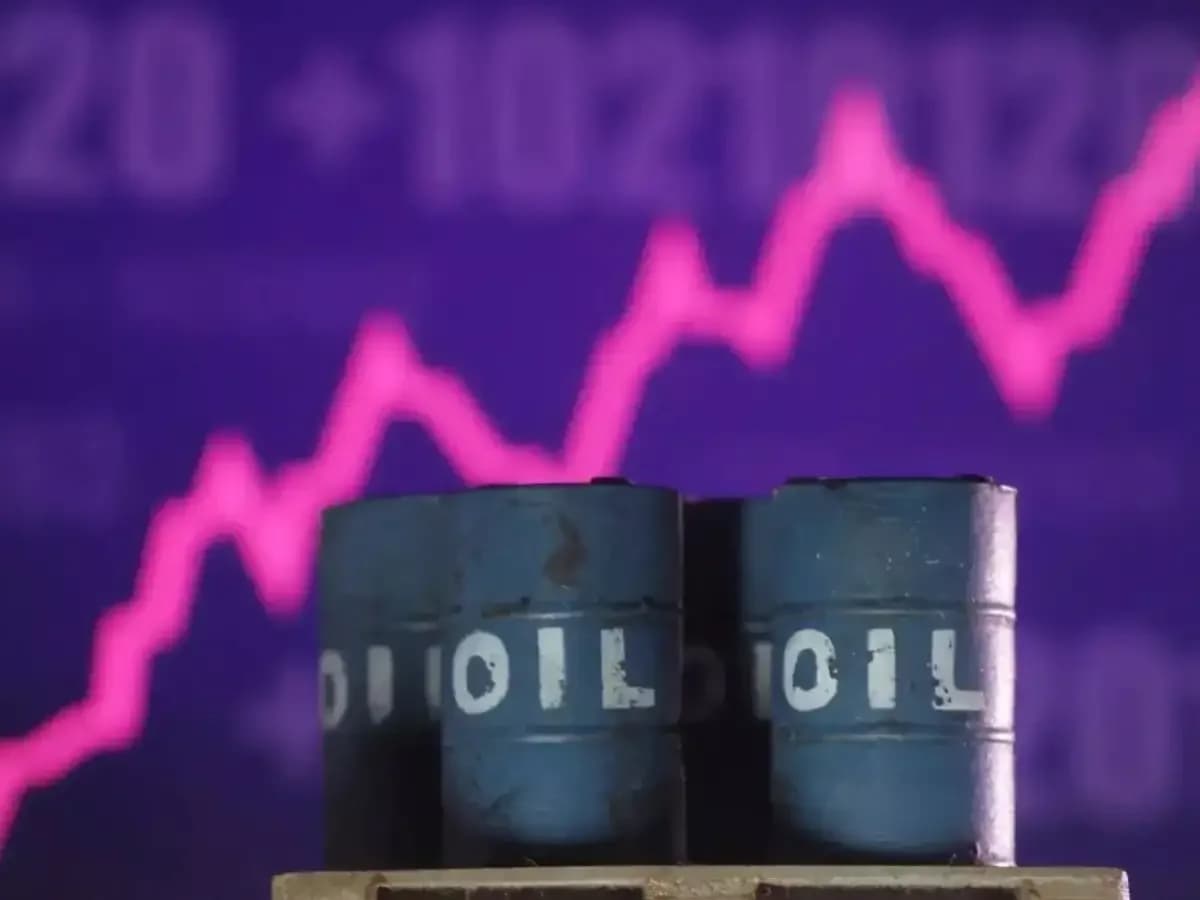
Oil prices have surged significantly as markets respond to the collapse of confidence in diplomatic resolution pathways rather than physical supply disruptions. According to Commerzbank analysts, the current situation reflects traders pricing in the disappearing probability of a managed reopening of the Strait of Hormuz, not confirmed closure. Brent crude climbed above the US$109 per barrel mark as fears grew over supply disruptions and shipping instability in the Gulf region. The oil market's reaction is not primarily a response to physical events but to the breakdown in diplomatic channels, with Brent crude futures settling at $109.26 per barrel, rising $3.54 (3.35%) while U.S. West Texas Intermediate crude futures ended at $105.42 per barrel, up $4.25 (4.2%). For the week, Brent crude advanced 7.84% and WTI gained 10.48% amid uncertainty surrounding the fragile ceasefire in the Iran conflict. The latest developments saw oil benchmarks record a weekly surge of $7 per barrel, as geopolitical jitters surrounding Iran, the Strait of Hormuz, and a lack of substantive outcomes from the Xi-Trump summit outweighed bearish demand revisions from OPEC and the IEA.
The ongoing US-Iran conflict continues to dominate market sentiment as the war and negotiations approach the three-month mark since the conflict began. As reported by Mint, Iran announced it will soon unveil a proposal for managing maritime traffic through the Strait of Hormuz, prompting Donald Trump to warn of serious consequences if Iran refuses to move forward with a peace agreement. The latest developments saw Iranian Foreign Minister Abbas Araqchi stating that Tehran has "no trust" in the United States and would participate in negotiations only if Washington demonstrated seriousness. He also stated that Iran remains prepared both for renewed conflict and diplomatic engagement. President Trump indicated his patience with the pace of talks was running thin, a rhetorical signal that commodity markets interpreted as raising the probability of renewed military engagement. The highly anticipated US-China summit in Beijing yielded little promise of near-term market stabilization, offering scant detail on commodity-related issues and further undermining expectations for a rapid reopening of the Strait of Hormuz. The Trump-Xi summit introduced a variable that briefly tempered market anxiety before proving insufficient to shift the fundamental price trajectory.
The Strait of Hormuz represents a critical chokepoint carrying a disproportionate share of the world's most critical commodity, with the physical geography being a narrow passage roughly 33 kilometres wide at its tightest navigable point separating Iran from the Omani exclave of Musandam. According to Vanda Insights, the market's attention remains firmly fixed on the strategic deadlock, with traders now incorporating a tail risk of renewed military escalation into their pricing rather than treating diplomacy as a credible near-term resolution mechanism. Even a partial reduction in Strait of Hormuz vessel traffic is sufficient to generate substantial upward pressure on global crude benchmarks, with the psychological risk premium embedded in futures pricing moving markets well before any confirmed physical supply shortage materialises. The current situation has placed this geographic reality into sharp focus, demonstrating how energy markets respond to probability shifts rather than just confirmed events. As dawn.today reports, the oil factor remains a primary strategic lever in determining the duration, intensity, impact and the eventual outcomes of this conflict, with the intersection of oil serving as a defining factor in reshaping global geopolitics and economic partnerships.
Santosh Mehrotra, former Economic Advisor to the United Nations, warns that every $10 rise in global oil prices could widen India's current account deficit by 0.3% of GDP. This warning comes as markets remain highly volatile and intensely headline-driven with investor sentiment continuing to hinge on developments surrounding the US-Iran conflict and diplomatic negotiations. Vandana Hari, founder of Vanda Insights, described the market's attention as firmly fixed on the strategic deadlock, with traders now incorporating a tail risk of renewed military escalation into their pricing. The analysis reveals three key scenarios: Partial constraint continues (Base Case) - $100–$110/bbl with elevated near-term probability, Full Strait Closure (Tail Risk) - $120–$130+/bbl with low-moderate probability, and Diplomatic Breakthrough - $85–$90/bbl with low near-term probability. While domestic liquidity continues to offer structural support to Indian equities, analysts warned that sustained recovery would depend largely on stability in crude oil prices, moderation in foreign selling, and improved global risk sentiment.
Market expert Sandip Sabharwal highlights that despite global headwinds like rising crude oil and currency weakness, Indian corporate fundamentals offer stability beneath the volatility. Speaking to ET Now, Sabharwal said that while global headlines are creating discomfort for investors, the underlying performance of Indian companies continues to remain relatively resilient. Bharti-Prudential Deal Seen as Positive for FDI - Commenting on the recent developments involving Bharti Enterprises and Prudential plc, Sabharwal viewed the transaction positively, especially from the perspective of foreign capital inflows. "It is a positive deal because of the fact that any FDI coming in in a big way is always positive," he said, adding that insurance businesses require continuous capital support to sustain growth and expansion. Oil Spike and Iran Conflict Remain Key Market Risks - Sabharwal acknowledged that macroeconomic concerns are beginning to overshadow otherwise healthy corporate commentary, noting that the ongoing Iran conflict and resulting spike in crude oil prices are becoming major concerns for global markets. IT Sector May See Tactical Recovery - On the information technology sector, Sabharwal said the recent fall in the rupee and a global shift away from richly valued AI stocks could trigger a short-term rebound in beaten-down IT counters. "There is a reasonable possibility that we could have some upside in the beaten down IT sector, which would depending on how the overall market does range between 10% to 15% also," he added. Vodafone Idea Still Faces Structural Challenges - Despite some recent optimism surrounding Vodafone Idea, Sabharwal remained unconvinced about its long-term competitive position, describing the stock's movement as largely speculative and arguing that the company's effective equity value remains negligible.