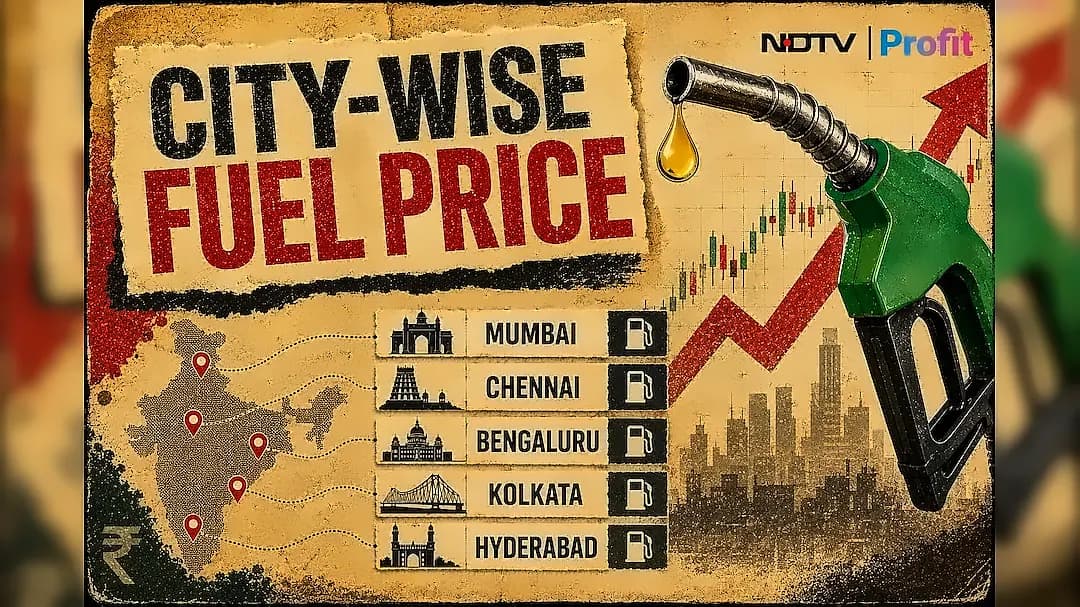
Oil prices have reached unprecedented levels, with Brent crude futures surging past $120/barrel amid escalating tensions from the US-Iran war. According to The Times of Oman, this represents a dramatic escalation from the previous week's surge of 7.84% for Brent crude and 10.48% for WTI. The latest spike comes as Iran's Revolutionary Guards reported that 30 vessels crossed the Strait of Hormuz between Wednesday evening and Thursday, still far short of the 140 vessels per day that was typical before the war, but representing a substantial increase from recent weeks. Shipping analytics firm Kpler confirmed that 10 ships sailed through the strait in the past 24 hours, compared with the 5 to 7 vessels crossing daily in recent weeks. Oil prices remain high, with Brent crude above $110 and WTI near $107 per barrel as uncertainty surrounding the Iran conflict pushed investors toward safe-haven assets and sent US equity futures lower. Latest reports from ET Now confirm that oil prices stay elevated above $110 amid escalating West Asia tensions, with Brent at $111 per barrel, reflecting continued market uncertainty.
India's petroleum product imports have plummeted to their lowest level since 2018, with refined petroleum product imports declining 25.5% year-on-year to an average of 765,000 barrels per day in March 2026. According to The Hindu BusinessLine, the decline was primarily driven by LPG supply disruptions, with LPG imports falling by 397,000 b/d, representing a 38% year-on-year drop. As reported by OPEC in its May monthly oil market report, product imports were down 476,000 b/d or 38% year-on-year, with month-on-month imports declining 245,000 b/d or 24%. Crude oil imports also fell to an eight-month low of 4.5 million barrels per day in March 2026, declining 775,000 b/d or almost 15% month-on-month despite temporary suspension of sanctions. The International Energy Agency (IEA) reported that India's LPG imports have dropped by more than half over the first two months of the conflict, losing around 430,000 b/d.
A prominent economist has made a bold prediction about the Strait of Hormuz's future importance. Andrew Freris, CEO at Ecognosis Advisory, told NDTV Profit that the current crisis could accelerate the creation of alternative export routes, making Hormuz "irrelevant in about a year." Speaking to NDTV Profit, Freris said "We will see a substitute to Hormuz in nine months to one year," arguing that the global energy system is likely to adapt far faster than many investors expect. The remarks come as roughly a fifth of global crude supplies pass through the narrow waterway, which links the Persian Gulf to international markets. Freris does not expect crude prices to ease meaningfully in the near term, warning that elevated energy costs could complicate the outlook for the Federal Reserve System, with the Fed unable to cut rates if oil prices remain elevated.
In a comprehensive global report on geopolitical risks, Moody's Ratings has delivered a stark warning about the Strait of Hormuz situation. The rating agency stated there is little prospect of a swift and durable settlement between the US and Iran and with it the full reopening of the strait. According to Moody's, a return to pre-conflict traffic volumes in 2026 is unlikely, with transit flows gradually improving through bilateral channels rather than general reopening. The agency expects oil importers -- particularly China, India, Japan and Korea -- to negotiate passage bilaterally with Iran, potentially through coordinated transit corridors such as those reportedly emerging near Larak Island and through Omani territorial waters. Even if safe passage were to resume in the next six months, Moody's warns the oil market would remain supply-constrained with persistently higher and more volatile energy prices and broader knock-on effects through costs, demand and financing conditions for exposed borrowers.
The supply disruptions have severely impacted India's LPG consumption, with LPG consumption falling by 16% month-on-month and 13% year-on-year to 2.38 million tonnes in March 2026, marking the lowest level in 21 months. As reported by The Hindu BusinessLine, LPG consumption witnessed the largest decline of about 120,000 b/d year-on-year in March, down from a year-on-year increase of 100,000 b/d in February 2026. However, India's cumulative LPG consumption in FY26 rose by 6% year-on-year to 33.21 million tonnes, representing the highest annual growth in usage since FY19. The crisis particularly affects more than 33.50 crore households that rely on LPG as their primary cooking fuel, with the conflict triggering a global energy crisis of unprecedented magnitude as around 3.4 billion people across the developing world use LPG as their primary energy source for cooking. As of 2025, 30% of all seaborne LPG exports transited through the Strait of Hormuz.