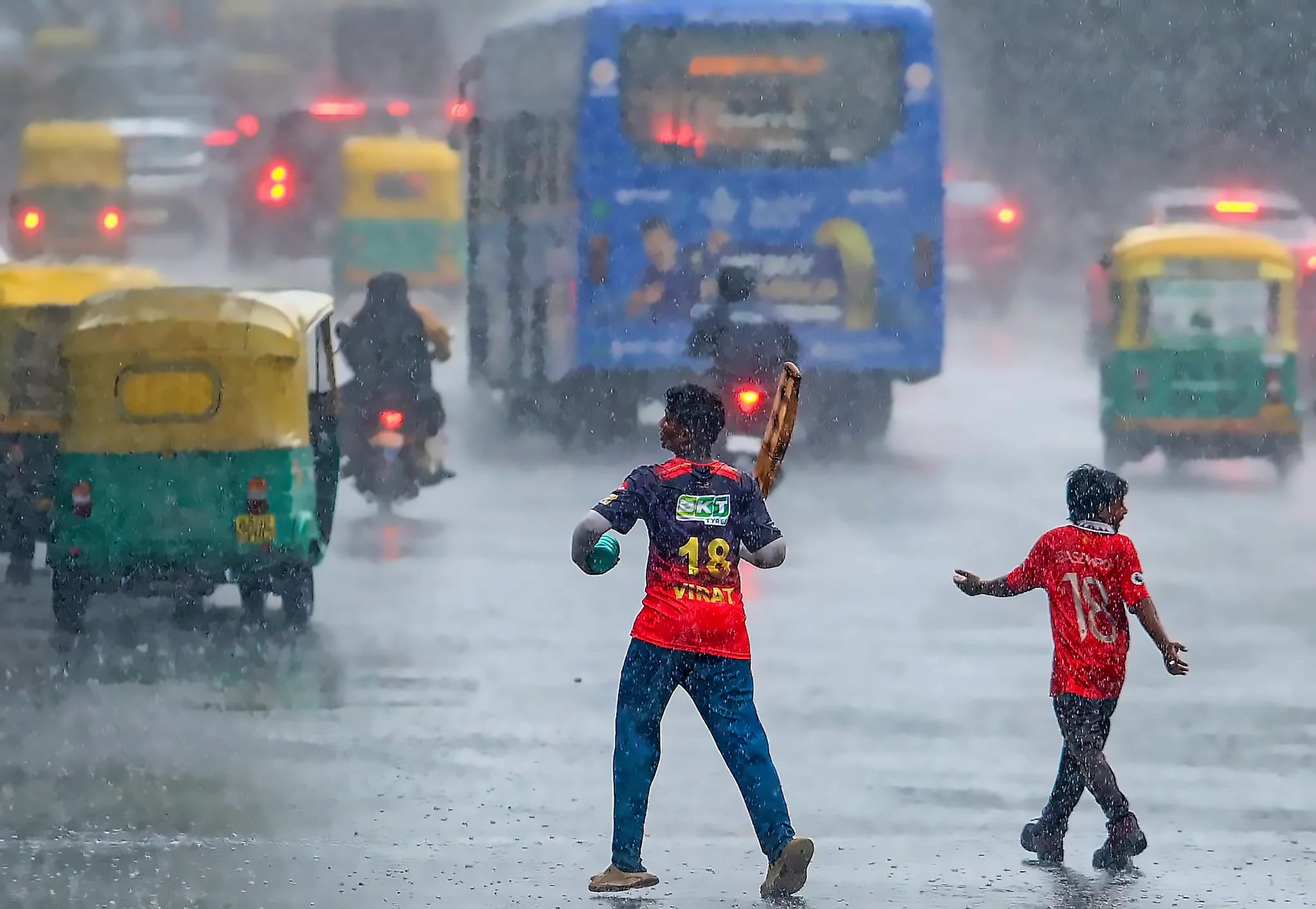
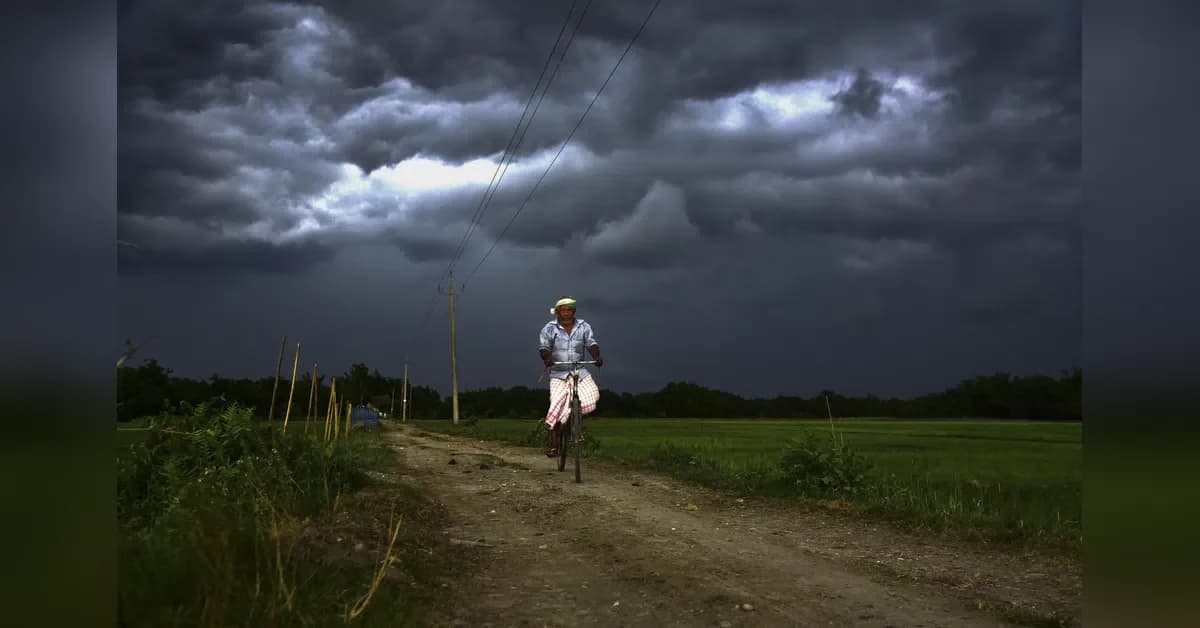
The India Meteorological Department (IMD) has forecast widespread rainfall, thunderstorms and strong winds across large parts of the country over the coming days, particularly in eastern, northeastern and southern regions. However, despite these expected showers, the southwest monsoon's advance has remained stalled over southern Maharashtra, contributing to a nationwide rainfall deficit of 41% between June 4 and June 18. According to Business Standard, India received only 42.6 mm of rainfall against the normal 72.2 mm during this period. The IMD attributed the slowdown to weak Arabian Sea moisture flow, reduced low-level southwesterly winds, weaker cross-equatorial flow, the absence of strong monsoon weather systems such as low-pressure areas, and an unfavourable phase of the Madden-Julian Oscillation (MJO). As a result, rainfall activity over much of Maharashtra is expected to remain isolated over the next four to five days.
The regional impact varies dramatically across India, with central India recording the steepest shortfall at 67%, followed by east and northeast India at 42%, the southern peninsula at 22%, and northwest India at 6%. As Business Standard reports, the country received only 42.6 mm of rainfall against the normal 72.2 mm during the June 4-18 period. The IMD has projected monsoon rainfall at 90% of the Long Period Average (LPA) for 2026, which would mark India's first below-normal monsoon in three years and its weakest forecast since 2015. This represents a significant escalation from previous concerns about delayed monsoon onset.
Heavy to very heavy rainfall is expected across eastern and northeastern India, with heavy rainfall likely over Bihar during June 22-25 and Odisha on June 20-21. According to Business Standard, heavy rainfall is also likely over Sub-Himalayan West Bengal and Sikkim between June 20 and June 25, with very heavy rainfall likely on June 22. In the Northeast, Assam and Meghalaya are likely to witness very heavy rainfall through June 23, while Arunachal Pradesh and the states of Nagaland, Manipur, Mizoram and Tripura are expected to receive persistent heavy showers. Thunderstorm activity is likely to remain widespread across several regions through June 25, with Delhi, Haryana and Punjab expected to witness thunderstorms, lightning and gusty winds reaching 40-60 kmph till June 22. Rajasthan may experience stronger thundersqualls with wind speeds touching 70 kmph, along with duststorm activity in western districts.
The monsoon challenges extend far beyond agriculture, with agriculture's contribution to GDP falling to around 14-16% while services account for more than half of gross value added. As Business Standard reports, agriculture employs 45% of the workforce, and historically, agriculture has contracted by 1% in El Nino years versus 4.5% growth in non-El Nino years. Food carries roughly two-fifths of the weight in India's CPI, meaning rainfall shortfalls quickly become an RBI problem. Rajeev Sharan from Brickwork Ratings noted that 'Food inflation in a weak monsoon year does two things simultaneously: it raises input costs for small food processors, traders, and agri-linked manufacturers, and it compresses the disposable income of rural households.'
Inflation may become the more immediate policy problem as weaker rainfall puts upward pressure on prices by squeezing supplies of pulses, vegetables and oilseeds. As Business Standard reports, rain-dependent crops, including pulses, oilseeds, vegetables and coarse cereals, are expected to face the sharpest pressure. Dr Javadekar warned that inflation risk could intensify because buffer mechanisms remain uneven, with vegetables, pulses, and oilseeds, for which no buffer stock mechanism exists, will drive food inflation. Rajeev Sharan emphasized that 'Weaker rainfall would put upward pressure on prices by squeezing supplies of pulses, vegetables and oilseeds, while also eroding rural purchasing power and slowing demand for tractors, two-wheelers, and mass-market consumer goods.'