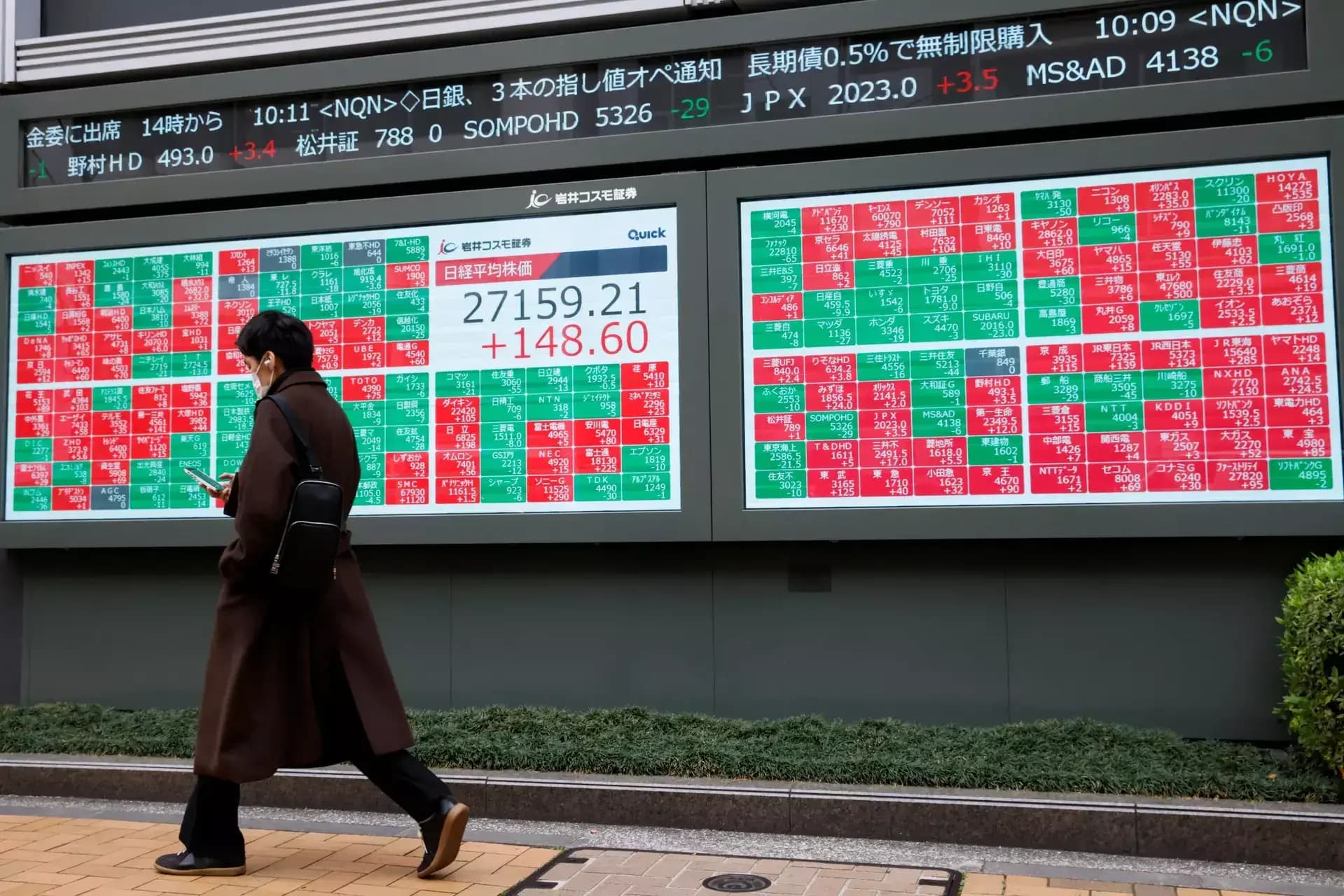
Asia's equity rally has become one of the biggest global stories of the year, with Bloomberg strategists now identifying Japan as the region's top remaining catch-up trade. Mark Cranfield, Bloomberg Live Strategist, frames the setup as an opportunity: "Japan has catch-up room compared to some of the other leaders." This development comes as the region digests one of its strongest tech-driven quarters in memory, with the yen's slide testing the Bank of Japan's tolerance. The biggest variables now are whether the Bank of Japan becomes more aggressive in defending the yen, whether China's AI leadership expands beyond a narrow group of semiconductor stocks, and whether capital continues rotating into overlooked markets.
Despite India's stock market regaining momentum supported by lower crude oil prices and improved macroeconomic conditions, Goldman Sachs maintains its preference for South Korea and Taiwan over Indian equities. According to Timothy Moe, Co-Head of Macro Research in Asia and Chief APAC Regional Equity Strategist at Goldman Sachs, the gap between India and North Asia is driven by fundamentals rather than sentiment. Foreign portfolio investors have sold nearly $100 billion worth of Korean equities this year, far more than the selling seen in either India or Taiwan, while India witnessed foreign selling in the mid-$20 billion range, broadly comparable to Taiwan. Asia's rally has posted its best quarter in 17 years on AI enthusiasm, with leadership rotating across markets as investors seek new opportunities beyond the original winners.
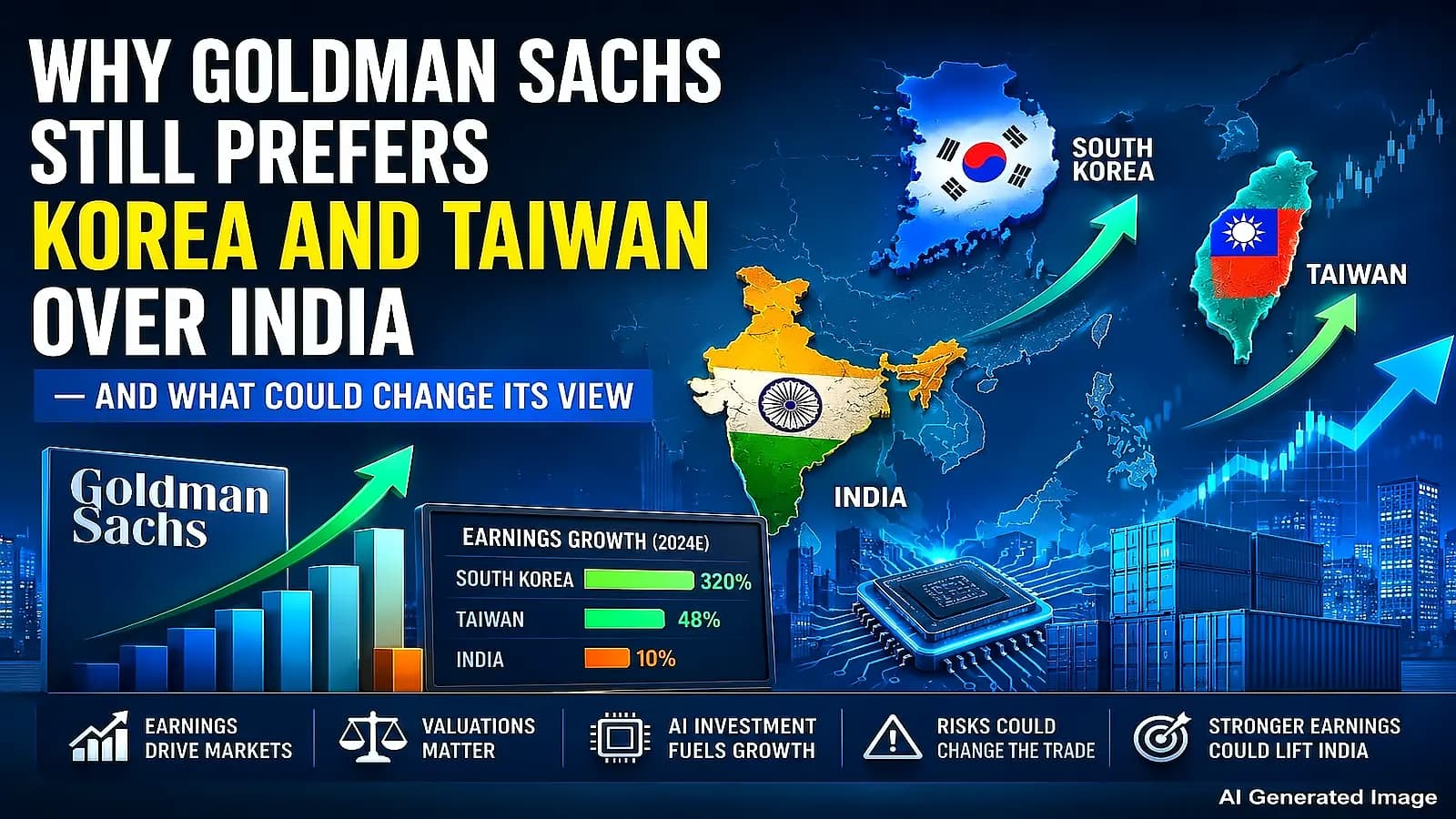
The primary driver of market leadership comes down to corporate earnings growth, where Goldman Sachs sees the biggest difference between India and North Asia. South Korea is expected to deliver extraordinary 320% earnings growth this year—the strongest across Asian markets covered by Goldman Sachs and among the highest growth rates the firm has recorded in decades. Taiwan is projected to post earnings growth of around 48%, while India is forecast to deliver 10% earnings growth this year after Goldman Sachs recently raised its estimate from 8% as lower crude oil prices improved the earnings outlook. China's AI and semiconductor champions are "clearly in a bull market," with the Star 50 index up more than 60% year to date, though consumer sectors remain a persistent laggard.
Despite similar valuation multiples, the earnings growth differential creates a compelling risk-reward profile for North Asian markets. India trades at around 20.5 times forward earnings, while Taiwan trades at roughly 21 times. However, Taiwan is expected to deliver earnings growth of about 48% this year and around 30% next year, while India's earnings are projected to grow by around 10% this year and 13% next year. When valuation multiples are broadly similar, investors typically favour the market offering faster profit growth, making Taiwan's risk-reward profile more attractive in Goldman Sachs' view. The current AI investment cycle could prove more durable than previous technology cycles, allowing earnings to remain stronger for longer.
A significant risk factor for Japan's potential outperformance is the yen's 40-year low near 163, with traders debating whether 170 is the next stop and referencing historic 160 levels. Yuka Hata, Head of Fund Investments at Japan Investment Corporation, argues that "it is in their hands if they want to do something about it, but investors are getting the sense there is a benign neglect" from policymakers. A weaker yen has increased Japanese exporter earnings, but it also raises the odds of intervention and a carry-trade unwind, either of which could quickly reprice Japanese equities in dollar terms. The panel's biggest potential risk for investors is Japan's currency, with any carry-trade unwind potentially repricing Japanese equities significantly.
While Goldman Sachs remains market weight on India, its view has become more constructive in recent weeks. Lower crude oil prices have eased pressure on India's macroeconomic outlook, prompting the firm to raise its earnings growth forecast for the Nifty from 8% to 10%. The rupee has also recovered, improving India's relative attractiveness among higher-yielding Asian currencies. Together, these developments have started to support Indian equities after a difficult period. However, Goldman Sachs wants more evidence that the earnings acceleration can be sustained before upgrading its recommendation, emphasizing that the debate is about whether corporate earnings can accelerate enough to justify India's relatively rich valuation.