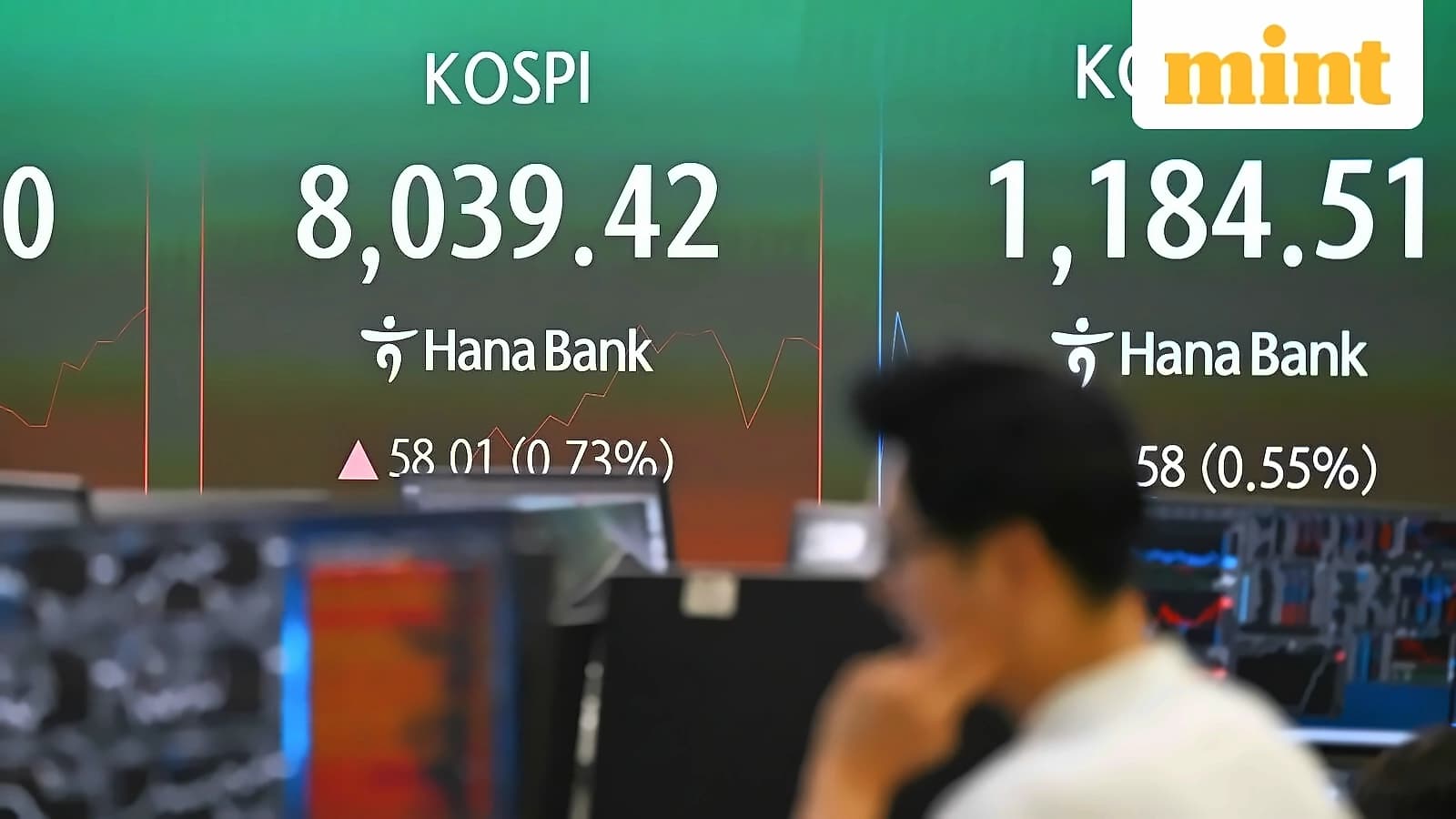
The Nifty is expected to open higher on Monday following a rally in global markets as signs of the US-Iran peace deal sent crude oil prices lower, easing inflation concerns and boosting investor sentiment. GIFT Nifty was trading around 23,970 level, a premium of nearly 251 points from the Nifty futures' previous close, indicating a gap-up start for the Indian stock market indices. On Friday, the Indian stock market ended higher, with the Sensex rising 231.99 points to close at 75,415.35 and the Nifty 50 settling 64.60 points higher at 23,719.30. According to Moneycontrol, about 2,026 shares advanced, 1,827 shares declined, and 136 shares were unchanged, with the intraday high of Sensex at 75,810.97 and Nifty at 23,835.65. As per Religare Broking Ltd, "Despite the range-bound setup, trading opportunities continue to emerge across sectors; therefore, participants should maintain their focus on stock selection and disciplined trade management while keeping a close watch on position sizing."
US President Donald Trump stated that he had instructed negotiators not to rush into a deal with Iran, adding that "time is on our side." He also said the US blockade in the Strait of Hormuz will remain in full force and effect until an agreement is reached, certified, and signed. These remarks further intensified concerns over global oil supplies, keeping crude oil prices elevated and increasing fears around inflation and global economic stability. According to Goodreturns, the US stock market ended higher on Friday, with the Dow Jones reaching a record closing high and the S&P 500 notching its eighth consecutive weekly gain, its longest since a nine-week streak ended in December 2023. The Dow Jones Industrial Average rose 294.04 points, or 0.58%, to 50,579.70, while the S&P 500 rose 27.75 points, or 0.37%, to 7,473.47. Crude oil prices tumbled on hopes of a deal to reopen the crucial Strait of Hormuz, with Brent crude prices plunging 5.08% to $98.28 a barrel and US West Texas Intermediate declining 5.29% to $91.49 a barrel. Crude oil fell to the lowest level in more than two weeks on expectations that a deal to reopen the Strait of Hormuz and restore oil flows may be near.
Foreign portfolio investors have withdrawn ₹3.65 trillion ($39.94 billion) from Indian secondary markets over the past year through May 2026, according to Bloomberg data. This massive outflow has significantly impacted market performance, with the Nifty 50 falling 3.6% to 23,719.30 over the same period. The selling pressure has been so intense that FPI ownership of NSE-listed firms has dropped to a 17-year low of 15.8%, as reported by exchange data. While mutual fund-led domestic institutional investors net invested a substantial ₹8.98 trillion over the same period, the FPI outflows have created substantial market pressure. Foreign portfolio investors net sold shares worth ₹4,440 crore on Friday, while DIIs were net buyers at ₹6,003 crore, as reported by The Economic Times. Looking at the broader trend, FIIs have remained significant net sellers during the month and throughout the year, with MTD outflows of ₹2,24,904.52 crore and YTD outflows of ₹2,52,154.09 crore, while DIIs have consistently invested in the market, with MTD inflows of ₹2,50,889.72 crore and YTD inflows of ₹3,23,196.62 crore.

According to analysts at Bajaj Broking Research, the Nifty formed a bullish candlestick pattern during the week, although the broader trend still reflects consolidation and corrective pressure. "Going ahead, in the coming week failure to move above the breakdown area of 23,800-23,900, will keep the bias corrective and can lead to testing of the support area of 23,200-23,000. While a move above the breakdown area will signal pause in the downtrend and open upside towards 24,200 & 24,600 levels," the brokerage noted. The Bank Nifty also witnessed buying support near lower levels during the previous week, helping the index recover from recent declines. According to Bajaj Broking Research, "Bank Nifty in the weekly chart formed a bullish candlestick pattern with a lower high and a lower low highlighting buying demand at lower levels from near the key support area of 52,400-52,700 levels. Index likely to consolidate in the range of 52,700-54,700. A move above 54,700 will open further upside towards 56,000 levels in the coming week." The brokerage added that market volatility is likely to remain elevated due to global developments, with key focus on US-Iran tensions, oil-price trajectories and quarterly corporate earnings.
The rupee has depreciated 10.15% over the past year through May, significantly impacting foreign investor returns. According to Bloomberg data, the Nifty 50 USD has generated a 13.41% negative return compared to the barely 4% negative return of the index in rupee terms over the past year through May 22. This represents a sharp deterioration from the average annual depreciation of 4.5% between May 2023 and May 2026, and 4.8% over a five-year timeframe. The currency weakness has turned what would have been a modest market dip into substantial foreign investor pain, with the rupee settling up 0.5% at 95.69 per dollar on Friday. However, the rupee strengthened for a second straight session on Friday, rising 63 paise to close at 95.73 on the back of easing crude prices, positive equity markets, and softer US yields coupled with central bank intervention. Asian currencies strengthened against the U.S. dollar, with the Thai Baht recording the highest gain with an increase of 0.749%, while the Malaysian Ringgit and South Korean Won also posted notable gains of 0.476% and 0.459%, respectively.
Corporate earnings growth has significantly deteriorated, contributing to the FPI exodus. As reported by Bloomberg, Nifty earnings per share (EPS) growth was 12.33% at 2023-end and 18.06% at 2024-end, compared to the Dow EPS growth of negative 10.37% in 2023 and 11.44% in 2024. However, this trend reversed in 2025, with Nifty's EPS growing 15% compared to Dow Jones' 19%. In the current year to date, the Dow continues to outperform with 13.99% EPS growth as of May 22, against a negative Nifty EPS growth of 1.6%. According to Nilesh Shah, managing director of Kotak Mahindra AMC, unfavorable base effects, labor code changes that raised employee costs, rupee depreciation, and elevated crude prices due to Middle East tensions impacted Nifty EPS growth in 2025.