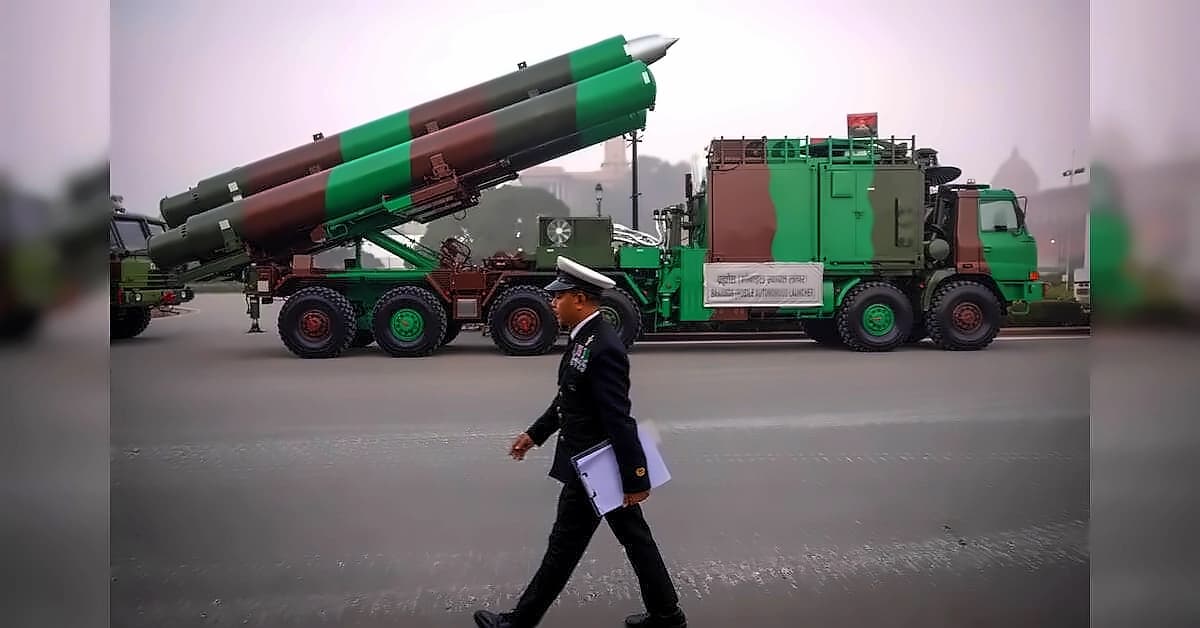
Defence stocks experienced significant declines on Friday, with Bharat Dynamics Ltd (BDL) and Hindustan Aeronautics Ltd (HAL) falling up to 4 percent following the government's announcement of the general export licence framework. According to reports from Moneycontrol, the Nifty Defence index snapped its rise in the previous session and fell around half a percent, with 13 of the 19 stocks in the index ending in the red. Bharat Dynamics was the top laggard in the Nifty Defence index, falling up to 3 percent during the session, while Hindustan Aeronautics declined up to 1 percent. Other major defence PSU firms including Garden Reach Shipbuilders & Engineers, Mazagon Dock Shipbuilders, Bharat Forge and Cochin Shipyard declined up to 1 percent. The sell-off reflects investor concerns about increased competition from private sector defence companies, which could benefit from the new export facilitation measures.
The Department of Defence Production has implemented significant reforms to the OGEL framework, increasing validity from two to three years and consolidating three existing procedures into a single framework. As reported by the Ministry of Defence, the revised framework eliminates stakeholder consultation requirements for exports of non-lethal defence items to most destinations, while maintaining safeguards for sensitive countries. The Defence Export Standard Operating Procedure (SOP) has been revised to remove stakeholder consultation for exports of all items for international tenders and exhibitions, allowing Indian companies to pursue overseas opportunities more quickly. The revised OGEL will serve as a standing one-time export authorisation allowing eligible exporters to generate authorisations for multiple consignments of specified defence items without seeking separate authorisation for each shipment. The government has also consolidated three existing OGEL SOPs covering major platforms and equipment, parts and components, and intra-company technology transfers into a single, unified structure. Importantly, OGEL validity has been increased from two years to three years, reducing the frequency of renewals and associated compliance work.
The reforms come at a time when India's defence sector has achieved remarkable growth, with exports reaching a record ₹38,424 crore and defence production touching an all-time high of ₹1.78 lakh crore in 2025-26. According to the Ministry of Defence, these reforms are aimed at making India a more competitive and trusted global defence manufacturing and export partner, while retaining safeguards for sensitive items, technologies and destinations. The changes are significant for India's growing defence industry, with the government seeking to reduce routine compliance requirements and speed up access to overseas markets while maintaining national security safeguards. For Indian manufacturers, particularly MSMEs, the reforms could mean fewer repetitive approvals, quicker responses to international business opportunities and easier access to overseas markets — strengthening India's push to become a competitive and trusted global defence manufacturing hub.
The revised rules introduce new provisions allowing Indian companies with long-term contracts or agreements with foreign original equipment manufacturers (FOEMs) to obtain licences for eligible items and the particular manufacturer. The licence validity will be aligned with the underlying contract or agreement, subject to prescribed conditions. The range of items covered by the OGEL has also been expanded to allow civil end-use exports of specified parts and components of small-calibre arms and protective equipment. The OGEL framework now allows eligible exporters to self-generate export authorisations for multiple consignments without separate approval for each shipment, with coverage expanded from 41 countries to all countries except negative or sensitive nations, and those subject to UN Security Council sanctions or arms embargoes. The Ministry of Defence expects these changes to particularly benefit Indian defence manufacturers, including MSMEs, by reducing procedural requirements and enabling faster participation in international tenders and exhibitions.
According to Business Standard, Abhishek Jain, co-founder of Pune-based smart and autonomous munitions manufacturing firm Zeus Numerix, highlighted the significant benefits for innovative MSMEs: "There are two big takeaways from the announcement, especially for innovative MSMEs. First, we are now free to showcase what we have made. Second, we can get one licence and have the world as our market. This means we can focus on innovation while the government takes care of the paperwork." The new framework requires applicants seeking an OGEL to submit a valid Importer Exporter Code, certificates issued by customs, declarations on sanction compliance, end-user checks and government inspection, along with an item-wise list of exports and destination countries with intended end use. These changes represent a major shift from the previous system where defence exports generally required separate government authorisation for individual export processes, making repeat shipments and regular exports slower. The government introduced OGEL in 2019, and these latest reforms significantly expand its scope and effectiveness.