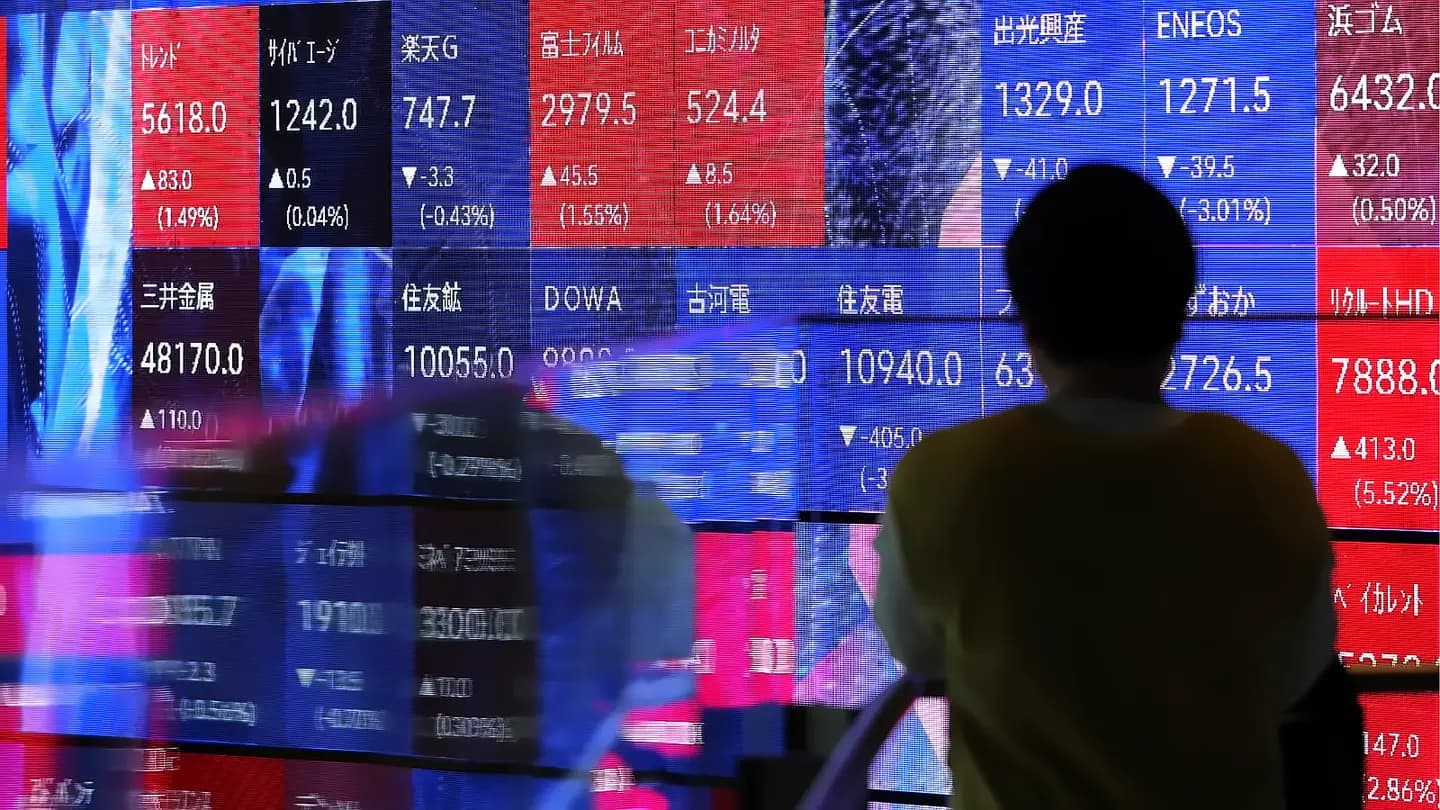
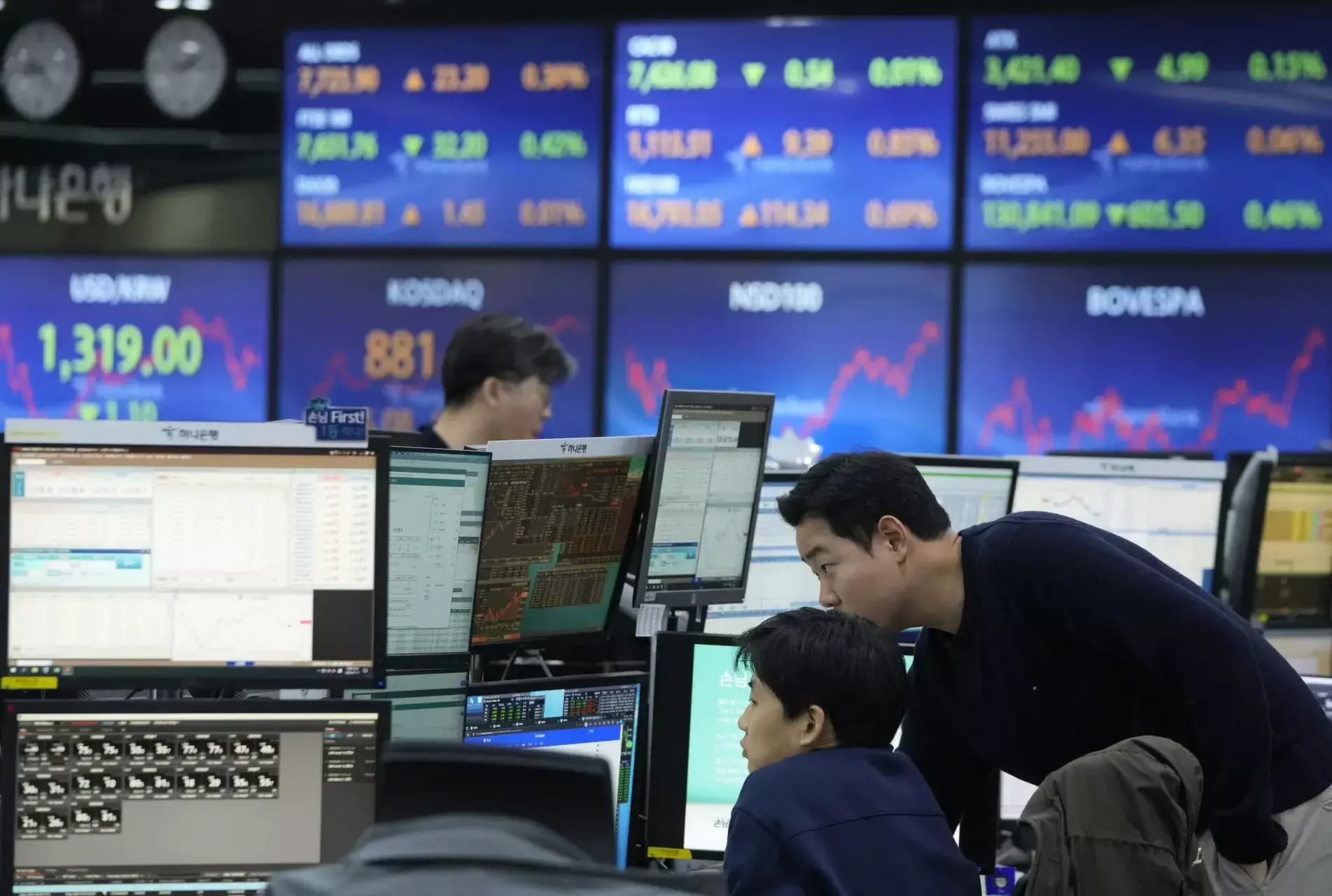
Asian stock markets staged a dramatic recovery on Thursday after Micron's upbeat guidance revived confidence in the artificial intelligence trade, driving sharp gains across semiconductor shares. South Korea's KOSPI surged 5.9% while Japan's Nikkei 225 gained 4.6%, led by advances in Samsung Electronics, SK Hynix, Advantest and Tokyo Electron after a sharp technology-led sell-off earlier this week. The recovery came after Asian equities had experienced a sharp decline on Friday, 26 June, with the MSCI Asia Pacific Index falling 1.7% and South Korea's tech-heavy Kospi index tumbling more than 3%. However, the S&P 500 was little changed as of 4 p.m. New York time despite the positive Asian sentiment, as a renewed wave of tech volatility gripped Wall Street with megacap selloffs tempering broader market optimism. According to Bloomberg, the S&P 500's equal-weighted version climbed in a sign of rotation away from market-value biases, highlighting the concentration risk in the current market structure where upside has been disproportionately driven by a narrow group of massive gainers.
Micron shares shot up nearly 18% in after-hour trading after the company reported record third-quarter results, with revenue rising to $41.5 billion, adjusted earnings reaching $25.11 per share and gross margin widening to 84.9%. The memory-chip maker also forecast gross margin of about 86% for the current quarter, beating market expectations and signalling that demand linked to artificial intelligence remains strong despite this week's sell-off in semiconductor shares. The company's strong performance helped lift broader technology sentiment across Asian markets, with Chinese markets mixed as the CSI 300 up 0.9% and Hong Kong's Hang Seng down 1.7%, while Australia's ASX 200 slipped 0.6% despite positive employment data showing 40,300 jobs added in May and unemployment rate falling to 4.4% from 4.5%. Meanwhile, Qualcomm jumped after forecasting annual sales of more than $15 billion from artificial intelligence components in data centers by fiscal 2029, adding to AI-related optimism. However, as Bloomberg reports, volatility in the tech industry remained elevated despite the positive Micron results, with investors questioning whether they should be diversifying away from longtime winners.

US stocks ended mixed on Wednesday, with the Dow Jones Industrial Average rising 0.1% to 51,848.90 points while the S&P 500 fell 0.1% to 7358.22 and the Nasdaq 100 lost 0.4% to 29,220.06. Technology shares came under renewed pressure ahead of Micron's results, with all Magnificent Seven firms falling, with Apple Inc. leading the way after boosting prices of Macs and iPads. The drop in the S&P 500's most-influential group sent the index wavering, even as the Nasdaq 100 rose 0.8% and the MSCI World Index rose 0.2%. US equity futures also pointed to a weaker opening, with Nasdaq-100 futures down 0.6% and S&P 500 futures down 0.2% following the mixed session. The divergence in performance reflects ongoing uncertainty about AI investment returns and their impact on technology valuations. According to Bloomberg, a few cracks have developed in the tech sector recently, making it extremely important to watch how hyperscalers trade going forward because if they continue to decline, it will make it very tough for the rest of the market to advance.
Oil prices fell on Thursday, with Brent crude trading lower at around $73 per barrel and West Texas Intermediate at $69, erasing gains made since the Middle East conflict began in late February. However, West Texas Intermediate crude rose 2.6% to $72.15 a barrel after a ship was hit by an unknown projectile in the Strait of Hormuz, just hours after several freighters turned around while attempting to cross the vital waterway. The decline came as investors grew more confident about global supply after more than 20 tankers carrying roughly 35 million barrels of crude resumed passage through the Strait of Hormuz following a US-Iran agreement to reopen the route. Meanwhile, gold prices rose 0.8% to $4,029.56 an ounce, reflecting a stronger US dollar which has risen for six straight sessions to a 13-month high. India's Nifty 50 was trading 0.7% higher amid the broader market recovery.
Global equity markets are set to end a volatile week, with investors now looking to US Personal Consumption Expenditures (PCE) inflation and gross domestic product (GDP) and labour market data for fresh signals on the Federal Reserve's next move. US consumer spending accelerated in May even as prices rose at the fastest pace in more than three years, suggesting Americans are powering through the fallout from the Iran war. A separate report showed the economy grew at an annualized 2.1% pace in the first quarter, faster than previously estimated. While those figures will likely leave the Federal Reserve under pressure to keep interest rates elevated, the recent pullback in energy costs could help ease inflationary pressures in the months ahead. Germany's ifo Business Climate Index rose to 85.6 in June from 85.0 in May, as companies viewed current conditions more favourably and became slightly less pessimistic about the next six months. The recovery in Asian markets suggests that concerns over whether massive investments in artificial intelligence will generate sufficient returns may be easing, though broader market uncertainty about AI investment returns continues to influence technology valuations. According to Bloomberg, UBS Chief Investment Office recommends investors remain constructive while keeping diversification at the center of portfolio construction, noting how quickly narratives can shift and how costly excess cash can become when markets move higher.