Since 2022, the number of states running cash transfer schemes for women has grown from two to 14, with welfare allowances having a combined outlay of ₹1.68 trillion, representing 0.5 per cent of India's gross domestic product (GDP). According to reports from Business Standard, these schemes' cumulative expenditure grew almost 25 per cent in five years, often announced before elections. However, with revenue deficits widening, some states are tightening the purse strings and reducing beneficiary numbers.
Maharashtra's Majhi Ladki Bahin scheme, launched in June 2024 with an outlay of ₹46,000 crore to provide ₹1,500 monthly to women aged 21 to 60, has contracted steadily since its electoral victory role. As reported by Business Standard, the ₹26,000 crore allocated in 2026 represents a 42 per cent cut from the previous year's ₹36,000 crore. Account closures after identity verification have reduced beneficiaries from 24 million to 16.6 million, while women farmers on a parallel scheme have had their monthly assistance cut by 67 per cent.
West Bengal, under the previous Mamata Banerjee government, increased the outlay for the Lakshmir Bhandar scheme from ₹12,000 crore in FY24 to ₹26,700 crore in FY26, when revenue deficits averaged between 1.6 per cent and 2.6 per cent of the gross state domestic product (GSDP). According to Business Standard, the state ranked 16th among 18 states in the NITI Aayog's Fiscal Health Index (2022-23) and carried a debt of 38-39 per cent of the GSDP. The new BJP government has renamed the scheme as Annapurna Yojana and increased the monthly payout to ₹3,000 from ₹1,500, but 3 million beneficiaries could be dropped due to the Special Intensive Revision electoral process.
Not all states are trimming funds, with Jharkhand doubling the monthly payout for Maiyan Samman from ₹1,000 to ₹2,500, and the scheme getting ₹14,066 crore for FY27 — 12 per cent of the state's revenue expenditure. As reported by Business Standard, New Delhi's Mahila Samriddhi scheme increased monthly assistance from ₹1,000 to ₹2,500, while Haryana's Lado Laxmi allocation rose to ₹6,500 crore for FY27. Madhya Pradesh's Ladli Behna scheme increased monthly transfers to ₹1,500 from ₹1,000, despite the state's revenue surplus for FY25 contracting from an estimated ₹618 crore to ₹7 crore.
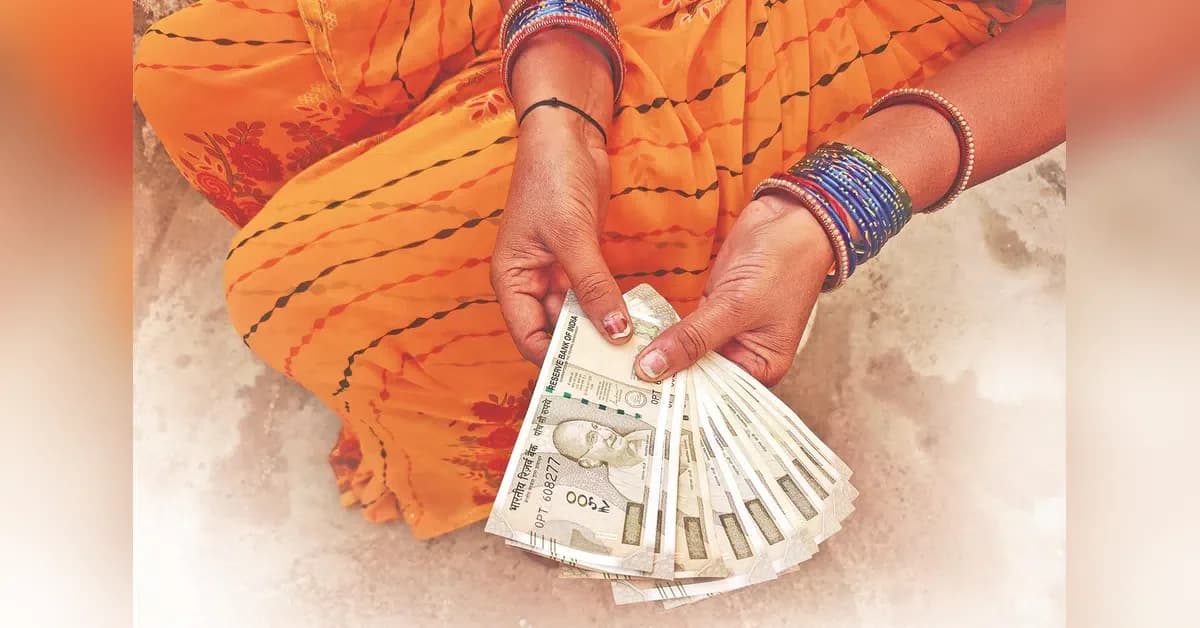
Karnataka's Gruha Lakshmi scheme was allocated ₹28,608 crore in the FY27 budget at a time when the state is in a delicate fiscal position. According to Business Standard, the state was in revenue surplus in FY23 — the year before the scheme was launched — but has run a deficit every year since. The Comptroller and Auditor General noted that five schemes for women, youth and poor households led to Karnataka cutting infrastructure spending by ₹5,000 crore in FY24.