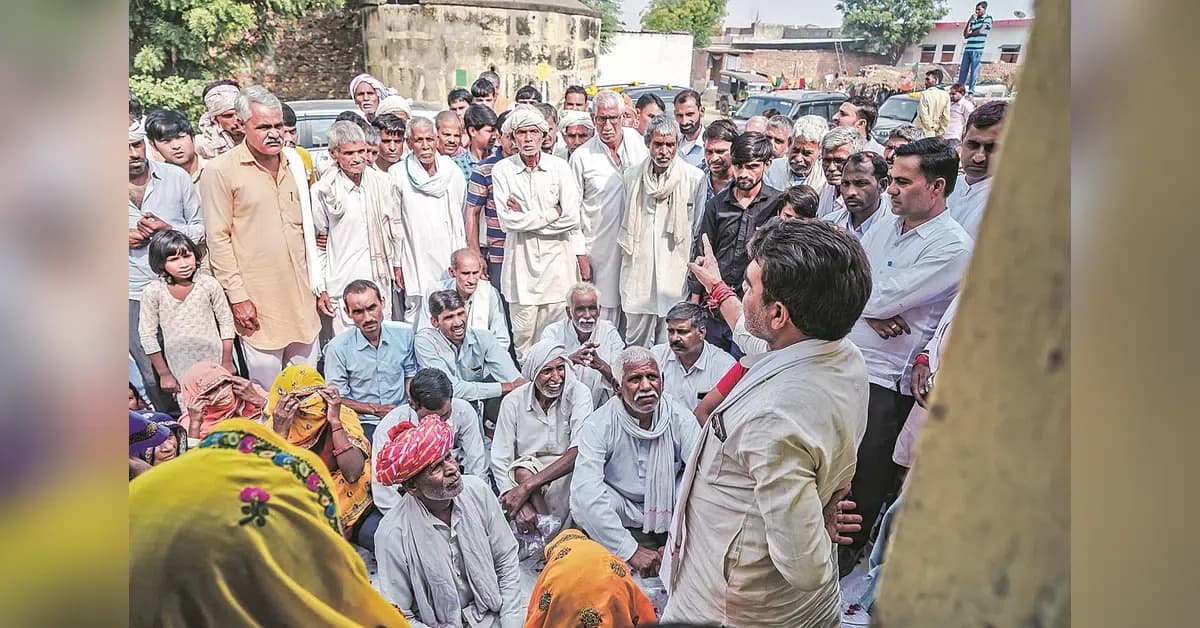
Odisha is implementing a performance-grant mechanism as part of the 16th Finance Commission reforms, marking a departure from traditional formula-driven allocation. As per Business Standard, the Centre has linked a portion of financial assistance to panchayats' revenue performance for the first time. Gram panchayats must demonstrate annual growth of at least 2.5% in own-source revenue (OSR) over 2025-26 as base year, or achieve revenues equivalent to 1.025 times that of two years earlier. Those failing to meet prescribed benchmarks may lose access to additional central assistance. The state is expected to receive ₹18,715 crore for rural local bodies during the 16th Finance Commission period (2026-27 to 2030-31), with ₹14,973 crore as basic grants and ₹3,742 crore as performance grants.
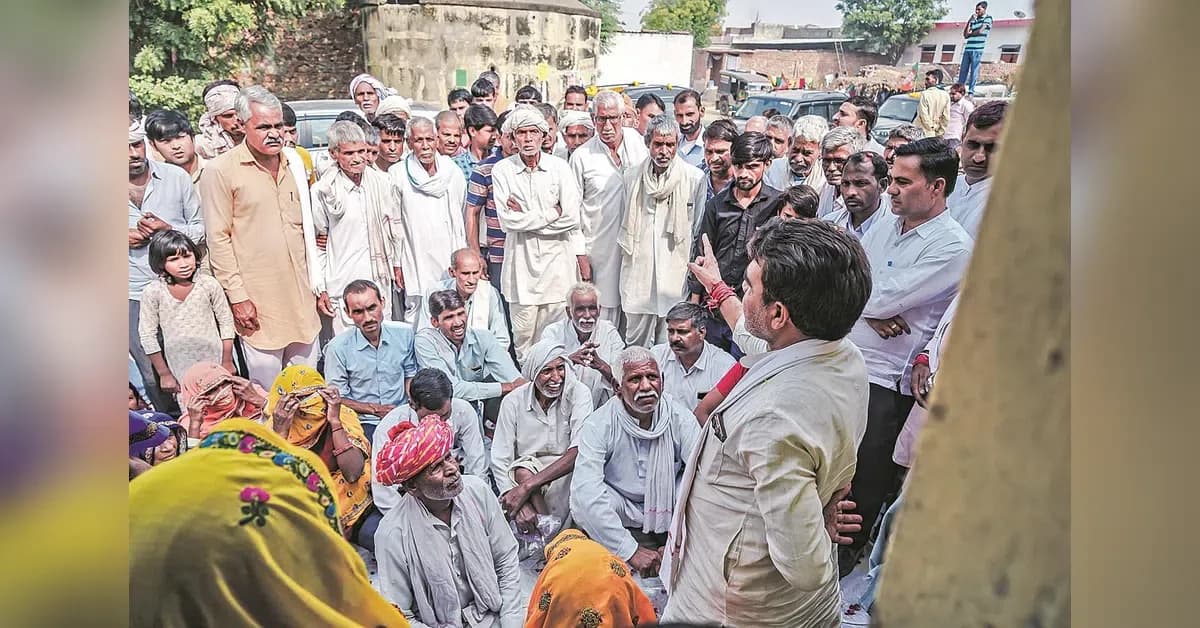
Low incomes, limited economic activity and weak tax collection continue to constrain panchayats' own-source revenue, affecting their financial autonomy. According to reports from Business Standard, a meeting called to discuss the 16th Finance Commission devolution to panchayati raj Institutions (PRIs) found that although the contribution of own-source revenue to panchayats' total annual receipts varied from 1 per cent to 40 per cent, it remained an important source for strengthening their financial autonomy and making them self-reliant. The new framework introduces household tax of minimum ₹1,200 annually and professional tax for traders and professionals operating in rural areas to create revenue streams.
The National Institute of Public Finance and Policy (NIPFP) study revealed substantial disparities in own-source revenue generation across states. As reported by Business Standard, OSR as a share of total receipts of gram panchayats showed substantial disparities, with the share ranging from 1 per cent (in UP) to 40 per cent (in Andhra Pradesh). The study found that house tax comprised the major share of tax revenue in most states, barring Odisha and Uttar Pradesh, while collection was positively driven by GP's population and number of commercial establishments, and negatively associated with poverty in the village.
The number of empowered taxes that gram panchayats can levy varies significantly across states, ranging from two in Bihar, Punjab and West Bengal to eight in Gujarat, Karnataka and Kerala. According to the NIPFP study cited by Business Standard, Madhya Pradesh and Odisha levy only one tax, while UP does not levy any tax out of six empowered taxes. The new framework introduces structured taxation for households with built-up area over 1,000 square feet and professional tax for traders and professionals. Even where panchayats are empowered to levy taxes, their collection remains negligible and varies depending on the method of assessment.
To address these challenges, the central government has implemented several support measures. As reported by Business Standard, the Centre commissioned the NIPFP study to develop viable financial models and actionable strategies for strengthening own-source revenue of PRIs. Additionally, it started the Atmanirbhar Panchayats programme to identify and support innovative revenue-generating projects that leverage idle panchayat assets. The government also formed a committee for formulation of model OSR rules and developed a comprehensive module with IIM Ahmedabad on OSR generation in panchayats, under which 254,000 functionaries have already been trained. The Odisha government has introduced schemes like Bikashita Gaon Bikahita Odisha for infrastructure development and plans to collect user fees against drinking water supply and sanitation facilities.
Experts warn that linking grants to revenue generation could create disparities among panchayats. As per Business Standard, while wealthier villages with thriving commercial activities may find it easier to increase collection and qualify for performance grants, poorer and remote panchayats in tribal and economically backward districts may struggle despite genuine efforts. Local governance expert Anirudha Prasad Das noted that mostly urban and semi-urban panchayats will benefit from the new approach, while former finance minister Panchanan Kanungo emphasized the need to proceed cautiously with tax criteria. Economist Amarendra Das from NISER stressed that strengthening fiscal autonomy through clear legal framework is essential for improving local-service delivery and reducing dependence on government transfers.