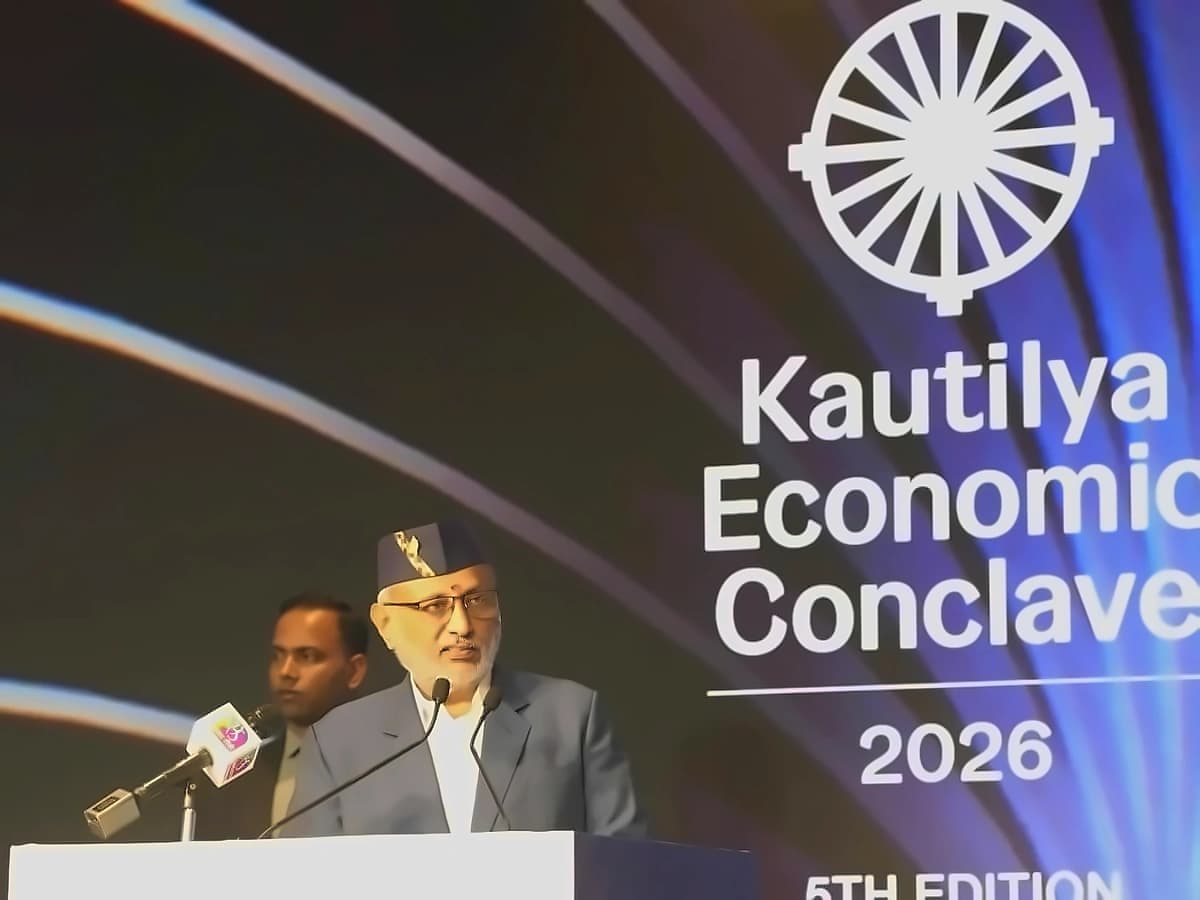
Vice-President C P Radhakrishnan emphasized that inclusivity can sustain development and underlined the need for consensus-driven decision-making during the inauguration of the 5th Kautilya Economic Conclave. As reported by Jammu Links News, Radhakrishnan stated that India is moving from under-developed to developing to developed economy, but emphasized that we can call ourselves a developed economy if it is an inclusive development of everyone and when benefits reach every nook and corner. He stressed that no other form of governance can substitute a functional democracy, noting that only free and transparent debate strengthens democracy globally.
Vice-President C P Radhakrishnan emphasized that India's democratic framework provides the foundation for sustainable economic reforms, stating that consensus-building may slow decisions but makes reforms durable and universal. Speaking at the fifth Kautilya Economic Conclave organized by the Institute of Economic Growth, he warned that growth benefits must reach every section of society to maintain democratic sustainability. As reported by Business Standard, Radhakrishnan highlighted that there are people who believe some parts of the world are witnessing a rise in communism, but opposition to communism arises because it legitimizes dictatorship rather than for other reasons.
India's economic resilience was highlighted through recent performance metrics, with 7.8% GDP growth recorded in the first quarter of FY27, positioning India as the fastest-growing major economy globally. According to the Vice-President's address, India's sovereign rating was upgraded by a Japanese credit rating agency, reflecting greater confidence in the economy and public finances. Radhakrishnan pointed to the government's achievement of pulling more than 250 million people out of poverty under Prime Minister Narendra Modi's policies, demonstrating that inclusion and growth can reinforce each other. Referencing global economic success stories, he noted that China's success as the second-largest economy is well-established because they understand the ground realities of both micro and macroeconomic situations.
The Vice-President highlighted significant achievements in financial inclusion through the Jan Dhan Yojana, which has enabled direct benefit transfers (DBT) and strengthened transparency. As reported by Business Standard, there are more than 590 million Jan Dhan accounts as of August 2026, with cumulative direct benefit transfers exceeding ₹53.4 trillion. Additionally, the goods and services tax (GST) rollout expanded the formal economy, with GST taxpayers rising from more than 6 million in 2017 to over 16 million in May 2026. The creation of 9 million women-run self-help groups covering more than 100 million rural women underscores the importance of women-led development.
Radhakrishnan emphasized the importance of ground reality-based policymaking in the current global environment. As reported by Jammu Links News, he stressed that in a period of rapid changes when geo-political tensions are rising, and global trade is changing, we need decisiveness embedded in consensus. He advised policymakers to always be aware of facts on the ground, stating that one has to be so flexible in making the policy that the policy itself should become a big success. The Vice-President highlighted that we can debate, discuss and come to a final conclusion that is acceptable to all, emphasizing the need for inclusive and transparent decision-making processes.