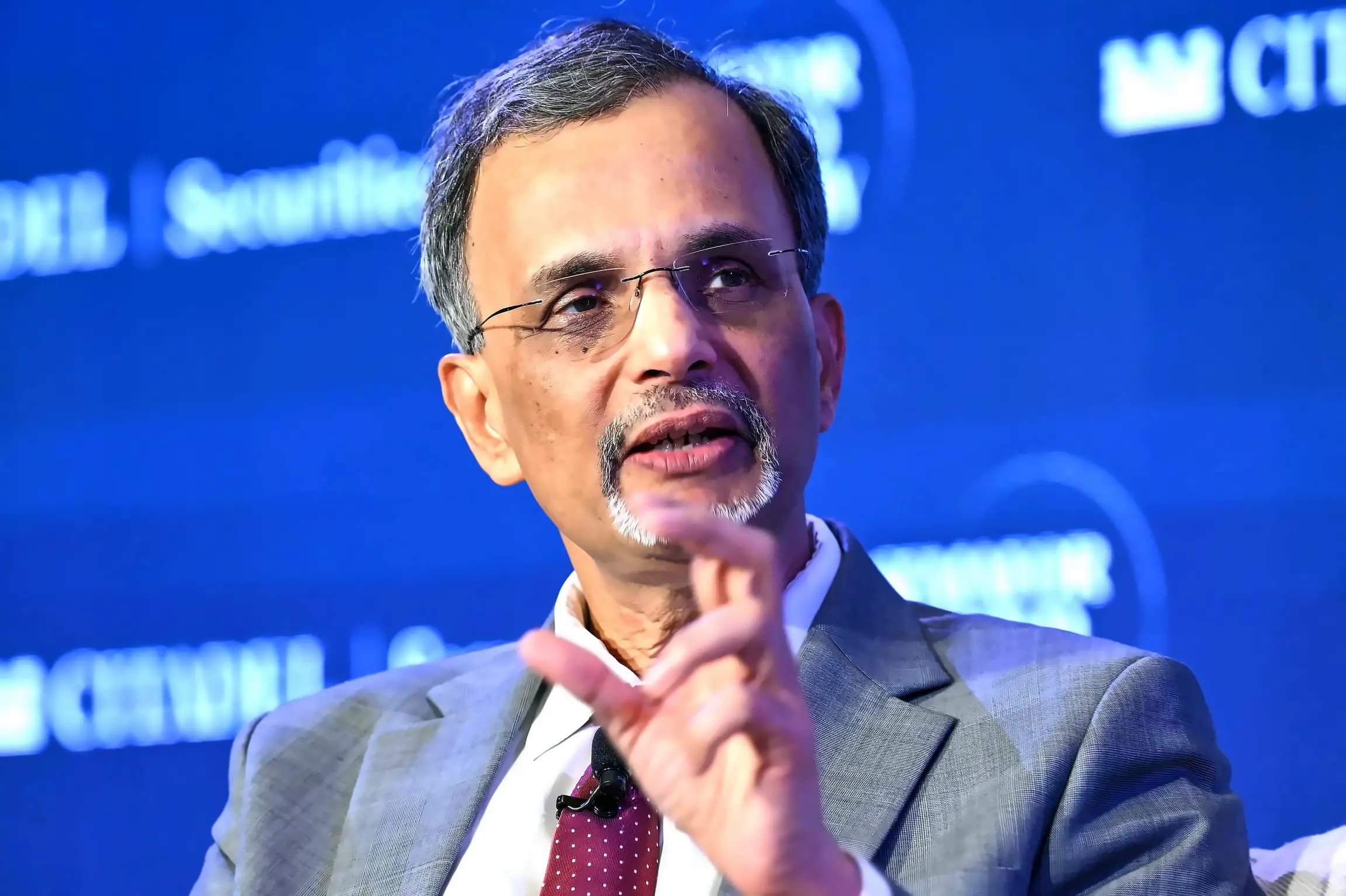
Finance Minister Nirmala Sitharaman has emphasized that India's next phase of consumption growth will depend on wage gains, upward mobility and higher discretionary spending. Speaking at the All India Management Association's 53rd National Management Convention on Tuesday, she stated that India stands at a structural inflection point where the next phase of consumption will be driven by upward mobility into brackets where discretionary spending accelerates. This aligns with Chief Economic Adviser V Anantha Nageswaran's earlier emphasis that fairness is essential for sustainable market economy, where growth must be shared between workers and corporates.
Chief Economic Adviser V Anantha Nageswaran emphasized that India's economic growth can only translate into meaningful transformation when gains are shared fairly between workers and corporates. Speaking at an AIMA event, he stressed that fairness is not an act of charity but a condition for a healthy and sustainable market economy. According to reports from Business Standard, Nageswaran argued that growth changes the country only when it is shared honestly between those who do the work and those who put up the money. Sitharaman's latest comments reinforce this principle, highlighting that wage growth and upward mobility are crucial for sustained consumption growth.
The CEA argued that the debate over fairness should not be framed as a choice between workers and businesses. As reported by Business Standard, he stated that both are part of the same economic bargain, with capital entitled to earn a fair return while workers must have a meaningful share in the prosperity generated by their work. Nageswaran explained that fairness is not charity, emphasizing that a sustainable market ultimately depends on consumers having enough purchasing power to buy goods and services businesses produce. Sitharaman's focus on wage growth and upward mobility reinforces this framework, as higher wages directly translate into increased consumer spending power.
On the government's responsibility, Nageswaran outlined specific measures to lower business costs. According to Business Standard, he said the government must ensure cheaper power, affordable land, and reduce compliance burden to lower the cost of doing business. The CEA noted that lowering business costs is at the core of what governments can do to create jobs, explaining that governments do not create lasting jobs but make it easier for economic activity to occur. This aligns with Sitharaman's recent comments about making it easier for economic activity to occur through policy measures.
Private consumption, which accounted for more than half of India's gross domestic product (GDP), recorded growth of 7.7 per cent in 2025-26 (FY26) after the government rationalised and cut rates under the goods and services tax (GST) and also exempted tax on income up to ₹12 lakh. India's GDP rose 7.7 per cent in FY26. According to Business Standard, Nageswaran noted that India's growth outlook was increasingly settled, with even cautious forecasts placing medium-term annual growth at around 6.5-7 per cent. Sitharaman warned against corporate strategies focused only on premiumisation for urban consumers, emphasizing that India's consumption base rests on working families across agriculture, rural construction, transport, and informal enterprise.