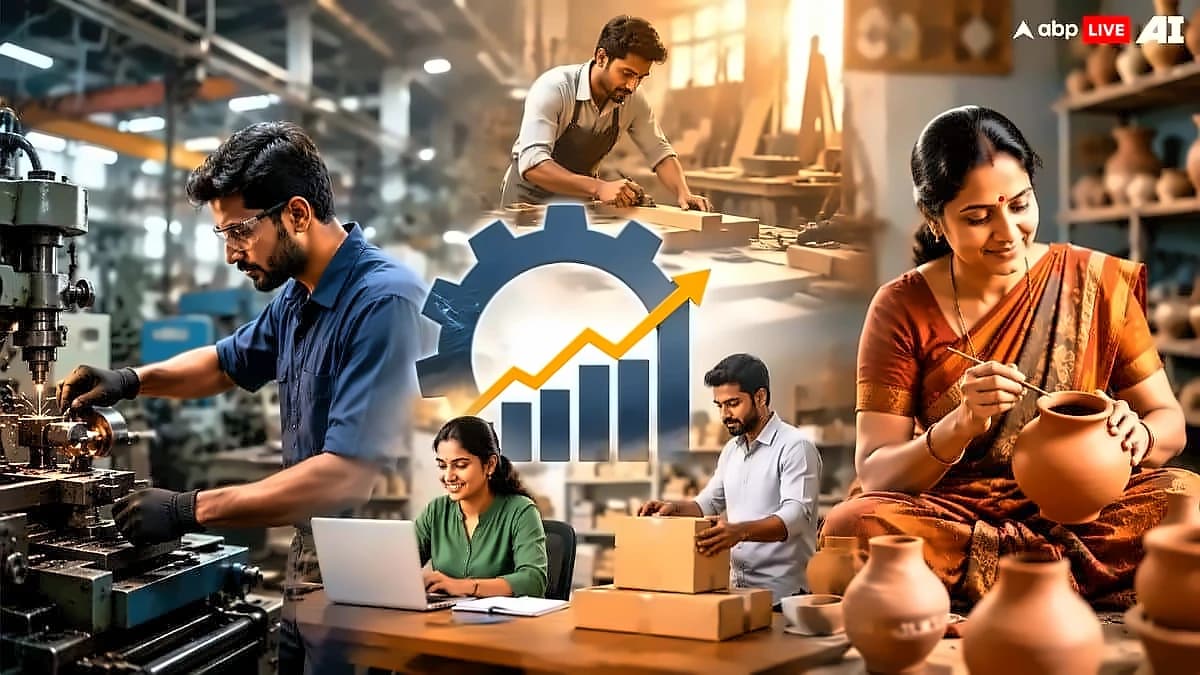
India's Micro, Small and Medium Enterprises (MSMEs) have emerged as a critical driver of the country's economic transformation, contributing over one-third of manufacturing output, nearly half of exports, and close to one-third of GDP. According to recent reports, MSMEs now employ more than 7 crore enterprises across the country, representing the second-largest source of employment after agriculture. The sector has evolved from peripheral participants to among the most important drivers of India's economic growth, with experts noting that global experience suggests India has only begun to unlock the full potential of its MSME sector. The transformation is particularly significant in rural and semi-urban areas, where MSMEs act as a backbone by supporting entrepreneurship and contributing significantly to GDP.
India's economic transformation since the 1991 reforms has created stark regional disparities in per capita income. According to reports from Business Standard, India's per capita income has risen more than 40 times in three and a half decades, yet the country still trails more than 140 nations on a per capita basis according to the International Monetary Fund. The reason lies primarily in demographics, as India remains the world's most populous country with more than 1.4 billion people, making average incomes appear modest despite the economy's aggregate size.
Since the reforms began, only two states have consistently remained among the top five: Delhi (Union Territory) and Goa. As reported by Business Standard, Maharashtra, which was among the top five in 1990-91, has since dropped out despite being home to India's financial capital Mumbai. Karnataka entered the top five in 2024-25, marking its latest arrival. Punjab, which had surged after the Green Revolution of the 1960s, has also slipped out of the top five since 2010-11, attributed to heavy reliance on agriculture and business insecurity from insurgency and natural disasters.
Bihar and UP have remained among the five poorest states every year since 1990-91, with Jharkhand joining them in 2000-01. According to Business Standard reports, Bihar's income has seen a steep decline, dropping from 53% to about 34% of the national average, while UP's share has slipped from three-fourths to about half of the national average. However, between 2020-21 and 2024-25, there was slight improvement in Bihar, Jharkhand, and UP's per capita income relative to the national average, with Manipur seeing an almost eight-percentage-point increase.
Over the past 12 years, Indian policymakers have established a strong foundation for MSME growth through comprehensive initiatives including MUDRA (Micro Units Development and Refinance Agency), GST (Goods and Services Tax), UPI (Unified Payments Interface), ONDC (Open Network for Digital Commerce), and the National Logistics Policy. These reforms have expanded accelerated formalisation and improved infrastructure for MSMEs, creating a more supportive business environment. The government has recognized the need for better urban planning and economic development at the local level, with the Ministry of Education launching programs to foster university-industrial linkages in about 40 different Tier-2 institutions. For India's ambition to become a developed economy by 2047, the MSME sector's ability to grow and compete will be critical, requiring a multidimensional approach including simplifying regulatory procedures, increasing awareness of government initiatives, enhancing access to credit through fintech solutions, and providing capacity building programs in both digital and managerial skills.