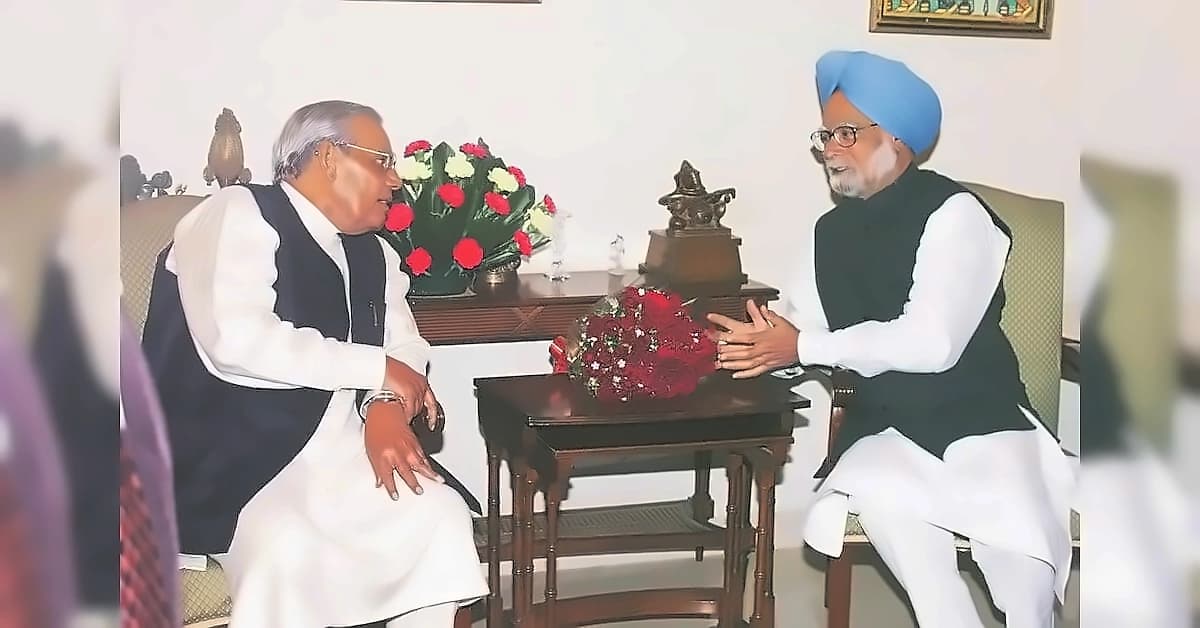
When then Finance Minister Manmohan Singh delivered his Budget speech on July 24, 1991, there was little to indicate the tectonic shift in India's political landscape. According to reports from Business Standard, the Congress government led by P V Narasimha Rao persisted with conviction despite strong opposition from both right and left. The reforms were initially met with resistance, but over the next three decades across six prime ministers, subsequent governments embraced the basic tenets of the 1991 economic reforms — promoting privatisation, seeking foreign direct investments and ending licence-permit raj. However, as former Chief Economic Advisor Nitin Desai reveals, the ideas behind these reforms actually started emerging by the late 1970s. The 1979 Vadilal Dagli Committee report on Controls and Subsidies, submitted when the Janata Party was in power, contained recommendations that were virtually ignored for 12 years but included much of what was implemented in 1991, including the recommendation to dissolve the office of the Controller of Capital Issues.
The BJP's election manifesto for the 2014 Lok Sabha polls mentioned 'reforms' 22 times and 'investment' 15 times, as reported by Business Standard. By the time Prime Minister Narendra Modi delivered his 13th Independence Day speech, he declared that reforms were not a compulsion but a conviction. The political shift was visible immediately after the reforms, with the Congress manifesto of 1991 mentioning 'socialism' but finding no reference in the 1996 manifesto. The 1996 manifesto promised to carry forward the momentum of economic reforms to achieve 8-9% GDP growth and coined the slogan, 'Every rupee earned from reforms is a rupee gained for development'. The BJP, which in 1991 emerged as the principal opposition in the Lok Sabha, had from the days of its earlier avatar, the Jana Sangh, advocated liberalisation in some form, declaring 'The BJP is no prisoner of any dogmas' and committing to 'de-bureaucratise the economy to maximise production'.
According to Business Standard reports, M Veerappa Moily, who was Karnataka's chief minister from 1992-1994, noted that state governments felt more empowered to attract investments. 'It was as if a weight was lifted off the shoulders of chief ministers,' Moily said, adding that 'we felt free that we could take our own economic decisions.' The reforms brought significant shifts at the state level, with West Bengal's Jyoti Basu-led Left Front government opposing the 1991 reforms initially but later announcing an industrial policy that welcomed 'new technology and investment in selective spheres'. In West Bengal, the Jyoti Basu-led Left Front government released a document titled 'Alternative Policy Approach to resolve BoP crisis', calling for an increase in income tax rates, unearthing black money and cuts in non-development expenditure. However, three years later, Basu's government announced an industrial policy that welcomed 'new technology and investment in selective spheres' for the benefit of the economy. Six years later, the state's most ambitious industrial project, Haldia Petrochemicals, was commissioned in April 2000, with Information Technology companies' campuses coming up in Salt Lake and Rajarhat, while gleaming shopping malls and restaurants began to alter the commercial landscape of Calcutta.
As reported by Business Standard, many proposed measures were embraced by successor governments and taken to their logical conclusion. The Rao government made the first move in opening telecom sector with its National Telecom Policy, while the Vajpayee government took it further with its New Telecom Policy that opened it up decisively for the private sector. The Vajpayee government created a dedicated disinvestment department and took privatisation forward, while the Manmohan Singh government brought in MGNREGA that assured 100 days of employment and raised wage floor, and introduced the Right to Information Act for government transparency. The Modi government brought in the goods and services tax that created unified market and the Insolvency and Bankruptcy Code for time-bound insolvency resolution. The Aadhaar introduced by the Singh government became the fulcrum of the architecture for digital governance delivery championed by Modi over the past 12 years, while Singh's civil nuclear deal that brought India closer to the US, became the foundation for the Modi government's SHANTI (Sustainable Harnessing and Advancement of Nuclear Energy for Transforming India) Act that opened the sector up to private players. Former Chief Economic Advisor Nitin Desai highlights that the greatest reform of the post-1991 period was the privatisation in finance, allowing private banks and mutual funds, which had earlier been restricted to the government's Unit Trust of India, and establishing the National Stock Exchange (NSE).
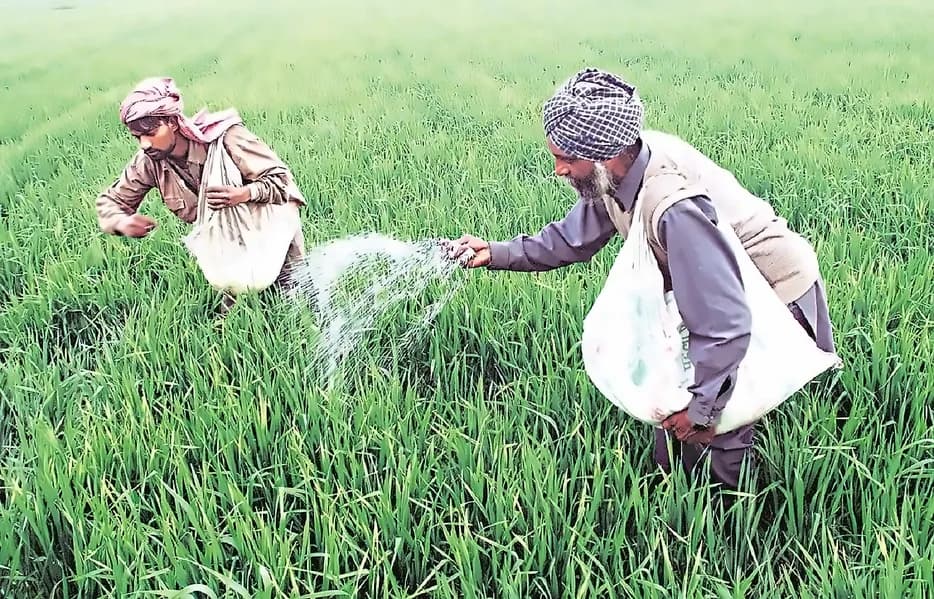
Despite India's official growth rates hovering around 7-8% since 2014, the middle class has experienced significant polarisation rather than linear expansion. According to recent reports, three quarters of Indians earned less than ₹15,000 per month in 2024, equivalent to about ₹140 euros. The IT sector, long a driving force behind middle-class growth, now faces challenges with graduate unemployment reaching 29.1% in 2024, nine times higher than illiterate people. Major IT companies including Infosys, Wipro, and TCS have begun laying off employees or scaling back hiring due to automation and artificial intelligence threats. The sector, which accounted for 7.4% of GDP in 2022 (up from 1.2% in 1998) and had exports exceeding $200 billion in the mid-2020s, now faces workforce stagnation and declining job opportunities. This polarisation is reflected in income distribution, with the richest 10% holding 57.7% of national income in 2022-2023, compared to 33.5% in 1990, while the poorest 50%'s share dropped to 15%. The World Inequality Lab data shows dramatic concentration, with the top 0.1% holding about 10% of national income, while the 40% below the top 10% saw their share drop from 44.1% in 1990 to 27.3% in 2022-2023. Former Chief Economic Advisor Nitin Desai identifies the weak performance on manufacturing as the most concerning issue, noting that manufacturing's share of GDP has come down to 14% and has actually fallen over the past decade, with private manufacturing investment also declining. He emphasizes the need to focus on blue-collar manufacturing jobs to move the 40-45% still working in agriculture out of the sector, particularly in northern India where 90% of the increase in India's labour force to 2050 will take place.