The Ministry of Statistics and Programme Implementation (MoSPI) has released a base paper proposing a framework to measure India's 'knowledge economy', marking a significant shift from traditional economic measurement. This new approach aims to quantify economic contribution from intellectual output itself, moving beyond the traditional focus on factories and physical production. The framework recognizes that modern economies increasingly create value through intangible assets, software, intellectual property, research, branding, algorithms, digital platforms, and innovation ecosystems. As per the latest MoSPI report, this represents a fundamental change in how India thinks about economic growth, with the future GDP of a country potentially depending as much on ideas as on industries.
India's $4 trillion consumer-led economy is experiencing a significant slowdown, with hiring freezes and layoffs becoming common across sectors. According to Reuters reports, this consumer-driven economy is showing early signs of stress as firms begin reducing workforce and scaling back expansion plans. The slowdown comes at a critical time as India transitions toward its Viksit Bharat vision to become a developed economy by 2047, with growth increasingly dependent on knowledge, innovation, deep tech, AI, R&D and IP creation rather than traditional manufacturing sectors.
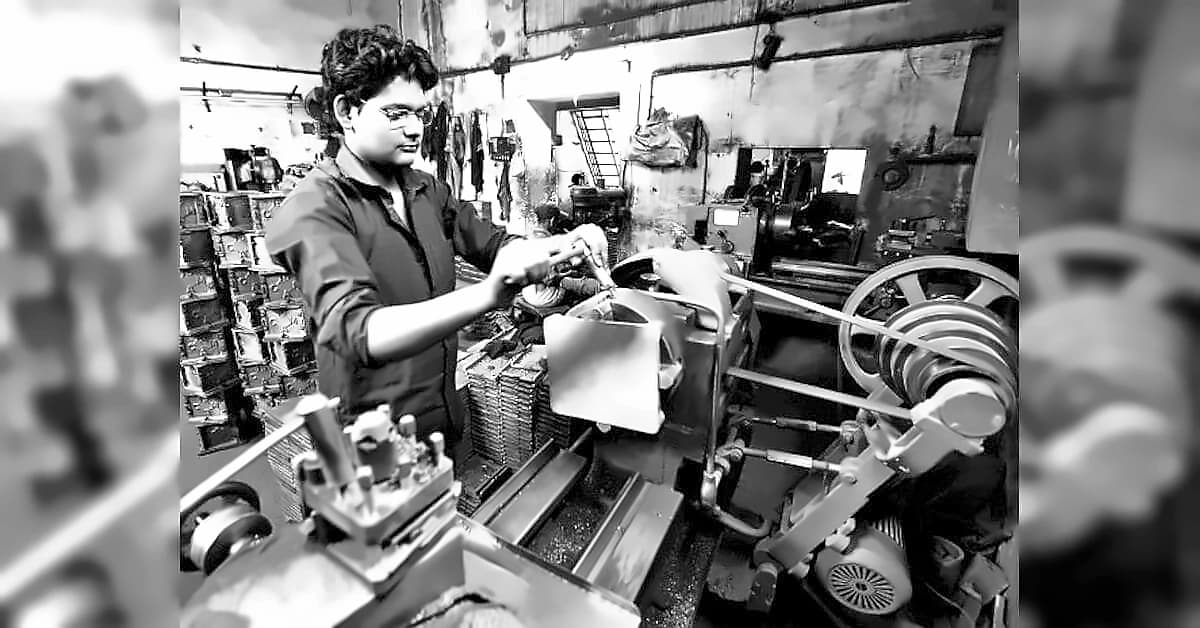
According to the 2025 Annual Survey of Unincorporated Sector Enterprises (ASUSE), Indian unincorporated businesses generate an average gross value added (GVA) of about ₹1.56 lakh per worker annually. However, there is a significant productivity divide within the informal economy itself. Own-account enterprises (OAEs) - sole proprietors - generate around ₹1.16 lakh per worker, while hired worker enterprises (HWEs) - firms that hire workers - generate nearly ₹2.3 lakh. This represents a nearly 100% increase in productivity once firms begin hiring workers and operating at larger scale. The higher productivity in HWEs is largely attributed to greater capital investment, division of labour, and the adoption of more advanced technologies.
The ASUSE data reveals clear productivity patterns across Indian states. Uttarakhand, Telangana, Kerala, Maharashtra, and Delhi are among the most productive economies in the country, with workers earning more than the national average. At the other end, Uttar Pradesh, Odisha, Bihar, and West Bengal remain stuck in the low-productivity, low-wage category. Kerala emerges as the strongest overall performer, with workers in Kerala's HWEs generating around ₹2.65 lakh in GVA per worker annually, while annual wages are close to ₹1.98 lakh. Telangana shows similar productivity levels at nearly ₹2.85 lakh per worker, with wages around ₹1.9 lakh. States exhibiting better ease-of-doing-business reforms and superior infrastructure, such as enhanced road connectivity and reliable power supply, tend to demonstrate higher informal sector productivity.

The report reveals significant variations in wage distribution across states. At the all-India level, workers in HWEs receive roughly 65% of the GVA as wages. Kerala leads with the highest wage share at 75%, while Maharashtra and Punjab generate one of the highest outputs per worker but their workers take home much less than the average. The formal-informal wage gap varies significantly, with Uttarakhand, Chhattisgarh and Bihar having the highest gaps, while Himachal Pradesh, Telangana and Haryana show the lowest gaps. On average, workers in formal employment get twice the wages compared to those in informal setups. Telangana, with a formal-informal wage gap of approximately 1.4 times, and Kerala with 1.8 times, show better wage parity compared to Uttarakhand, where formal workers can earn over seven times more than their informal counterparts.
Uttarakhand appears extremely successful at first glance, with the highest productivity among major states at over ₹3 lakh per worker annually and wages among the highest at over ₹2.14 lakh. However, much of this success is driven by formal employment, with the state having the largest formal-informal wage gap in India. A formal worker there earns more than seven times what an informal worker earns. This highlights how productivity gains are concentrated among formal sector workers while informal sector participation remains limited. The state's success is largely attributed to better ease-of-doing-business reforms and superior infrastructure, including enhanced road connectivity and reliable power supply.
This knowledge economy framework aligns with India's ambitious Viksit Bharat vision to become a developed economy by 2047. As per the MoSPI report, growth cannot rely only on traditional sectors, with knowledge, innovation, deep tech, AI, R&D and IP creation eventually becoming core economic drivers. The framework signals India's beginning to treat knowledge itself as measurable economic infrastructure, positioning the country to compete in the global knowledge economy where countries may not just manufacture more, but may own more ideas. This represents one of the biggest long-term shifts in how India thinks about growth, preparing the nation for a future where the value of intellectual property, innovation and knowledge will be treated as seriously as physical infrastructure in measuring economic growth. The current consumer economy slowdown adds urgency to this transition as traditional growth drivers face challenges.