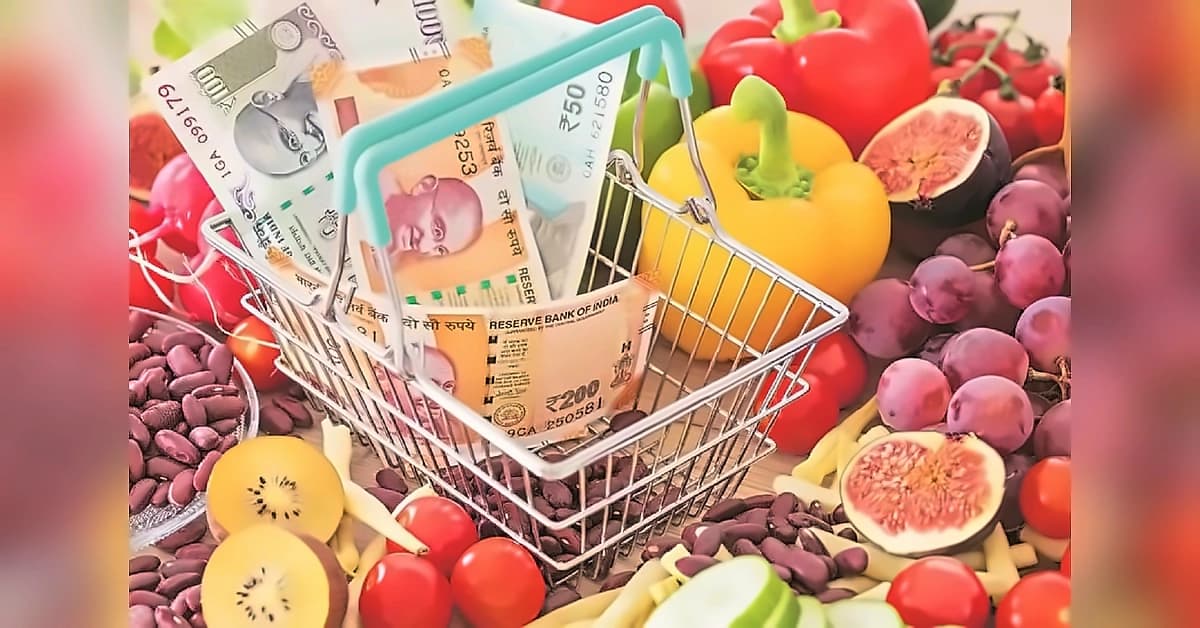
India's consumer price index is expected to settle at 4.50% in July 2026, according to a Reuters poll of 40 economists, marking a 0.12 percentage point increase from 4.38% in June. The projection carries upside risks primarily due to broadening food inflation across key items, with inflation remaining broad-based across essential commodities led by onions, edible oils, rice and pulses. As reported by Reuters, uneven rainfall across the country this year has hampered agricultural output, driving food costs higher, with Indian households spending over 40% of their budgets on food. Despite the rise, inflation remained within the Reserve Bank of India's (RBI) 2%-6% target range, allowing the central bank to keep interest rates unchanged this week as widely expected.
Core inflation (excluding food and fuel) is expected to remain contained at around 4.08%, according to Union Bank of India's chief economic advisor Kanika Pasricha, as reported by Reuters. The absence of any meaningful revision in domestic retail fuel prices is expected to limit the pass-through to consumer inflation, despite volatile crude oil prices during the month. Core inflation, which excludes volatile food and fuel components and better reflects underlying demand, is expected to have been 4.08% in July, though India does not publish official core inflation data. International gold prices have softened further by -3.7% on a month-on-month basis, hence personal care and effects of core inflation are likely to derive some relief.
The Bank of Baroda's Essential Commodities Index (BoB ECI) has risen at its sharpest pace in the entire series in July 2026 by 4.1% on a year-on-year basis, as reported by IANS. In the first five days of August 2026, the build-up was even higher at 5.4%. Among vegetables, the arrival statistics for TOP (tomato, onion and potato) have been comforting despite stickiness in onion price trajectory, with improved vegetable arrivals providing some relief to the overall inflation trajectory. However, the improvement in monsoon activity during July supported crop conditions but did little to ease near-term supply concerns, as noted by Union Bank of India's chief economic advisor.
Monsoon progress has been favourable, with 63% of States receiving normal rainfall, according to the Bank of Baroda report. The area sown as percentage of normal area of major Kharif crops (except oilseeds and sugarcane) as on July 31, 2026 have remained above the same period of previous year. However, uneven rainfall across the country this year has hampered agricultural output, driving food costs higher. International food prices, especially edible oils, have softened, providing some relief to the overall inflationary pressures in the food basket. The RBI flagged adverse weather-related events and uncertainty around global energy markets as key risks to its inflation outlook.
The RBI expects inflation in this financial year to average 5.0%, lower than its previous estimate of 5.1%, as reported by Reuters. This was higher than the 4.8% predicted in a Reuters survey in July. The bank warned that upside risks could emerge in the near term as corporate Q1 transcripts indicate pass-through of higher input costs to consumers amid robust demand conditions. Despite current relief from softer gold prices and improved agricultural conditions, the broad-based nature of food inflation across essential commodities continues to pose challenges for maintaining inflation within the targeted range. Wholesale price index-based inflation likely remained elevated at 9.95% in July, roughly unchanged from June levels.